Advertising
From Pink Slips to Silent Sidelining: Inside adland’s layoff and anxiety crisis
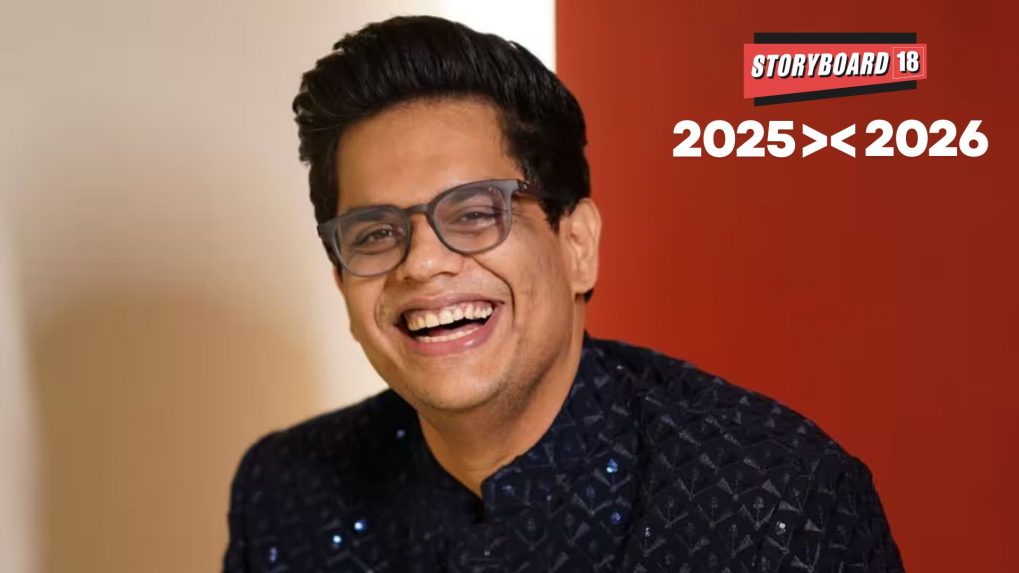
Tanmay Bhat’s career has never followed a straight line. Over roughly fifteen years, he has moved from comedy writing and stand-up to co-founding AIB, surviving one of India’s earliest large-scale internet cancellations, and re-emerging as an investor, streamer, advertising creative and, increasingly, a self-styled curator of internet culture.
Rather than unfolding in neat phases, his professional life has progressed through successive iterations. In an industry where many early digital creators faded with platform shifts, audience fatigue or reputational collapse, Bhat has remained structurally relevant across multiple resets of India’s creator economy.
What distinguishes his trajectory, industry observers say, is not dramatic reinvention but continuity of perspective.
Consistency of worldview, not format
Unlike creators who endlessly chase algorithmic trends, Bhat’s core has remained intact. Comedy, especially roasting and cultural commentary, continues to anchor his work. Formats have changed, platforms have rotated, but the lens through which he engages culture has stayed consistent.
This continuity has translated into durable audience behaviour.
On Instagram, Bhat now commands around 2.1 million followers, with average reel views crossing 8.5 lakh and engagement of over 8 percent, unusually high at that scale. The platform functions as his high-frequency cultural presence, driven largely by urban audiences between 18 and 34.
YouTube plays the deeper game. With roughly 5.3 million subscribers and nearly 1,600 uploads, his long-form catalogue averages about 2.6 million views per video, with strong engagement across Tier-2 and Tier-3 cities and an older 25–44 demographic. Where Instagram sustains visibility, YouTube compounds authority and loyalty.
Together, they form a two-engine influence model: immediacy on one side, institutional memory on the other.
Reinvention without redemption theatrics
Bhat’s post-cancellation comeback never followed the standard apology-to-redemption arc. Instead, it unfolded as something more mechanical and far more durable: output, consistency and role redesign.
Time, platform turnover and changing audience cohorts quietly reset the playing field. New users arrived without emotional memory of earlier controversies. Older viewers recalibrated based on present output. What mattered most was whether the work stayed relevant.
And it did.
Rather than foregrounding himself as the star, Bhat gradually repositioned as a system builder. He shifted away from personality-centric content toward repeatable formats, collaborative structures and cultural aggregation. This reduced personal risk while increasing creative velocity, allowing him to scale without burning out on identity performance.
From creator to architect
This structural shift also prepared the ground for his most unexpected transformation: Tanmay Bhat, advertising’s breakout creative force of 2025.
Long before his advertising rise, Bhat had studied the craft. He had grown up on the work of Indian advertising legends and absorbed the grammar of persuasion alongside comedy. When his agency Moonshot entered the brand world in earnest, it did not behave like a typical production shop. It behaved like a culture lab.
The turning point came with the CRED campaign series, beginning with Rahul Dravid’s now-famous reimagining. What followed was a string of hits that reshaped how brands thought about celebrity, humour and internet-first storytelling: Disney+ Hotstar’s IPL campaigns with Shah Rukh Khan and MS Dhoni, Lenskart with Karan Johar, Subway with Viswanathan Anand, BoldCare’s parody of Indian television soaps featuring Ranveer Singh, among others.
In a short span, Moonshot became one of the most sought-after creative partners in Indian advertising. Among CMOs and founders, Bhat acquired a reputation for a rare quality: the ability to generate cultural conversation at scale. Hit after hit, viral after viral, he turned attention itself into a dependable output.
By 2025, industry insiders were openly referring to him as advertising’s new star. Not because he mimicked the past, but because he translated classic creative instincts into internet-native execution. His campaigns delivered what brand managers increasingly chase: immediate visibility, massive shareability and cultural stickiness in a hyper-compressed attention economy.
Why brands keep knocking
The reason is straightforward. Marketing tenures are shrinking. Quarterly performance pressures are intensifying. Virality has become the new holy grail. Brand managers want ideas that travel faster than media plans.
Bhat’s background as a lifelong content creator gives him rare fluency in audience behaviour. He understands not only what works, but why it works, how long it will work and where it will break. His humour cuts across age groups. His instinct for meme culture, platform language and emotional triggers gives him an edge traditional agencies struggle to replicate.
That fluency is now extending into how Bhat and his collaborators are responding to the industry’s newest inflection point: artificial intelligence.
CRED’s latest campaign, which Bhat helped shape in 2025, turns that tension into its central idea. The film opens with a deliberately unsettling, AI-generated version of former cricketer and current national team coach Gautam Gambhir, delivering a surreal pitch about paying credit card bills to win free ice cream. What begins as playful quickly becomes grotesque, as the AI-crafted Gambhir appears to consume a human tongue from an ice cream cone before morphing into the cone himself. The ad then snaps back to reality. A real Gambhir, watching the film on his laptop, responds by smashing the screen with his bat.
The device works on multiple levels. It borrows CRED’s established playbook of absurd celebrity subversion, recalling the earlier Rahul Dravid traffic-rage campaign, while simultaneously staging a critique of AI’s growing influence on creative work. By placing AI-generated excess at the centre and having the human protagonist physically reject it, the campaign captures the industry’s current contradiction: fascination with automation paired with deep discomfort about what gets lost when machines start doing the imagining.
Importantly, this is where Bhat’s ecosystem thinking becomes visible. His work does not exist in isolation from platform shifts, technological change or cultural anxiety. Instead, it absorbs those forces and converts them into narrative material. In a market increasingly obsessed with tools, his advertising success continues to hinge on something more elemental: understanding people, attention and the stories that still cut through when everything else is automated.
Importantly, this is where Bhat’s ecosystem thinking becomes visible. His work does not exist in isolation from platform shifts, technological change or cultural anxiety. Instead, it absorbs those forces and converts them into narrative material. In a market increasingly obsessed with tools, his advertising success continues to hinge on something more elemental: understanding people, attention and the stories that still cut through when everything else is automated.
The Piyush Pandey shadow, and why Tanmay didn’t claim it
As Bhat’s advertising work stacked up through 2024 and into 2025, industry conversations increasingly reached for the most loaded comparison available: Piyush Pandey. The shorthand was less about equivalence and more about aspiration. Pandey’s passing on October 24, 2025 sharpened that instinct, as the industry found itself speaking about legacy, not just campaigns. Pandey had shaped Indian advertising’s emotional grammar over decades. His absence created a vacuum that pulled attention toward new creative forces who seemed capable of shaping culture rather than merely responding to it.
Yet Bhat has consistently resisted that framing. Industry observers note that he positions himself not as an heir but as a student of that tradition, acknowledging that his advertising innings is still early and that Pandey’s stature came from an unusually long and consistent body of work. If Pandey represented the classic era of persuasion built on craft and emotional depth, Bhat’s rise reflects how the centre of gravity has shifted toward high-velocity storytelling, celebrity recontextualisation and culture-first formats engineered for the internet’s attention economy.
In a volatile creator economy, Tanmay Bhat’s continued relevance is not the product of viral luck. It is the result of structural adaptation: systems over stardom, output over image, longevity over nostalgia.
In 2025, he is no longer just a comedian who survived the internet. He is one of the most influential creative forces shaping how Indian brands speak, move and matter online.
From purpose-driven work and narrative-rich brand films to AI-enabled ideas and creator-led collaborations, the awards reflect the full spectrum of modern creativity.
Read MoreLooking ahead to the close of 2025 and into 2026, Sorrell sees technology platforms as the clear winners. He described them as “nation states in their own right”, with market capitalisations that exceed the GDPs of many countries.