Advertising
From Pink Slips to Silent Sidelining: Inside adland’s layoff and anxiety crisis
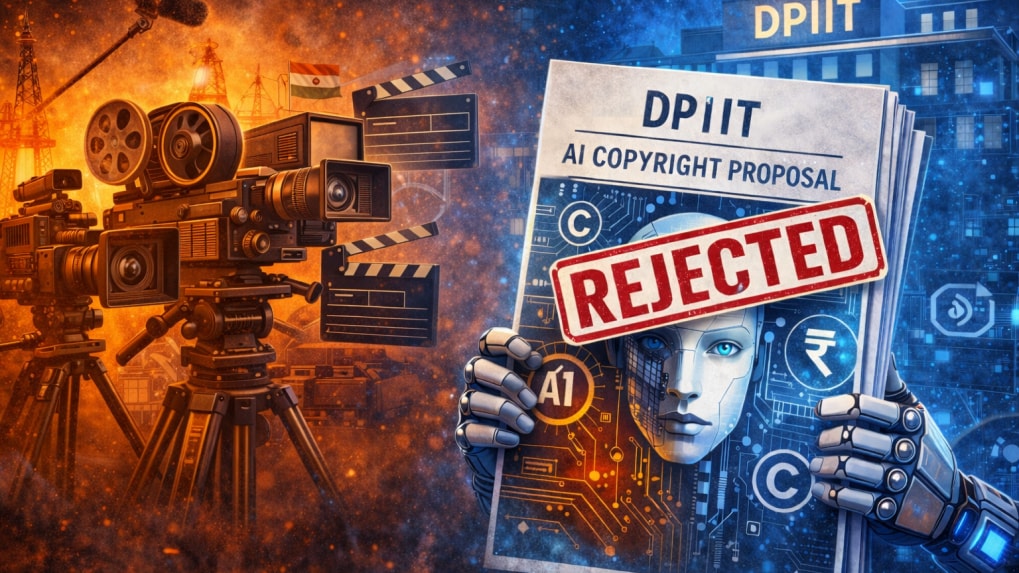
Broadcasters have raised strong objections to the Department for Promotion of Industry and Internal Trade’s (DPIIT) working paper on the use of copyrighted material for training generative artificial intelligence (GenAI) models, arguing that the proposed shift from voluntary licensing to a mandatory framework is unnecessary, untested and risks undermining India’s creative economy.
Broadcasters said the existing voluntary licensing model has functioned effectively and fully respects creators’ and copyright owners’ rights to control the use of their works. “There is no demonstrated market failure that warrants replacing a successful, market-driven system with a globally unparalleled and unenforceable mandatory licensing model,” a senior executive from a media house said.
According to broadcasters, voluntary, direct licensing allows rights holders to negotiate the value of their content based on quality, uniqueness and market demand, while enabling AI developers to access high-quality datasets through mutually agreed terms. “This approach encourages collaboration between the technology and creative sectors, drives innovation and ensures creators benefit through exposure, reach and revenue,” the official added.
Broadcasters pointed to the rapid growth of global AI content licensing markets as evidence that existing copyright frameworks are capable of facilitating mutually beneficial arrangements. Industry estimates cited in the submission show the global AI training dataset licensing market was valued at about $2.62 billion in 2024 and is projected to grow to $18.5 billion by 2034.
“AI developers are increasingly opting for licensed content to mitigate legal risks and to gain access to proprietary, high-quality datasets that are not freely available online,” another broadcaster noted, adding that access to such datasets is fast becoming a competitive differentiator in AI development.
Broadcasters expressed concern that the committee’s proposed mandatory licensing regime would deprive copyright owners of the fundamental right to opt out or to negotiate terms. “Copyright is, by nature, an exclusionary right — the absolute right to say no. Replacing negotiated agreements with administratively determined terms fundamentally alters this principle and creates uncertainty at a critical moment when licensing markets are evolving,” another leading broadcaster said.
Beyond substantive policy concerns, broadcasters also flagged serious procedural issues with the composition of the committee and the consultation process that informed the working paper. They argued that the committee did not adequately represent the creative industries, despite their being primary stakeholders in copyright policy. “It is surprising that copyright owners from film, television, radio and news media were not represented, even though the recommendations will directly shape the future of India’s creative economy,” a senior broadcaster said.
India’s creative sector is currently valued at over $30 billion and is projected to grow to $100 billion by 2030. Broadcasters warned that excluding industry voices with deep expertise in copyright market dynamics poses unintended policy risks.
Broadcasters were particularly critical of the absence of the Ministry of Information and Broadcasting (MIB) from the committee’s deliberations. Under the Allocation of Business Rules, 1961, MIB regulates print media, broadcasting, film, radio and online content — sectors that are directly impacted by the deployment of generative AI.
The concerns also extend to India’s animation, visual effects, gaming and comics (AVGC) segment, which faces complex questions around authorship, ownership and licensing in an AI-driven environment. Broadcasters noted that the government has repeatedly emphasised the strategic importance of AVGC, citing initiatives such as the National Centre of Excellence for AVGC-XR and statements positioning India as an emerging global hub for gaming and digital content. “Policy on AI and copyright must evolve in sync with national AVGC goals, and that requires MIB’s direct involvement,” a broadcaster said.
On the proposed royalty framework, broadcasters warned that a centralised, government-appointed rate-setting committee could lead to arbitrary outcomes and inequitable compensation. The working paper’s analogy to railway fares or essential commodity pricing was described as fundamentally flawed.
Broadcasters cautioned that a one-size-fits-all royalty rate would ignore vast differences in investment and production costs across creative sectors. “High-budget film and television productions cannot be treated on par with low-cost user-generated content,” a senior executive said, warning that flat rates could result in under-compensation for some rights holders and overcompensation for others.
They also questioned the practicality of distributing royalties based on limited disclosures by AI developers. “A ‘sufficiently detailed summary’ of training data characteristics does not capture the true value of content, making fair and equitable royalty distribution virtually impossible.” The proposal to revise royalty rates only once every three years was also criticised as unrealistic in fast-changing AI markets.
broadcasters highlighted that the DPIIT proposal diverges sharply from global regulatory approaches. While countries such as Australia and the UK have stepped back from broad text-and-data-mining exceptions following industry backlash, and the EU and US continue to reassess their frameworks, India risks becoming an outlier. “There is no global consensus on AI training exceptions, and no other jurisdiction has adopted a model as rigid or interventionist as the one proposed,” a broadcaster said.
“India’s ambition to become a global content hub depends on alignment with international norms. Exceptionalism makes us vulnerable to global supply and value chain disruptions at a time when uncertainty is already high,” the executive stated.
From purpose-driven work and narrative-rich brand films to AI-enabled ideas and creator-led collaborations, the awards reflect the full spectrum of modern creativity.
Read MoreLooking ahead to the close of 2025 and into 2026, Sorrell sees technology platforms as the clear winners. He described them as “nation states in their own right”, with market capitalisations that exceed the GDPs of many countries.