Advertising
From Pink Slips to Silent Sidelining: Inside adland’s layoff and anxiety crisis
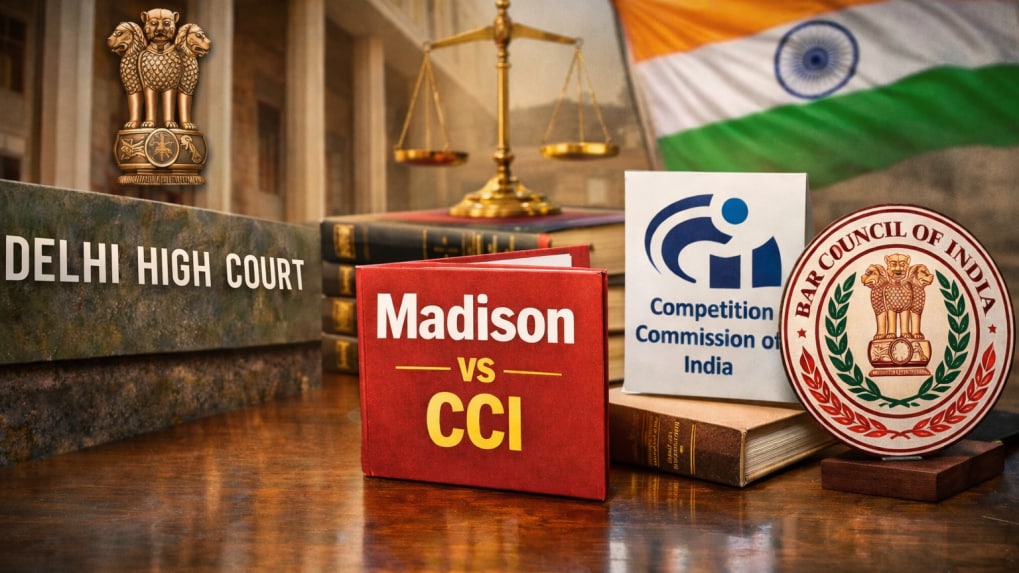
The Delhi High Court on Thursday strongly reprimanded the Union of India for failing to file its response in a high-stakes challenge mounted by Madison Communications Pvt. Ltd. against the Competition Commission of India (CCI), warning that continued non-compliance could invite adverse consequences.
A bench led by Chief Justice Devendra Upadhyaya and Justice Tushar Gedela granted the Centre a final window of two weeks to place its reply on record, cautioning that the court would be constrained to draw an adverse inference if the government defaults again. The matter has been listed for further hearing on February 26, 2026.
The court’s sharp remarks came during the hearing of Madison’s petition challenging the scope of investigative and regulatory powers exercised by the CCI and its Director General (DG), particularly under Section 26(1) of the Competition Act, 2002, and certain provisions of the recently notified CCI (General) Regulations, 2024.
BCI impleaded despite CCI objection
In a significant development, the High Court allowed Madison’s plea to implead the Bar Council of India (BCI) in the proceedings, a move that could have wider ramifications for the interface between sectoral regulators and the legal profession.
Senior advocate Jayant Mehta, appearing for the CCI, strongly opposed the impleadment, arguing that the Bar Council was neither a necessary nor a proper party to the dispute. However, Chief Justice Upadhyaya accepted Madison’s contention that the issues raised directly touch upon the disciplinary jurisdiction over advocates and therefore warranted the presence of the BCI. The court accordingly ordered the Bar Council of India to be made a party to the case.
The bench expressed clear displeasure at the Centre’s failure to respond despite notice, stressing that constitutional challenges to statutory provisions cannot be kept pending indefinitely due to executive inaction. “If the Union of India does not file its reply within two weeks, the court will draw an adverse inference,” the bench observed, underscoring the seriousness with which it viewed the delay.
CCI defends DG’s investigative powers
In its response to the High Court, the CCI has defended the breadth of the DG’s investigative authority, asserting that once a prima facie opinion is formed under Section 26(1) of the Act, the DG is empowered to inquire into allegations and investigate “anyone and everyone” connected with the matter.
The regulator has further argued that its powers under Regulations 46(3) and 46(4) of the 2024 Regulations—relating to conduct during investigations and proceedings—are on par with those exercised by the Bar Council in matters of professional discipline.
Madison has challenged the constitutional validity of Section 26(1) of the Competition Act, contending that the provision does not permit the DG to add new parties or investigate unnamed entities. According to the company, the CCI must identify specific parties while forming its prima facie opinion, and any sub-delegation of this power to the DG is impermissible.
The advertising major has urged the court to either strike down Section 26(1) in its present form or read it down to limit investigations strictly to named and identified parties.
Beyond the statute, Madison has assailed multiple clauses of the CCI (General) Regulations, 2024. It has taken particular exception to Regulations 46(3) and 46(4), which, according to the petition, empower the CCI to hold advocates guilty of “professional misconduct” during DG examinations and commission proceedings.
Madison has argued that such disciplinary authority vests exclusively with the Bar Council under the Advocates Act, 1961, and that the impugned regulations amount to regulatory overreach, undermining the right to counsel and procedural fairness.
The company has also challenged Regulation 19(3), which restricts publication of prima facie orders to cases involving vertical restraints and abuse of dominance. Madison contends that the selective disclosure regime lacks statutory backing and arbitrarily curtails transparency in antitrust enforcement.
Another provision under challenge is Regulation 47(c), which restricts the presence of advocates during the recording of statements on oath. Madison has argued that this violates Section 30 of the Advocates Act and effectively deprives witnesses of legal assistance.
Interim protection
During the hearing, the CCI gave an undertaking that it would not summon Madison officials for recording of statements until the next date of hearing. The court recorded the assurance while directing the Union of India and the CCI to complete their pleadings within the stipulated timeline.
Madison is represented by senior advocate Krishnan Venugopal, along with Anu Monga and Rahul Goel, partners at AnantLaw.
The case is being closely watched, as its outcome could redefine the limits of investigative powers exercised by the competition regulator and clarify the boundaries between regulatory oversight and professional self-governance of advocates.
From purpose-driven work and narrative-rich brand films to AI-enabled ideas and creator-led collaborations, the awards reflect the full spectrum of modern creativity.
Read MoreLooking ahead to the close of 2025 and into 2026, Sorrell sees technology platforms as the clear winners. He described them as “nation states in their own right”, with market capitalisations that exceed the GDPs of many countries.