Advertising
From Pink Slips to Silent Sidelining: Inside adland’s layoff and anxiety crisis
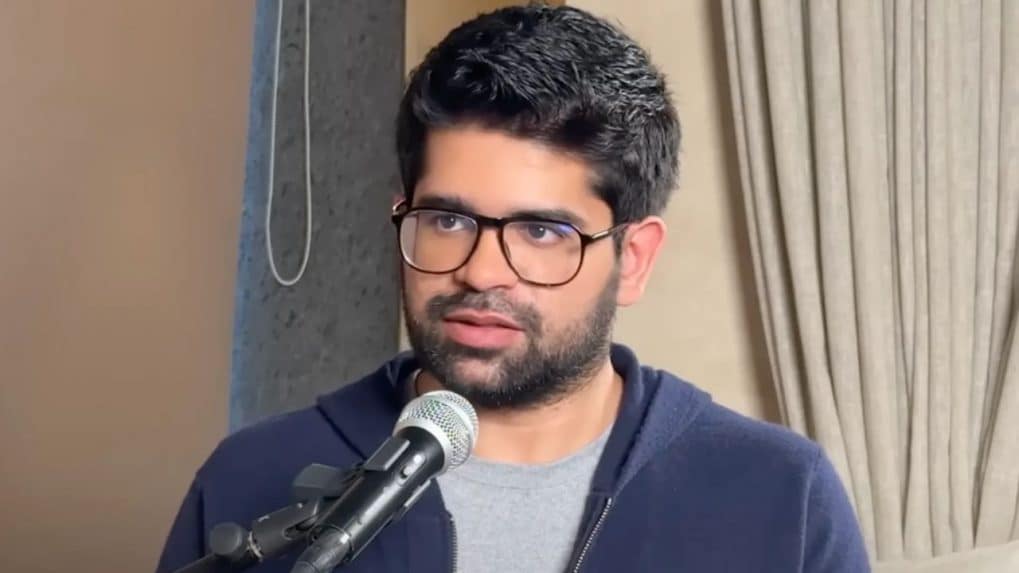
Artificial intelligence may be advancing rapidly, but its role remains fundamentally shaped by human judgement. Aravind Srinivas, chief executive of AI search startup Perplexity, has said that machines excel at solving problems but still rely on humans to decide which problems are worth pursuing. He argued that curiosity and question framing remain uniquely human strengths.
Speaking on a recent podcast with writer and entrepreneur Prakhar Gupta, Srinivas said AI systems are highly effective at solving, optimising and verifying solutions but do not independently identify meaningful problems. The episode was released earlier this week.
Srinivas stated that AI can assist humans in solving pre-defined challenges, but this is different from machines acting autonomously to decide what matters in the first place. He added that the advantage still lies with humans because it is people who recognise and define problems before any system attempts to solve them.
He further challenged the idea that AI possesses genuine curiosity, describing curiosity as a distinctly human trait that underpins scientific discovery and intellectual progress. Srinivas said AI systems do not pose questions or pursue ideas out of intrinsic interest, noting that human curiosity is what leads individuals to consider why certain problems or conjectures are worth exploring at all.
According to Srinivas, no AI system to date has demonstrated the ability to ask foundational questions purely out of curiosity, a limitation he said marks the current boundary between artificial and biological intelligence. While AI can outperform humans in narrowly defined tasks, he informed that recognising what truly matters continues to be a human advantage.
The discussion also turned to the future of AI infrastructure, where Srinivas suggested that advances in locally run AI systems could eventually challenge the dominance of large-scale data centres. He said the biggest threat to centralised data centres would emerge if intelligence could be efficiently packed onto local chips running directly on user devices, removing the need for centralised inference at scale.
Srinivas highlighted the contrast between human and artificial intelligence in terms of energy efficiency, noting that the human brain operates using a fraction of the power consumed by modern data centres to perform comparable tasks. He attributed this gap not only to biology but also to human qualities such as curiosity, intuition and the ability to challenge assumptions, which he said current AI models lack by design.
Looking ahead, Srinivas stated that personalised and widely accessible AI tools could reshape how people work and learn, drawing parallels with the impact smartphones have had over the past decade. He added that AI has the potential to level the playing field between individuals and large institutions by giving people across age groups and backgrounds access to powerful capabilities.
From purpose-driven work and narrative-rich brand films to AI-enabled ideas and creator-led collaborations, the awards reflect the full spectrum of modern creativity.
Read MoreLooking ahead to the close of 2025 and into 2026, Sorrell sees technology platforms as the clear winners. He described them as “nation states in their own right”, with market capitalisations that exceed the GDPs of many countries.