How it Works
WPP, Havas, Omnicom: Are advertising’s biggest holdcos recasting agencies as AI Operating Systems?
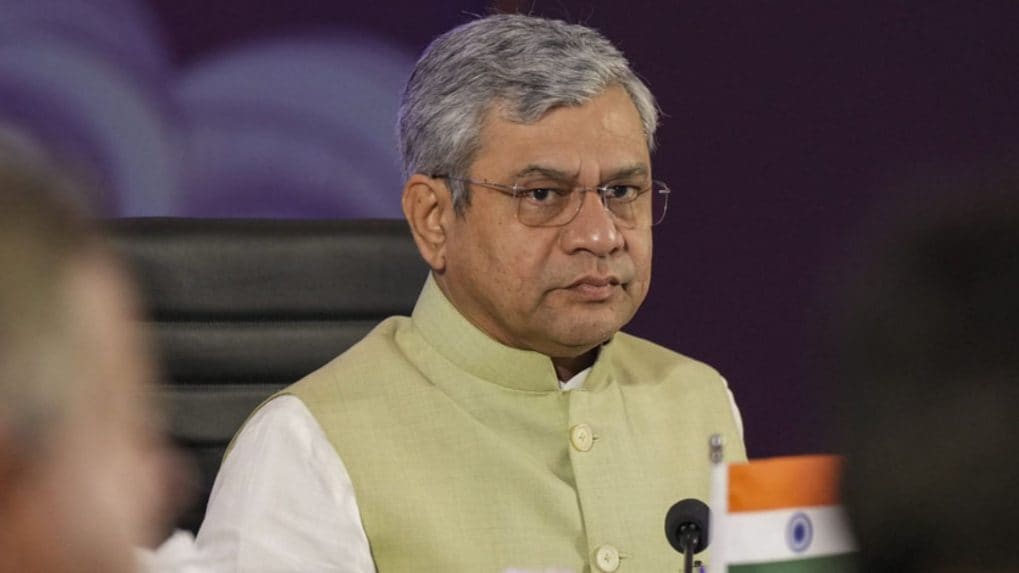
Information technology minister Ashwini Vaishnaw has pushed back against the International Monetary Fund’s classification of India as a second-tier country on artificial intelligence preparedness, stating that the country clearly belongs among the top group of AI-ready nations.
Speaking during a panel discussion at the World Economic Forum in Davos, as reported by Moneycontrol, IMF managing director Kristalina Georgieva outlined the fund’s newly created Index of Preparedness, which assesses how ready countries are for the adoption and deployment of artificial intelligence.
Georgieva explained that the IMF categorises countries into three broad groups — those that make AI happen, those that watch it happen, and those still trying to understand what is happening — based on four parameters covering physical infrastructure, labour skills, the diffusion of AI into the economy, and regulation and ethics.
She informed the audience that only a small number of countries currently sit at the top of the index, naming the United States, Denmark and Singapore as the leading three. While acknowledging China’s capabilities, she said its scale affected its overall ranking. Among emerging markets, she highlighted Saudi Arabia and added that India would also fall into that group, citing the country’s continued investment in information technology.
Vaishnaw, who was part of the same panel, was subsequently asked whether India, described during the discussion as being in the second grouping, should align itself more closely with either the United States or China, or pursue an independent path.
Responding to the question, the minister stated that India clearly belonged in the first group, explaining that artificial intelligence rests on five layers comprising the application layer, model layer, chip layer, infrastructure layer and energy layer. He said India was working across all five layers and making strong progress in each.
Vaishnaw said India’s greatest strength lies in AI applications and diffusion, a key parameter in the IMF’s own framework. He stated that India is likely to become the world’s largest supplier of AI-driven services, adding that successful deployment of AI and return on investment are driven by applications rather than the creation of extremely large models.
He added that India is deliberately focusing on smaller and more efficient AI models instead of pursuing scale for its own sake, stating that the vast majority of practical work can be achieved using models with 20 billion to 50 billion parameters. He said India has already created a portfolio of such models and that these are being rolled out across multiple sectors to improve productivity, efficiency and effective use of technology.
Questioning the IMF’s methodology, Vaishnaw said he was unclear about the criteria used by the fund, noting that Stanford University ranks India third globally in terms of AI penetration and preparedness, and second in terms of AI talent.
From purpose-driven work and narrative-rich brand films to AI-enabled ideas and creator-led collaborations, the awards reflect the full spectrum of modern creativity.
Read MorePraveen Someshwar, Managing Director and CEO of Diageo India, joins the Grand Jury of the Storyboard18 Awards for Creativity, highlighting the awards’ focus on work that blends cultural relevance with strategic and commercial impact.