How it Works
WPP, Havas, Omnicom: Are advertising’s biggest holdcos recasting agencies as AI Operating Systems?
There is no doubt that Shah Rukh Khan has always functioned as a cultural barometer. In the mid-2010s, he appeared in ads telling Indian men it was okay to use face cream. At that time, the pitch was explicit: this is for you, and no, it does not make you less masculine.
Now Khan is back, this time wearing jewellery. In a recent ad campaign for Candere, the lifestyle brand owned by Kalyan Jewellers, he is not selling aspiration so much as normalcy. The jewellery is not bridal or ceremonial, but just part of the outfit with a tagline: "Jewellery sabke liye hai honi chaiye (Jewellery should be for everyone).
That change in tone is more about India's consumer internet era than any single product launch.
Men, once treated as an edge case in grooming, wellness, and lifestyle categories, have moved squarely into the centre of the funnel. Not because they were "discovered", but because the system around them-culture, platforms, payments-finally caught up.
"Men were always buying and gifting jewellery," said Neha Chopra, Head of Strategy at Enormous. "What has changed is the cultural license to be a wearer. SRK's ad campaign has made jewellery feel like an everyday identity for men".
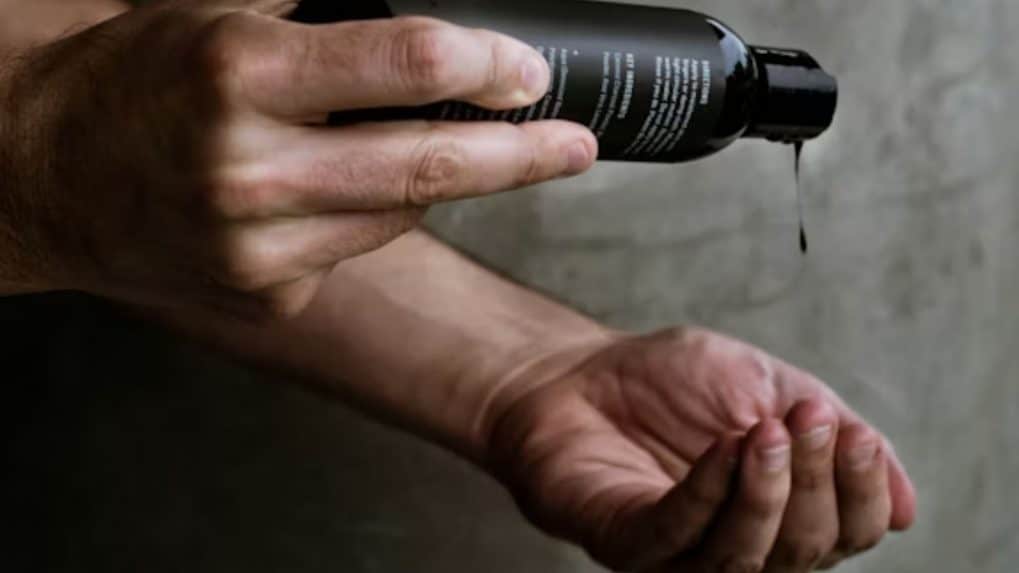
However, for years, in the men's grooming industry in India, a distinct playbook has prevailed: dark packaging, shrinking the product, and marketing it as rugged. That logic now appears to be collapsing.
The messaging has shifted from masculinity to mechanics: ingredients, outcomes, timelines. Functions beating flex.
"Brands are speaking in a language men recognise now," said Divesh Mehta, SVP at Infectious. "Visible results, everyday relevance, clear benefits are scaling".
Henceforth, the big FMCG players are also bullish on this booming market. Over the past decade, India's big consumer goods firms have spent roughly Rs 1,380 crore acquiring men-focused grooming brands, according to Storyboard18 analysis. What started as a minority bet, like Colgate-Palmolive's early investment in Bombay Shaving Company, has turned into outright buyouts by Marico, Emami, Godrej Consumer Products and Honasa Consumer.
Face washes, serums, anti-ageing creams, and specialized cleansers are no longer fringe purchases. Globally, the male grooming market is projected to hit $115 billion by 2028, as per Statista.
Scroll through Instagram or YouTube Shorts, and men using skincare, discussing wellness routines, or wearing jewellery barely register as content anymore. It's a routine.
That's where brands stumble sometimes, said experts. They said that campaigns that rely on exaggerated masculinity or outdated stereotypes risk alienating the very consumers they seek to attract.
"A lot of men's launches are basically cosplay," Chopra says. "Dark packaging and stronger fragrances are not innovation".
Instead, experts argue that long-term success will come from normalization. Chopra, citing GCPL, said the company has pointed to a structural shift from basic soaps to specialized cleansing products, focusing on clearer product claims, ingredient transparency and expert endorsement rather than overtly gendered messaging.
"If your strategy still needs a separate 'men's counter', you are already behind," Mehta said.
However, Santosh Sreedhar, partner at Avalon Consulting, has anticipated that a downward curve in this category is imminent. He said it's a familiar cycle: early excitement, oversupply and correction. "When a segment shows promise, activity spikes, " he added, "Then the reality sets in".
Even so, the floor has moved. Spending may settle, launches may thin out, but the male consumer is no longer treated as an anomaly.
Shah Rukh Khan will not have to explain anymore why he is wearing jewellery. In a consumer market shaped increasingly by platforms, algorithms and habit loops, the quiet normalization will be the most disruptive signal of all.
From purpose-driven work and narrative-rich brand films to AI-enabled ideas and creator-led collaborations, the awards reflect the full spectrum of modern creativity.
Read MorePraveen Someshwar, Managing Director and CEO of Diageo India, joins the Grand Jury of the Storyboard18 Awards for Creativity, highlighting the awards’ focus on work that blends cultural relevance with strategic and commercial impact.