How it Works
WPP, Havas, Omnicom: Are advertising’s biggest holdcos recasting agencies as AI Operating Systems?
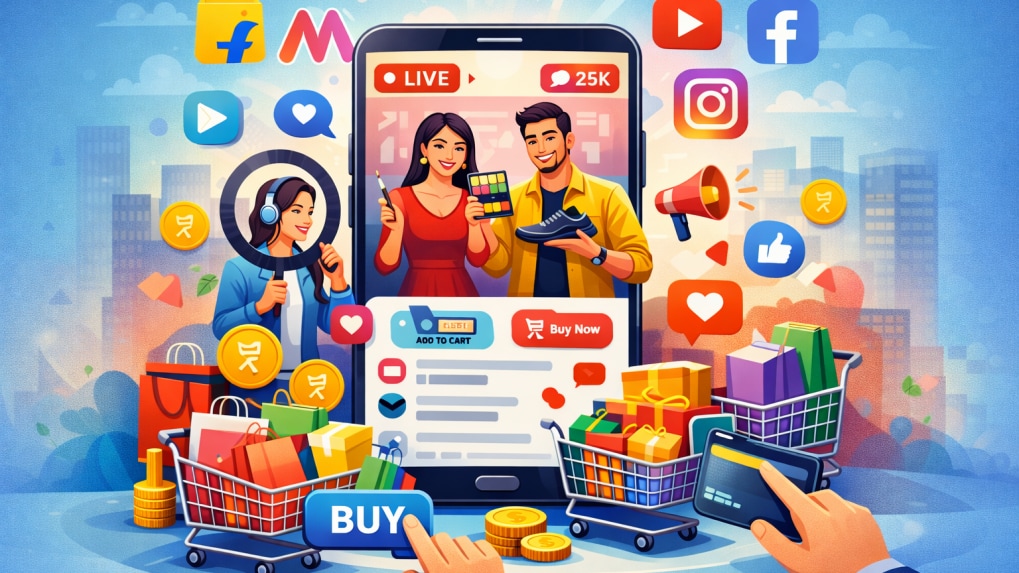
Despite India’s exploding creator economy and rising consumer appetite for video-led discovery, live commerce has failed to emerge as a mass-market retail channel. Years of platform experimentation, influencer-led broadcasts and brand pilots have delivered engagement but not scale, as weak unit economics, fragmented infrastructure and cautious consumer buying behaviour continue to limit conversions — keeping live selling on the fringes of India’s e-commerce ecosystem even as influencers thrive elsewhere online.
Despite years of hype and heavy platform experimentation, live commerce remains a niche format in India, unable to replicate the explosive success seen in markets such as China.
India’s rapidly expanding creator economy is projected to influence over one trillion dollars in annual consumer spending by 2030, reflecting a fundamental shift in how purchase decisions are made across the country, according to a report by Boston Consulting Group.
The report estimates that India currently has around 2 to 2.5 million monetised digital creators who influence more than 30 per cent of consumer purchase decisions. At present, creator-led influence already shapes an estimated 350 to 400 billion dollars in annual consumer spending, a figure expected to grow sharply over the next five years.
Over the past few years, leading Indian e-commerce players have actively experimented with live formats. Flipkart has integrated live commerce within its main app through initiatives such as Flipkart Live and Vibes, hosting influencer-led shopping sessions across categories including fashion, electronics, home and beauty.
Myntra runs M-Live and M-Studio, where creators and brands host live sessions, particularly during large sales events like the End of Reason Sale (EORS). Brands such as USPA, HRX, L’Oréal, SUGAR Cosmetics and Tanishq have all participated in live shopping formats, using demonstrations, audience Q&A and curated launches to boost engagement.
Despite these initiatives, live commerce has struggled to convert engagement into consistent, scalable revenue. Industry executives say the challenge is not consumer interest, but economics and execution.
“Infrastructure consistency remains the primary barrier,” said Mitchelle Jansen, senior vice-president at White Rivers Media. “Live commerce requires seamless streaming and real-time interaction, but varying internet quality creates conversion friction. Buffering or connectivity issues during sessions directly impact sales completion.”
Jansen added that consumer trust remains a work in progress. “Building confidence in live-sold products takes time. Unlike traditional e-commerce channels with mature buyer protection and return expectations, live commerce is still earning credibility as a legitimate purchase format.”
Unlike China, where platforms such as Taobao Live and Douyin fused entertainment, discovery and transaction into a single frictionless interface, India’s ecosystem remains fragmented. In China, influencers play a central role, seamlessly converting entertainment into instant purchases at massive scale. Indian platforms are still assembling these components, often treating live commerce as an add-on rather than a core shopping behaviour.
“India’s live commerce journey has friction. The simplest answer is that the unit economics in India are tough,” said Danny Advani, head of business strategy at Dot Media. “If you’re not looking at large volumes, then it’s a failed medium. Without concurrent viewership and consistent purchases at scale, you’re looking at severe cash burn — high production costs, creator fees, logistics and tech expenses pile up quickly.”
Advani noted that Indian consumers tend to reserve impulse buying for low-ticket items. “We do make impulse purchases, but they’re like in-store behaviour — a candy, a biscuit, maybe a mini perfume or a t-shirt. Once the price point rises, consumers prefer to compare and research before buying.”
In 2024, India’s live commerce market generated revenues of about $4.82 billion and is projected to grow at a compound annual growth rate (CAGR) of 46.2% between 2025 and 2033, potentially crossing $140 billion by 2033, according to Grand View Research. Yet, India accounted for just 3.8% of global live commerce revenues last year — a stark contrast to China, where live selling has become a primary retail channel embedded deeply across platforms.
This mismatch between cost structures and average order values has derailed several well-funded live commerce ventures. Bulbul, a Sequoia-backed live commerce startup, raised around $16.5 million but shut down after failing to build sustainable economics due to low order values and high fulfilment costs. YouTube-owned Simsim also wound down after struggling to drive stickiness and conversions. Moj’s video commerce partnership with Flipkart was later scaled back amid losses, while ShareChat reduced focus on its live commerce vertical after two years.
Industry observers say these failures reflect a broader pattern. Collectively, Indian live commerce startups raised close to $90 million, yet most were unable to scale profitably or exited at modest valuations. The creator economy, while booming across short video and influencer marketing, has not translated automatically into live selling success.
That said, platforms continue to invest cautiously. Flipkart reports more than two million hours spent on video shopping, signalling strong engagement. Myntra and Nykaa continue to embed shoppable live experiences within their apps, while social platforms such as Instagram, Facebook and YouTube are positioning themselves as commerce corridors for brands and creators.
Experts believe live commerce in India may still find its footing — but as a complementary channel rather than a dominant one. Incremental gains in platform maturity, creator monetisation models, consumer trust and regulatory clarity will be critical before brands move live commerce from experimentation to scale.
For now, live commerce remains a promising concept constrained by India’s economic realities — growing steadily, but falling short of the transformative force it was once expected to be.
From purpose-driven work and narrative-rich brand films to AI-enabled ideas and creator-led collaborations, the awards reflect the full spectrum of modern creativity.
Read MoreThe Storyboard18 Awards for Creativity have unveiled a Grand Jury comprising some of India’s most influential leaders across advertising, business, policy and culture, positioning it among the country’s most prestigious creative award platforms.