How it Works
WPP, Havas, Omnicom: Are advertising’s biggest holdcos recasting agencies as AI Operating Systems?
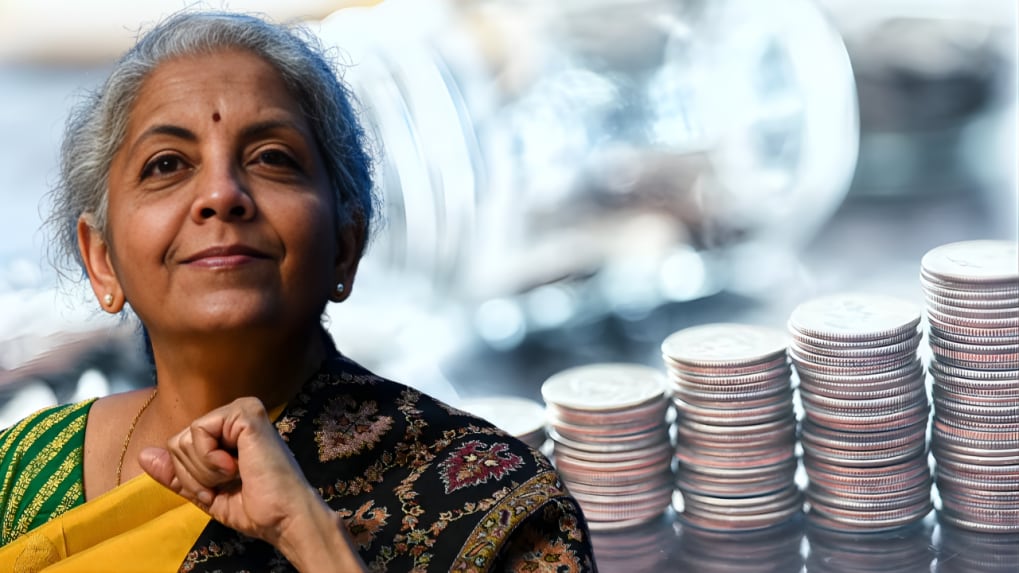
Union Finance Minister Nirmala Sitharaman’s Budget 2026 pitch for India’s creative industries marked a clear shift in how the government is thinking about the so-called “orange economy” — one driven not by manufacturing or services alone, but by ideas, culture and intellectual property.
Presenting the Budget, Sitharaman underscored the employment and growth potential of India’s Animation, Visual Effects, Gaming and Comics (AVGC) sector, projecting a demand for nearly two million professionals by 2030. A key proposal involved supporting the Indian Institute of Creative Technologies, Mumbai, to set up AVGC Content Creator Labs across 15,000 secondary schools and 500 colleges, a move aimed at building a future-ready creative workforce and expanding access beyond India’s metros.
The Economic Survey 2025–26 reinforced this view, identifying creativity-led sectors — culture, media, entertainment and intellectual property as potential drivers of jobs, urban services and tourism. Termed the “orange economy”, these activities derive value primarily from artistic expression and cultural capital, with spillover effects across live events, digital content, gaming and the broader creator ecosystem.
But as industry voices point out, infrastructure and skilling alone will not determine whether India becomes a global creator powerhouse or remains a large-scale execution hub for global platforms.
Skilling at scale, ownership at risk
For Shudeep Majumdar, Chief Executive Officer (CEO) & Co-Founder, Zefmo, Budget 2026 marks an inflection point — but also a fork in the road. The nationwide rollout of AVGC and content creator labs, he argues, could democratise access to world-class tools and training, especially in Tier-2 and Tier-3 cities, opening the creative economy to millions of young Indians who were previously excluded. The infrastructure push, in that sense, is overdue.
The unresolved question is what this talent ultimately builds. Without pathways to intellectual property creation, the risk is that India produces skilled creators who service global demand rather than own the ideas they generate. Unlocking the orange economy, Majumdar notes, requires policy support that goes beyond skilling including dedicated funds or co-investment vehicles that back Indian stories, games, formats and characters over multi-year development cycles, stronger IP monetisation frameworks, and clearer commercialisation pathways.
This is where creator-first agencies, influencer marketing firms, platforms and brands can play a catalytic role. By building creator-to-IP pipelines, facilitating brand-backed IP ventures, connecting talent with capital, and up-skilling creators in rights management and licensing, industry players can help creators move from content production to asset creation.
The infrastructure is being built, Majumdar says. Whether this generation builds “universes or just resumes” will depend on how the ecosystem responds.
Scale without ownership is not nation-building
Sohail Qadri Khan, Vice President - Client Success, Kofluence frames the challenge more starkly. India already contributes an estimated 16% of the global gig economy, much of it in creative services. The AVGC push signals intent to move up the value chain but scale without ownership, he argues, is not nation-building; it is subcontracting.
From his vantage point in the creator economy, the most valuable creators are not those with the best editing skills, but those who understand audience equity and platform leverage. India’s content already travels globally with cultural authenticity. What’s missing is a shift from being a “creator factory” to becoming a “creator headquarters”, where IP is conceived, owned and monetised from India.
The AVGC labs themselves present both opportunity and risk. If they focus only on tools and technical execution, they could flood the market with interchangeable talent, pushing wages down. True democratisation, Khan argues, requires producing creator-entrepreneurs and IP thinkers — not just employable operators.
For sustainable outcomes, he points to three gaps that must be addressed simultaneously: alignment between supply and demand so trained talent finds real markets; quality standards that prioritise IP ownership and pricing power; and career frameworks that lead to creative leadership, not perpetual entry-level execution. Without this, India risks scaling talent without scaling livelihoods.
The IP problem at the heart of the creator economy
Across industry voices, one concern surfaces repeatedly: platform dependence. India’s creator economy is rich in distribution but poor in ownership. Most creators operate on rented platforms, dependent on algorithms, brand cycles and revenue models they do not control. Growth under these conditions, Khan warns, will eventually plateau — not because of a lack of talent, but because value leaks out of the ecosystem. Scaling the orange economy sustainably requires portable IP that monetises across formats, stronger copyright and licensing protections, and creator-led brands that build equity rather than just output. Platforms will remain critical for reach, but ownership is what creates optionality.
For Aryan Anurag, Co-founder, Binge Labs, the success of AVGC labs will depend less on infrastructure and more on intent. Access to cameras, software and studios is no longer the primary bottleneck. What’s missing is direction. If labs focus only on how to make content, the outcome will be a large pool of partially skilled workers competing for the same entry-level roles. If, however, these labs are anchored by experienced creators, storytellers and digital entrepreneurs, they can open real career pathways.
The goal, Anurag argues, should not be to churn out more influencers, but to produce digitally fluent thinkers with transferable skills such as storytelling, communication and creative problem-solving. Without structured guidance and realistic expectations, labs risk becoming distractions rather than launchpads.
On monetisation, he is unequivocal: platforms offer speed, but IP offers longevity. The next phase of India’s orange economy will hinge on creators owning characters, formats, music and narratives that compound in value beyond platform cycles.
Why patient capital matters
Beyond skilling, infrastructure and even IP protection, several voices point to a deeper policy gap: capital that understands creative risk. Creative businesses do not scale like software startups. They operate on longer gestation cycles, irregular revenue patterns and cultural rhythms that do not fit quarterly reporting frameworks. Yet financial institutions continue to evaluate them using conventional metrics, leaving creators starved of growth capital.
Both Khan and Anurag argue that patient capital — through dedicated creative economy funds, revised lending criteria or co-investment structures — is the lever that activates all others. Without it, creators are pushed toward short-term brand integrations instead of long-term asset building.
Anirudh Sridharan, Co-Founder and Head of Product at HashFame, distils this further. For him, IP protection and monetisation are the base layer that turns creativity into an asset class. Distribution risk, revenue volatility and weak ownership structures keep creators optimising for short-term platform rewards rather than building long arcs.
Rohit Aggarwal, Co-founder and CEO, Alpha Zegus echoes this view, arguing that India must link tax relief, export credits and patient capital directly to IP ownership and global monetisation, not just services output. Without that shift, India will continue exporting talent while importing value.
From policy intent to creative power
Budget 2026 has clearly signalled intent. The challenge now is execution and alignment. If AVGC labs become production pipelines without ownership, India will scale labour, not power. If they evolve into creative venture studios that combine craft with IP thinking, capital access and platform negotiation, the orange economy could become one of India’s most durable growth engines.
The infrastructure is arriving. Whether India builds a generation of creators or a generation of creators who own will determine how brightly the orange economy truly shines.
From purpose-driven work and narrative-rich brand films to AI-enabled ideas and creator-led collaborations, the awards reflect the full spectrum of modern creativity.
Read MoreThe Storyboard18 Awards for Creativity have unveiled a Grand Jury comprising some of India’s most influential leaders across advertising, business, policy and culture, positioning it among the country’s most prestigious creative award platforms.