Advertising
From Pink Slips to Silent Sidelining: Inside adland’s layoff and anxiety crisis
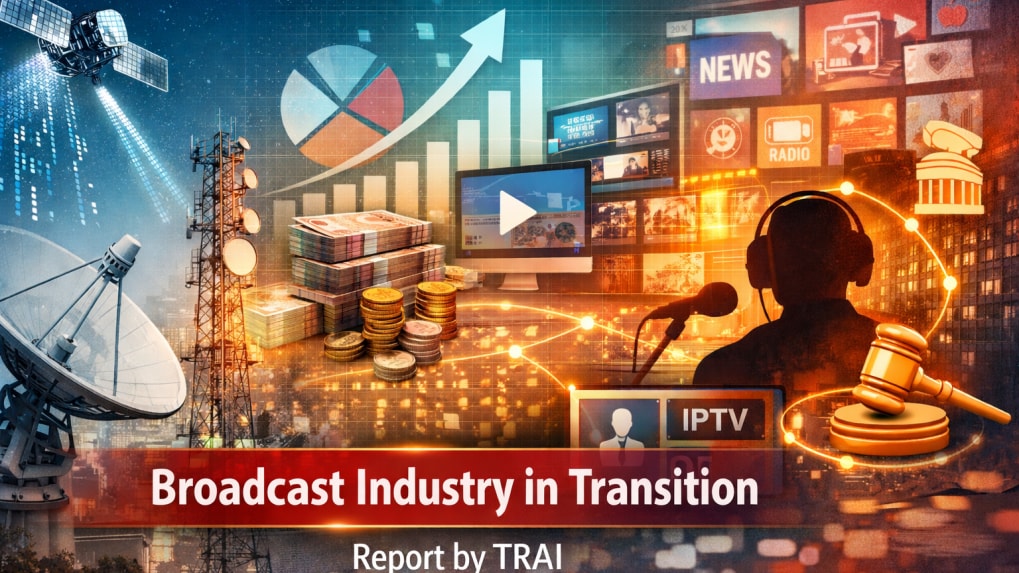
The broadcasting sector is entering a phase of structural transition, with regulatory, technological and market-led shifts reshaping its operating landscape, the Telecom Regulatory Authority of India (TRAI) said in its Annual Report 2024–25.
Flagging challenges ranging from platform fragmentation and revenue pressures to the need for updated licensing and authorisation frameworks, the regulator underscored the urgency of a policy reset to align broadcasting regulation with converging telecom and digital delivery networks, even as the sector remains one of the largest in scale globally.
India’s broadcasting sector went through a year of structural recalibration in FY25, marked by regulatory churn, platform fragmentation and steady but uneven revenue growth, as policymakers moved to align legacy broadcast frameworks with the converging realities of digital delivery and telecom-led distribution.
According to the Telecom Regulatory Authority of India (TRAI) Annual Report 2024–25, the broadcasting and cable television ecosystem continued to remain one of the largest in the world by scale, even as it grappled with subscriber migration, revenue pressure and technology-led disruption.
Size and economic contribution
Industry estimates cited by TRAI show that the Indian media and entertainment (M&E) sector reached ₹2.5 trillion in 2024, registering a year-on-year growth of 3.3%, and contributing 0.73% to India’s GDP. The sector is projected to grow 7.2% in 2025, reaching ₹2.7 trillion, driven by content demand and digital distribution.
Within this, the television industry generated revenues of ₹67,900 crore in 2024, of which ₹38,500 crore came from subscription revenues and ₹29,400 crore from advertising, highlighting the continued importance of linear TV advertising even as digital platforms gain ground.
Platform landscape: cable, DTH, IPTV
India’s television distribution ecosystem remains highly fragmented. As of March 31, 2025, industry data referenced by TRAI indicates:
Around 60 million cable TV households
56.92 million active pay DTH subscribers across four private operators
Approximately 2 million HITS subscribers
Around 0.7 million IPTV subscribers, reported by nine IPTV operators
The cable TV sector continues to operate through a large last-mile network, with 845 Multi System Operators (MSOs), over 81,700 registered local cable operators, and a fully digital addressable architecture that remains under regulatory audit scrutiny.
Broadcasters and channel universe
As per data compiled from the Ministry of Information and Broadcasting (MIB), India had around 329 broadcasters operating nearly 918 private satellite television channels as of March 31, 2025. This included 232 standard-definition pay channels and 101 high-definition pay channels, offered by 35 broadcasters reporting to TRAI.
In addition, Doordarshan, operated by public broadcaster Prasar Bharati, continues to play a central role through DD Free Dish, India’s only free-to-air DTH platform. Industry estimates place DD Free Dish households at about 49 million, largely concentrated in rural, remote and low-income regions, where it serves as a vehicle for information, education and public messaging.
Radio broadcasting: steady but constrained
The radio segment remained stable but constrained by advertising cycles. As of March 31, 2025:
388 private FM radio stations were operational
591 radio channels were run by All India Radio
531 community radio stations were operational out of 639 permissions granted
Private FM operators reported advertisement revenues of ₹1,818.71 crore in FY25, underlining radio’s continued relevance in local advertising markets, despite competition from digital audio platforms.
Regulatory focus: policy reset under Telecom Act, 2023
FY25 saw intense regulatory activity as TRAI initiated consultations to realign broadcasting regulation under the Telecommunications Act, 2023. During the year, TRAI released multiple consultation papers, including on:
Inputs for the National Broadcasting Policy 2024
Regulatory framework for ground-based broadcasters
Digital radio broadcasting policy
Framework for service authorisations for broadcasting services
Reserve prices for FM radio auctions
Audit provisions under the Interconnection Regulations, 2017
TRAI also submitted key recommendations to the government, including proposals on upgrading DD Free Dish to an addressable system, improving Electronic Programme Guide (EPG) listing norms, and restructuring broadcast authorisations to replace legacy licensing models
During FY25, TRAI submitted multiple recommendations to the government covering broadcasting policy, service authorisation, digital radio and platform regulation; however, the Annual Report does not record acceptance or implementation of these recommendations during the year.
Compliance and audits
Regulatory oversight remained a key focus area. During FY25, 518 audits of Digital Addressable Systems were conducted by 44 empanelled auditors in association with Broadcast Engineering Consultants India Limited (BECIL), reflecting continued concerns around transparency, subscriber reporting and revenue assurance in the distribution value chain.
TRAI’s assessment underscores that while India’s broadcasting sector retains scale and reach unmatched by most global peers, it is entering a phase of transition. Linear television continues to command mass audiences, particularly in rural markets, even as digital distribution, IPTV and convergence with telecom networks reshape consumption patterns.
Policy clarity under the new legislative framework, alongside reforms in pricing, audits and platform neutrality, is expected to determine how the sector balances legacy economics with future-ready delivery models in the years ahead.
From purpose-driven work and narrative-rich brand films to AI-enabled ideas and creator-led collaborations, the awards reflect the full spectrum of modern creativity.
Read MoreLooking ahead to the close of 2025 and into 2026, Sorrell sees technology platforms as the clear winners. He described them as “nation states in their own right”, with market capitalisations that exceed the GDPs of many countries.