Digital
Why OpenAI is hiring 100 ex-bankers: Inside the ChatGPT-maker's secret project to automate Wall Street's grunt work
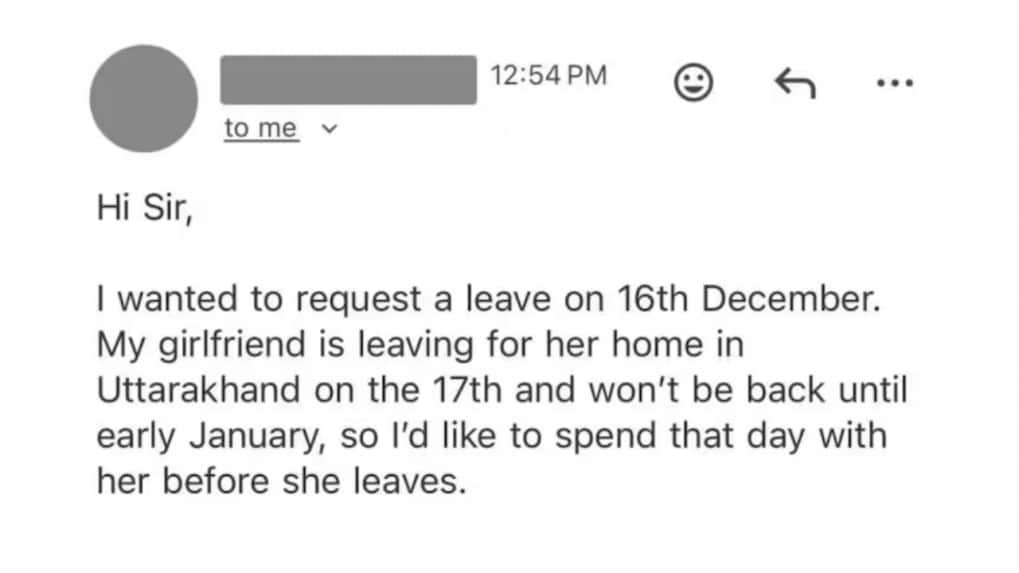
A LinkedIn post by a manager has sparked a broader discussion on evolving workplace expectations around leave and transparency after it gained traction on the professional networking platform.
The post shared a screenshot of an email sent by an employee seeking leave for a personal reason. In the email, the employee requested a day off on December 16, informing his manager that his girlfriend was scheduled to leave for her hometown in Uttarakhand on December 17 and would not return until early January, and that he wished to spend time with her before her departure.
Alongside the screenshot, the manager reflected on how such situations were often handled in the past, stating that a decade ago similar circumstances would likely have resulted in a last-minute sick leave message sent on the morning of the absence, whereas the current request was transparent and shared well in advance. The manager added that this approach was preferable and approved the leave, noting that attitudes at work were changing.
The post received significant engagement from LinkedIn users, many of whom supported the employee’s openness and the manager’s response. Several users questioned the expectation that employees should disclose personal reasons for taking time off, stating that personal leave should not require detailed justification and that a simple request ought to suffice in a healthy work culture. Others echoed the view that trust and flexibility were key indicators of positive workplace norms and that transparency should be encouraged without making private matters a subject of scrutiny.
From purpose-driven work and narrative-rich brand films to AI-enabled ideas and creator-led collaborations, the awards reflect the full spectrum of modern creativity.
Read MoreIn a wide-ranging interview with Storyboard18, Sorrell delivers his frankest assessment yet of how the deal will redefine creativity, media, and talent across markets.