Advertising
From Pink Slips to Silent Sidelining: Inside adland’s layoff and anxiety crisis
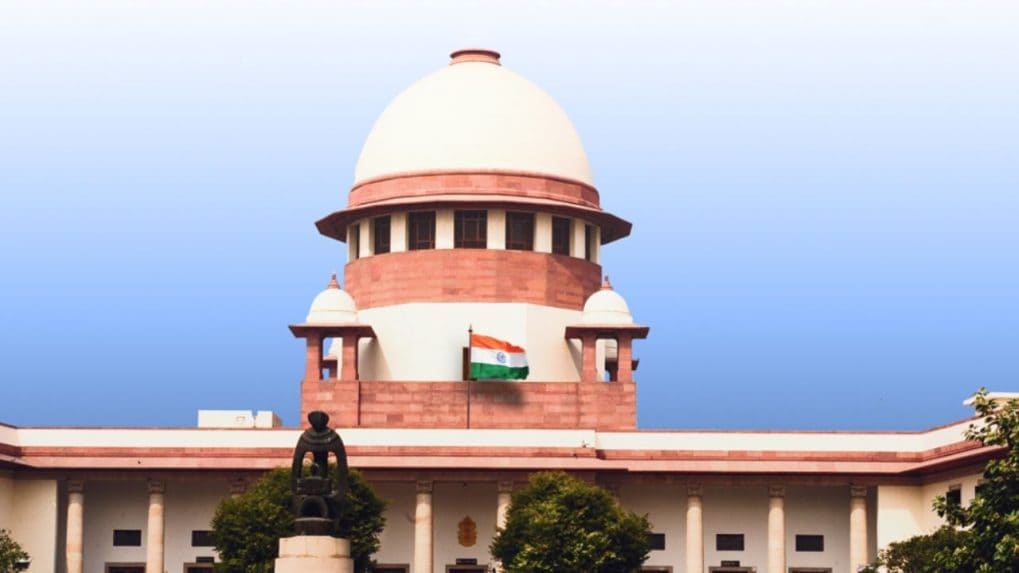
The Supreme Court on Monday set aside an Allahabad High Court order that had reinstated a Uttar Pradesh government employee despite his failure to disclose pending criminal cases at the time of recruitment, reiterating that sympathy cannot override the rule of law, according to a Moneycontrol report.
A Bench comprising Justices Sanjay Karol and NK Singh held that disclosure of criminal antecedents is not a mere procedural requirement but a foundational condition for entry into public service, rooted in principles of fairness, integrity and public trust. While overturning the High Court’s ruling, the court relied on the legal maxim dura lex, sed lex, indicating that even if the law appears harsh, it must be applied as written.
The Bench acknowledged the personal hardship faced by the employee, who now stands to lose his government position, but clarified that compassion cannot supplant legal principles. It observed that losing a government job is a significant personal blow but added that individuals must remain conscious of the consequences of their actions.
The court pointed out that government recruitment processes often attract hundreds or even thousands of applicants who are assessed under identical conditions. In such circumstances, it said, rigorous scrutiny of every candidate is essential to ensure fairness and to preserve the integrity of the selection process. Withholding information about criminal antecedents, the court noted, undermines this process by denying the appointing authority the opportunity to make a fully informed assessment of a candidate’s suitability.
Clarifying the legal position, the Bench stated that non-disclosure of criminal cases may not always be fatal to a candidature and must be assessed in light of the nature of the offence and surrounding circumstances. However, it emphasised that such non-disclosure remains a serious lapse, with its gravity increasing substantially when the omission is repeated, as repeated non-disclosure reflects deliberate concealment rather than an inadvertent error.
The court further observed that such conduct strikes at the core of the trust placed in candidates seeking public office, where honesty and transparency are indispensable, and therefore warrants a stricter approach by authorities.
The case related to the appointment of a Sahayak Samiksha Adhikari in Uttar Pradesh, whose services were terminated after it emerged that two criminal cases were pending against him, neither of which had been disclosed in his application form. Earlier, both a single judge and a division bench of the Allahabad High Court had quashed the termination, characterising the non-disclosure as trivial.
The Uttar Pradesh government challenged those rulings before the Supreme Court, which has now upheld the termination and reaffirmed that full and accurate disclosure is a non-negotiable requirement for government employment.
From purpose-driven work and narrative-rich brand films to AI-enabled ideas and creator-led collaborations, the awards reflect the full spectrum of modern creativity.
Read MoreLooking ahead to the close of 2025 and into 2026, Sorrell sees technology platforms as the clear winners. He described them as “nation states in their own right”, with market capitalisations that exceed the GDPs of many countries.