How it Works
WPP, Havas, Omnicom: Are advertising’s biggest holdcos recasting agencies as AI Operating Systems?
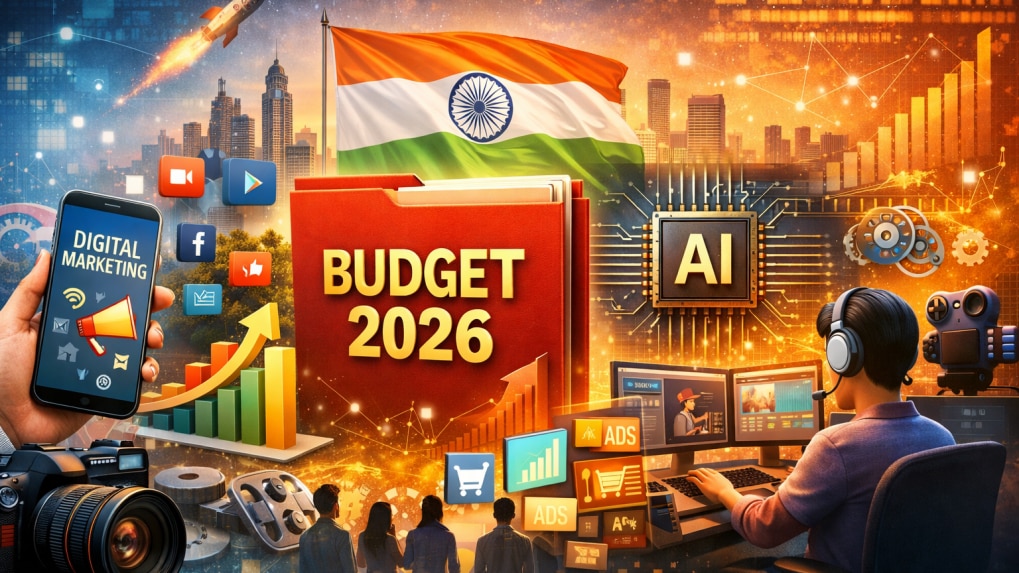
The Union Budget 2026 has struck a largely positive chord with India’s advertising, marketing and media industry, with industry leaders pointing to improved business confidence, sustained digital infrastructure spending and a sharper focus on MSME enablement as key growth triggers for advertising spends in the coming year.
While the Budget stopped short of direct fiscal incentives for the media and advertising sector, its broader emphasis on economic expansion, liquidity flow and technology-led growth is expected to create favourable downstream effects for brand spending and media investments.
Business confidence to translate into higher ad spends
Industry executives say the Budget’s focus on growth and infrastructure sends an important signal to businesses, which typically translates into stronger marketing outlays.
“This year’s Budget feels encouraging from a business sentiment point of view. When the broader economy shows intent to invest in growth and infrastructure, it usually creates a ripple effect across industries — including marketing and media,” said Ritz Malik, Founder, Ritz Media World.
Malik noted that the ongoing shift towards digital advertising is only expected to accelerate. “We’re already seeing digital take a larger share of ad spends in India, and that shift will get stronger as brands look for more measurable and targeted ways to reach consumers. For agencies and marketers, the opportunity now is to move beyond just visibility and focus on communication that truly connects with people in a fast-changing environment,” he said.
MSME push seen as critical for broad-based advertising growth
A major takeaway for the advertising ecosystem is the Budget’s sustained emphasis on MSMEs, access to capital and improved liquidity — factors that directly influence marketing spends, especially from emerging and regional brands.
“This Budget delivers exactly what the advertising and marketing ecosystem needed at this stage: confidence, not noise,” said Yasin Hamidani, Director, Media Care Brand Solutions.
According to Hamidani, marketing investments are a downstream outcome of business stability. “When MSMEs move from survival mode to scale mode, they invest in branding, content and customer acquisition. Measures that improve access to capital, payment cycles and digital readiness create the conditions for wider participation in advertising — especially from regional, challenger and B2B brands that have traditionally been underrepresented in media spends,” he said.
He added that the sustained push on digital infrastructure will strengthen India’s AdTech and MarTech backbone, enabling brands to plan more precisely beyond metros. “Better connectivity allows advertisers to accelerate regional storytelling, commerce-led marketing and data-driven targeting across Tier II, Tier III and rural markets, rather than relying on metro-centric mass planning.”
Digital infrastructure and AI to reshape marketing strategies
The Budget’s emphasis on digital infrastructure, AI and emerging technologies is expected to further accelerate the shift toward data-driven, performance-oriented marketing models.
Industry leaders believe that improved connectivity and platform readiness will encourage brands to invest in full-funnel strategies rather than short-term visibility metrics.
“The Budget signals a move away from chasing episodic spikes toward long-term capability building,” Hamidani said. “This encourages brands and agencies to invest in owned platforms, content IP, creator ecosystems and strategies that compound value over time.”
Creative economy and talent pipeline get policy backing
Another key positive for the media and marketing ecosystem is the government’s push toward building a future-ready talent pipeline, particularly for the AVGC (animation, visual effects, gaming and comics) sector.
Shrenik Gandhi, Co-founder and CEO, White Rivers Media said, "Budget 2026 opens with a clear belief in India’s orange economy - creativity, content, culture, and creators as real economic engines. By backing AVGC, sports, and creative education, it recognises the creator economy as an increasingly serious source of jobs and global influence. This marks a shift from viewing creativity as soft power to treating it as economic power. The larger message is that India’s growth will now be built on talent, not just infrastructure. Yuva Shakti is positioned as both a demographic advantage and an entrepreneurial force."
Anand Bhadkamkar, Group CFO, LS Digital, said the Budget reinforces the government’s commitment to inclusive, innovation-led growth. “The emphasis on AI and emerging technologies as force multipliers reflects a clear focus on enhancing competitiveness while expanding access to opportunity. Sustained investment in research, skilling and digital infrastructure provides a strong foundation for long-term value creation,” he said.
Bhadkamkar pointed to initiatives such as Bharat-VISTAAR and the proposal to establish AVGC Content Creator Labs across 15,000 schools and 500 colleges as particularly significant for the industry.
“These initiatives signal a forward-looking approach to talent development and are well aligned with the AVGC sector’s projected requirement of nearly two million professionals by 2030. For services-led and digital-first enterprises, this Budget offers clarity and confidence, strengthening India’s ability to scale innovation and compete globally,” he said.
Outlook: Measured optimism for FY27
Taken together, Budget 2026 lays a supportive foundation for the advertising, marketing and media industry, even if direct fiscal interventions were limited. With consumption expected to improve, MSMEs gaining confidence to scale, and digital and creative ecosystems receiving policy backing, industry leaders expect advertising spends to remain on a steady growth trajectory through FY27.
However, executives caution that sustained momentum will depend on execution, regulatory clarity around data and digital advertising, and the broader macroeconomic environment. For now, the industry appears cautiously optimistic — viewing Budget 2026 as a confidence booster that aligns well with India’s long-term shift toward a digital-first, creativity-driven economy.
From purpose-driven work and narrative-rich brand films to AI-enabled ideas and creator-led collaborations, the awards reflect the full spectrum of modern creativity.
Read MoreThe Storyboard18 Awards for Creativity have unveiled a Grand Jury comprising some of India’s most influential leaders across advertising, business, policy and culture, positioning it among the country’s most prestigious creative award platforms.