Advertising
From Pink Slips to Silent Sidelining: Inside adland’s layoff and anxiety crisis
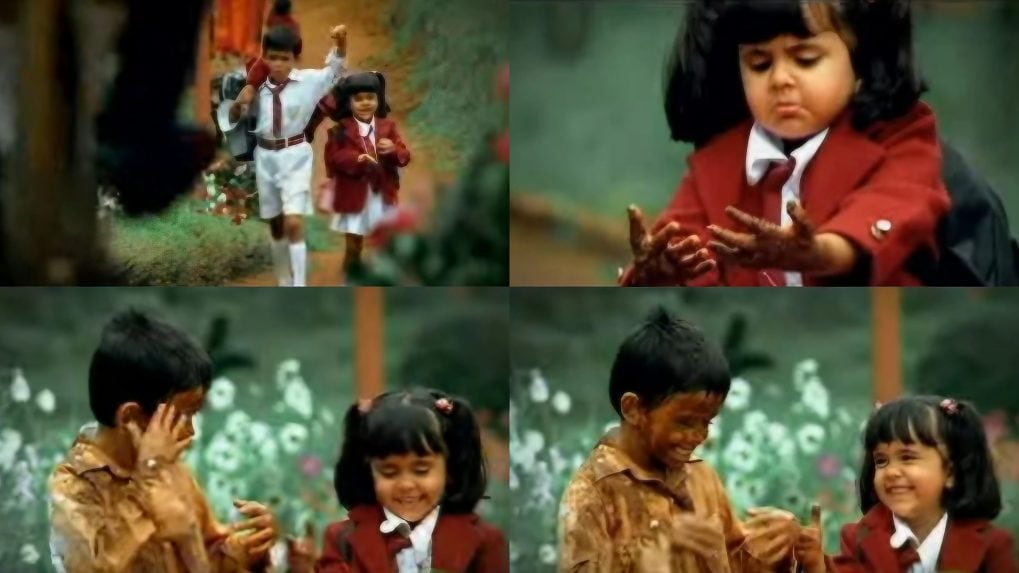
Two school-going siblings walk home, the younger sister lost in her poetry. She trips, falls into a puddle and soils her hands. Before she can cry, her brother springs into action—not against the fall, but against the puddle itself. He slaps the water repeatedly, splashing mud all over his clothes, until the “offending” puddle appears to apologise. The sister smiles again.
Released in 2005, Surf Excel’s Puddle War film didn’t just introduce a new campaign—it quietly rewired how detergent advertising worked in India.
At a time when detergent commercials were dominated by foam shots, whiteness demonstrations and laboratory-style claims, 'Daag Acche Hain' did something radical: it didn’t show washing at all.
“It was possibly the first detergent commercial on Indian television that didn’t show washing clothes, product shots, or demonstrations,” recalls Priti Nair, former creative head at Lowe Lintas. “Until then, detergent ads were all about cleaning action. This one took a higher ground—it simply said, dirt is good.”
The response, she says, was phenomenal.
From ‘Dirt Is Good’ to ‘Daag Acche Hain’
The campaign originated from Unilever’s global brand idea, Dirt Is Good, launched around 2003. Surf Excel, a global brand sold under different names—Persil in parts of Europe and Australia, Omo in markets like Brazil and South Africa—was looking to adapt the thought for India.
But the Western framing didn’t quite land.
“When the idea was first introduced globally, it focused on children going outdoors and engaging physically with the world,” says Arun Iyer, then a copywriter at Lowe Lintas. “That didn’t fully resonate with Indian parents.”
The breakthrough came in 2005, when Unilever’s laundry and home care business was led by Gopal Vittal (now Chairman of Airtel), with Sudhir Sitapati (now MD & CEO, GCPL) as the brand manager.
“Gopal proposed attaching values to stains,” Iyer explains. “That’s what Indian parents care about—values, not mess. That single shift led directly to Daag Acche Hain.”
Choosing the right lens
Director Abhinay Deo remembers being briefed by Nair and Iyer—friends and collaborators under R. Balki at Lintas—with a radical proposition.
“They said, ‘We’re calling stains good.’ That was the entry point,” Deo recalls.
While the client initially wanted an urban setting, Deo pushed back. City puddles, he argued, signal pollution and illness—not play.
“The idea wasn’t about the city,” he says. “It was about reimagining stains. A green, scenic place like Ooty completely changes how mud is perceived.”
After much debate, the team agreed. The decision proved critical.
An insight rooted in everyday life
At the heart of the film was a simple behavioural insight: when a child gets hurt by an inanimate object, adults instinctively scold that object to comfort the child.
“That’s something we all do,” says Nair. “We hit the floor, the table, the wall—anything that caused the pain. That behaviour became the emotional core of the film.”
Iyer, who wrote the script, transferred that instinct to the puddle, framing the story around a fiercely protective brother.
To hedge against misinterpretation, the team even shot an additional scene of a mother approving the child’s actions from a window. It never made it to the final edit.
“We weren’t sure if audiences would immediately get it,” Iyer admits. “But consumers later told us only a brand confident about stain removal could encourage kids to get dirty.”
Casting, cold water and creative chaos
Finding the right child was another challenge.
“The client wanted a sweet, innocent-looking boy,” Deo says. “I wanted someone mischievous—someone who’d do something wild out of love.”
The chosen child had never acted before. Shooting in Ooty came with another hurdle: freezing water.
“The boy refused to step into the puddle,” Deo recalls. The solution? Hot water was poured in.
“After that, he didn’t want to come out,” he laughs. “It was warmer than the air.”
Heavy rain, impromptu breaks under tents, and a crew soaked in mud became part of the film’s folklore.
Serendipity everywhere
The film’s music was composed by Ram Sampath, a childhood friend of Iyer. On a rain-soaked day at Sampath’s Matunga studio, the designated voiceover artist couldn’t make it.
“With deadlines looming, we asked Ram’s wife, Sona Mohapatra, to step in,” says Iyer. “That’s how her voice became part of the film—completely unplanned.”
Why it endures
For Iyer, the film’s success lies in its emotional truth.
“Indian parents value seeing values reflected in their children,” he says. “That insight is universal—and it later travelled to other markets.”
Deo believes it was the restraint that made the film powerful. “We didn’t shout the message. We trusted the audience.”
Nearly two decades later, Daag Acche Hain remains a cultural reference point—proof that sometimes, the bravest advertising move is to stop selling and start believing.
From purpose-driven work and narrative-rich brand films to AI-enabled ideas and creator-led collaborations, the awards reflect the full spectrum of modern creativity.
Read MoreLooking ahead to the close of 2025 and into 2026, Sorrell sees technology platforms as the clear winners. He described them as “nation states in their own right”, with market capitalisations that exceed the GDPs of many countries.