Advertising
From Pink Slips to Silent Sidelining: Inside adland’s layoff and anxiety crisis
Legacy isn’t something you preserve. It’s something you move forward. In reflecting on Piyush Pandey’s influence, one idea cut through clearly: his legacy was never meant to be fossilised. It wasn’t a formula, a style, or a greatest-hits reel. It was motion. Curiosity. Courage.
And his simplest advice — “aage badho.” At a time when creativity risks being automated, optimised, or trapped in reverence for the past, that lesson feels more relevant than ever. Not to protect what was built — but to build what comes next with the same honesty and instinct.
Indian advertising is at a crossroads — and not just a creative one.
As creativity becomes increasingly measured, automated and procured, its place at the centre of the industry is no longer guaranteed. Platforms, performance dashboards and artificial intelligence now shape not only how ideas are made, but how they are judged. The deeper question this moment raises is unsettling: who really controls creativity today — and does it still have the power to shape culture, not just optimise outcomes?
Any serious conversation about Indian advertising inevitably returns to Piyush Pandey. His work did more than produce iconic campaigns; it defined the emotional grammar of Indian brand storytelling. In a faster, more data-led era, the challenge is no longer whether that legacy still matters, but how it can evolve without being diluted, commodified or frozen into reverence.
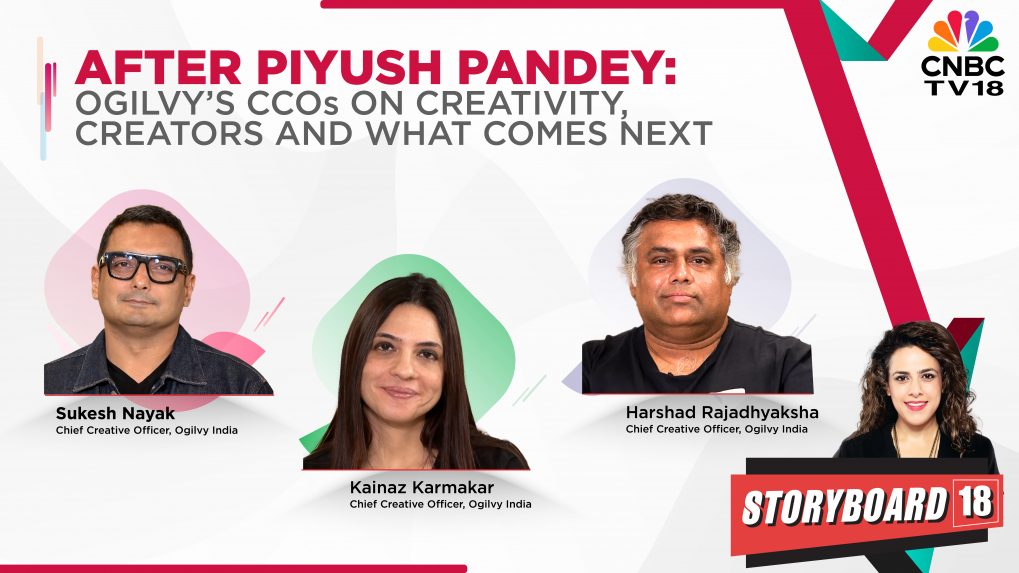
In this episode of Media Dialogues with Storyboard18, editor Delshad Irani brings together Sukesh Nayak, Kainaz Karmarkar and Harshad Rajadhyaksha — the Chief Creative Officers of Ogilvy India — for a candid conversation. It is their first joint discussion since Pandey’s passing, and it unfolds against an industry grappling with AI, authorship, risk aversion, shifting career paths and the erosion of creative authority.
The conversation moves beyond nostalgia. It interrogates whether creativity is still advertising’s most valuable currency or merely its most romantic idea; whether AI has flattened originality or exposed how formulaic much work had already become; and whether agencies today are building culture — or simply reacting to it in real time. It also confronts harder truths: the decline of the “famous ad,” the fear of backlash disguised as brand safety, and what young creatives must unlearn if they want to remain relevant in the next decade.
At its core, this is a discussion about stewardship — of a legacy, of an institution, and of an idea of creativity that once had the confidence to take risks and shape national conversation. Can Ogilvy honour what Piyush Pandey stood for without becoming trapped by it? And in a world of freelance talent, creator-led studios and platform-first fame, can it still offer something rare: a place to build not just a portfolio, but a long creative life?
Watch the full conversation to understand where Indian creativity stands today — and where it must go next.
From purpose-driven work and narrative-rich brand films to AI-enabled ideas and creator-led collaborations, the awards reflect the full spectrum of modern creativity.
Read MoreLooking ahead to the close of 2025 and into 2026, Sorrell sees technology platforms as the clear winners. He described them as “nation states in their own right”, with market capitalisations that exceed the GDPs of many countries.