Advertising
From Pink Slips to Silent Sidelining: Inside adland’s layoff and anxiety crisis
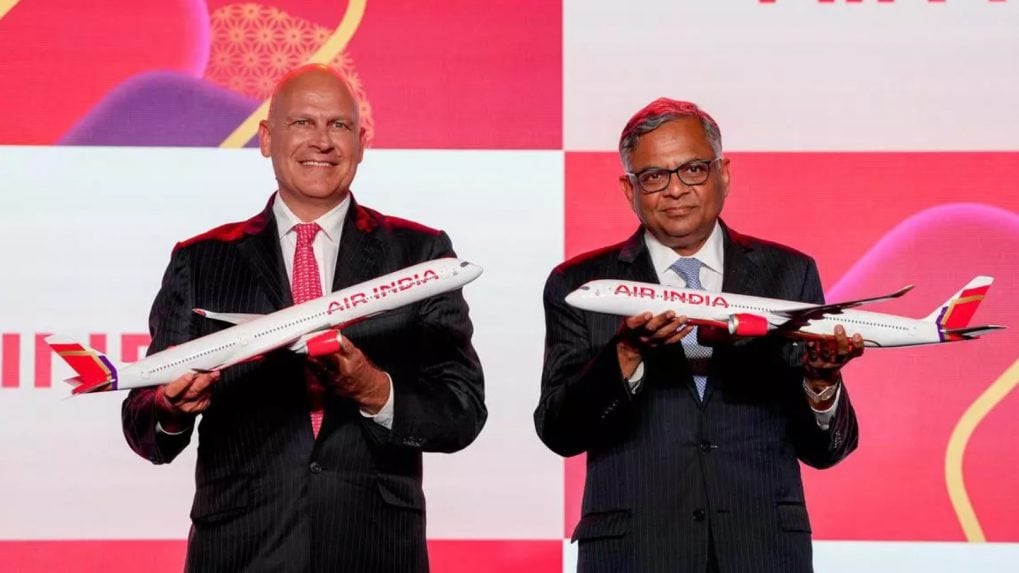
Tata Sons, the owner of Air India, has begun exploring a potential leadership transition at its aviation businesses, as the conglomerate assesses the pace of the airline’s transformation nearly three years after its return to Tata control.
N. Chandrasekaran, chairman of Tata Sons and Air India, has held preliminary discussions with senior executives from major international airlines, including carriers based in the United Kingdom and the United States, according to a report by The Economic Times. The conversations are understood to be part of early succession planning and could lead to a change in leadership at Air India before the end of the current chief executive’s term in 2027.
People familiar with the matter told the newspaper that Chandrasekaran has grown increasingly concerned about the speed of execution and visible improvements at the airline. While Campbell Wilson, Air India’s chief executive, is contracted through June 2027, the timing of any transition remains fluid. Similar evaluations are underway at Air India Express, where the tenure of Chief Executive Aloke Singh is also set to conclude in 2027, the report said.
Chandrasekaran has held regular performance reviews with Wilson in recent months, according to people briefed on the discussions. A person close to Wilson said he was participating in succession planning and had informed the board that he did not intend to continue beyond 2027, the ET report stated. The report also added that group officials disputed that account, saying no such board-level discussion had taken place and that any transition planning was being led directly by the group chairman.
Wilson, a New Zealander who took charge of Air India in July 2022, introduced a five-year turnaround strategy aimed at restoring the airline’s global standing while improving its financial performance. His tenure has produced mixed results. The merger of Vistara into Air India was executed with minimal disruption, and the airline expanded capacity on key domestic routes, at times overtaking market leader IndiGo in select metro markets.
But progress on the broader transformation has been slowed by global supply-chain disruptions. Delays in aircraft deliveries and the refurbishment of older planes have affected service quality and on-time performance, particularly on long-haul routes to Europe and North America. Persistent technical issues with wide-body aircraft have further strained operations.
The airline has also faced increased scrutiny following last year’s crash in Ahmedabad that killed 260 people. While a preliminary investigation did not identify faults in the aircraft or Air India’s engineering practices, senior government officials chose to engage directly with Tata Group leadership rather than Wilson in the aftermath, an episode that has weighed on his standing, according to the report.
From purpose-driven work and narrative-rich brand films to AI-enabled ideas and creator-led collaborations, the awards reflect the full spectrum of modern creativity.
Read MoreLooking ahead to the close of 2025 and into 2026, Sorrell sees technology platforms as the clear winners. He described them as “nation states in their own right”, with market capitalisations that exceed the GDPs of many countries.