Digital
Why OpenAI is hiring 100 ex-bankers: Inside the ChatGPT-maker's secret project to automate Wall Street's grunt work
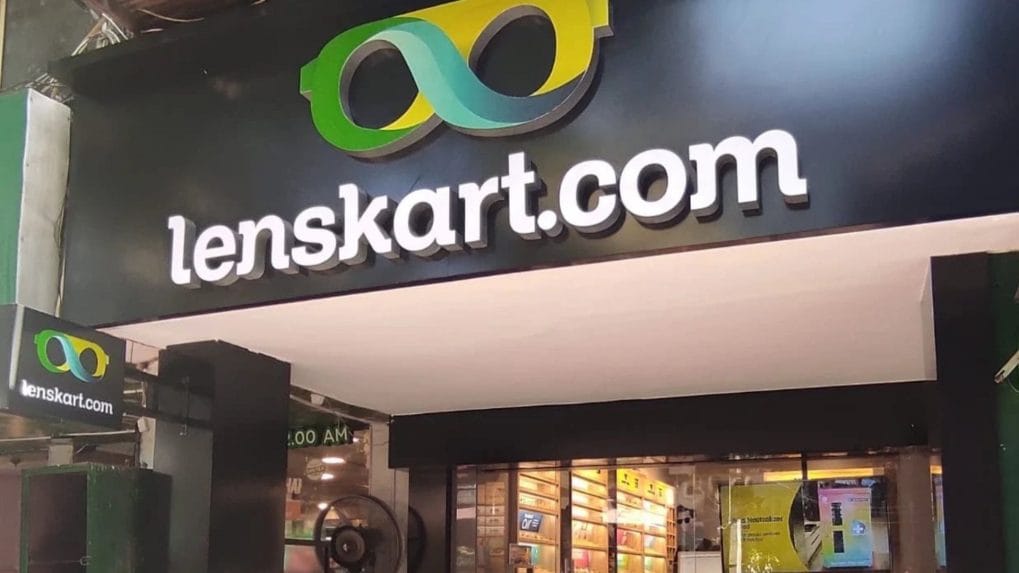
Lenskart, the fast-growing eyewear retailer, plans to increase its investment in artificial intelligence, supply chain upgrades, optometry, and its omnichannel retail network as it seeks to sustain momentum following a tepid stock market debut in November.
The company, based in Gurugram, stated that it has been enhancing the efficiency of its marketing engine while continuing to invest aggressively to expand its presence in India and abroad. Marketing costs fell 2.5% in the first half of fiscal 2026 compared to the same period a year earlier, driven by stronger engagement on its mobile app and deeper brand recognition. Over 45% of sales are digitally influenced, Lenskart added.
By leveraging its mobile app and brand strength, Lenskart maintains targeted and efficient marketing. Marketing expenses decreased from 9.7% of revenue in FY23 to 7.5% in H1 FY26.
The company had originally set aside Rs 320 crore for brand-building efforts in its draft red herring prospectus (DRHP).
Lenskart had increasing marketing expenses in the past. The company spent Rs 448 crore on marketing in fiscal 2025, up 27% year-on-year, and said it would continue investing in campaigns and international market awareness.
Lenskart's global push is accelerating. In H1 FY26, Lenskart added 22 net new stores across several markets, focusing on Japan and Southeast Asia. The company has set up design and marketing teams in each international region to align products and messaging with local tastes.
In Southeast Asia, for example, Lenskart tapped Thai fashion star Baifern Pimchanok as a brand ambassador.
The company is experimenting with faster delivery, too. In Singapore, customers can now order contact lenses for delivery within two hours--Lenskart's first quick commerce service in the region.
The eyewear market across Lenskart's international territories is valued at $19 billion this year and is projected to grow to nearly $24.7 billion by 2030, the company said.
Direct-to-consumer brands have been expanding rapidly: 7–10% CAGR in Japan, 10–14% in Southeast Asia, and 15–20% in the Middle East, where prescription eyewear often costs two to three times more than in India.
In its home market, Lenskart reported a 20% YoY rise in profit after tax to Rs 103.5 crore in Q2 FY26. Revenue reached Rs 2,096 crore, while EBITDA grew 44% to Rs 414 crore
Growth was fuelled by stronger volumes, with eyewear units sold rising 23.7% YoY in H1 FY26 and 21.7% in the second quarter.
The company is also widening its physical presence at a rapid clip. Lenskart opened 203 stores in H1 FY26 versus 86 in H1 FY25. Same Store Sales Growth (SSSG) grew about 15% in both the quarter and the half-year period, matching last year's performance. The company now operates in 431 cities, up from 399 in March, adding locations such as Gurdaspur, Shivpuri, and Jamnagar.
Lenskart aims to add more than 450 net new stores in India in FY26, up from 282 in FY25. It is also investing in new technologies, including smart glasses, adaptive lenses, and RFID-enabled stores.
Later this fiscal, Lenkart revealed it would be introducing its first smart glasses line, called "B", featuring an AI-powered camera, and a slate of technology-forward features, such as UPI payments, food logging and health insights, photo and video capture, object scanning, translations, and personalised recommendations.
In the sunglasses category, Lenskart said it is strengthening what it considers an "underpenetrated" segment by expanding Meller--a Spanish brand it owns--across India, the Middle East, and Asia. Meller generated Rs 2,720 million in revenue, with EBITDA of Rs 443 million, and margins of 16.3% in FY25.
From Delhi’s sharp-tongued lyricists to Chennai’s bilingual innovators and North-East India’s experimental beatmakers, Rap 91 LIVE’s lineup was a sonic map of the country’s cultural diversity.
Read MoreAs WPP reels from revenue declines and vows sweeping restructuring, Publicis and Havas ride strong AI-led client demand. With Omnicom and IPG on the cusp of a historic merger, the global advertising landscape braces for a power realignment built on data, technology, and efficiency.