How it Works
WPP, Havas, Omnicom: Are advertising’s biggest holdcos recasting agencies as AI Operating Systems?
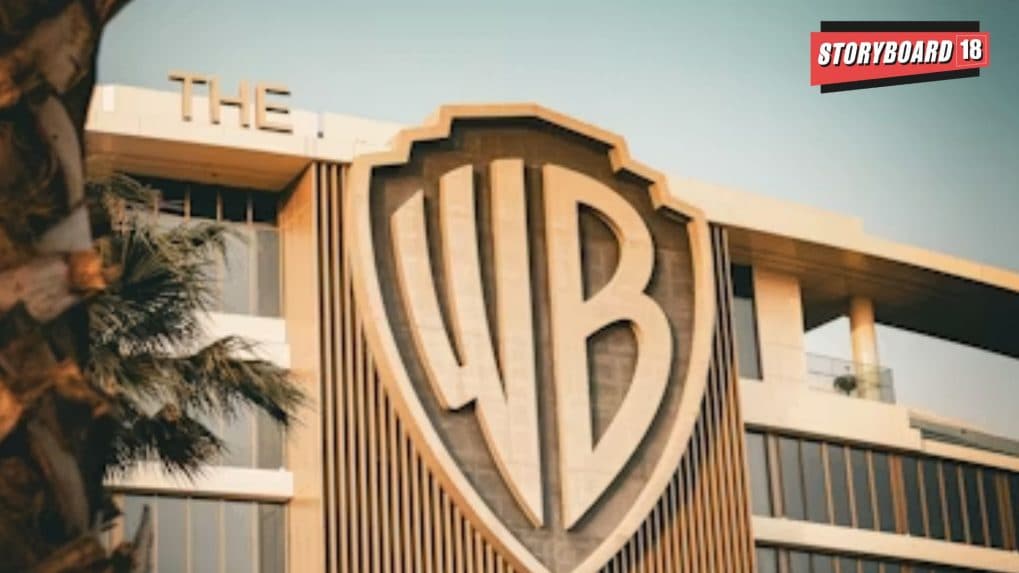
Two Models of Cultural Capitalism Are Now in Combat. Whoever owns Warner decides whether storytelling remains a ritual or becomes an infinite scroll.
Between 2000-04, I lived in Southern California and met many folks from the film industry. Hollywood was a geography. It had studios, lots, ancillaries,commissaries and a skyline punctuated by studio signage.
You could stand outside a building and know that the stories shaping global imagination were being written somewhere inside.
What is unfolding now is the possible erasure of that physical idea. The fight over Warner Bros is less about ownership and more about who gets to define the future of cultural production. One bidder is promising restoration the other a reinvention.
Two companies are circling the same prize. One is bidding for heritage; the other is bidding for inevitability.
The Paramount Thesis - Culture Still Needs a Grand Home
In Paramount’s worldview, Hollywood lost patience and hence relevance. The Ellison bid imagines Warner as an institution that still needs to breathe. This vision treats cinematic release not as a public ritual. It thinks nostalgia is not the main prize. They celebrate the old success model of audiences gathering around something that arrives on one day, in one place, for everyone.
This is not just sentimentality. It is an argument that stories should unfold in community. Theatres remain an inconvenient but collective venue. Streaming is not Theatrical.A slate of big-screen releases is more than merely commercial scheduling. Attention should be earned rather than pushed.
Read More: Paramount’s hostile bid for Warner Bros. draws an unusual mix of billionaires, banks and Gulf wealth
Paramount’s worldview says culture must still have stewards. A studio’s role is to keep alive the grammar of cinematic experience. I get that. Scale must not flatten taste.
The Netflix Reality - Culture Is Now a System
Netflix is bidding for something different and more radical. It is not acquiring Warner to build a new Hollywood. Netflix sees a classified inventory of intellectual assets. It gets universes to extend, characters to recombine, storylines that can be precision delivered to fragmented audiences. In its model, culture is not produced in anticipation of audience interest. Culture is refined by datasets, behavioural patterns, and probabilistic demand.
Netflix believes the future does not belong to release windows but to recommendation funnels. There is a geeky confidence in its proposition. The algorithm is the closest modern equivalent to a mass culture engine.
In that vision, Warner’s catalogue becomes an engine of repeatable engagement.
The Contest Is Civilisational Not Commercial.
Hollywood has experienced large mergers before. Those fights were about reach, distribution, and debt. This is so much more significant because it’ll define ‘what meaning means.’
If Paramount wins, we get a world where cinemas remain relevant, where studios still cluster around signature banners, where stories retain their seasonality. We get fewer titles but deeper releases. We get a cultural calendar that feels intentional.
If Netflix wins, Hollywood becomes a software industry. A launch date or a theatrical run is less important. Any cultural legacy becomes contingent on watchability, meme-ability, discoverability.
Prestige is no longer earned, it is platform recommended.
That difference is profound.
One imagines culture as property to curate.
The other imagines culture as data to optimize.
Why It Matters Beyond Entertainment
American Soft Power rules the world.
The fight for Warner is also a fight for narrative sovereignty. American cinema has historically exported identity. Audiences abroad often understand America not through policy or politics, but through characters, musical cues, dramatic arcs, and visual mythologies.
If storytelling is engineered, calibrated, and delivered by a single platform, it becomes homogenized.
Recommendation logic reduces variance, sequels multiply, universes expand as per model demand.
With AI to add, storytelling will become an iterative software update.
That is not dystopian. This is happening.
Conversely, if studios remain independent, ideation stays in writer’s rooms, not data rooms. Human gatekeepers keep the initiative.
The output might still be commercially compromised, but it remains authored.
One path leads to cultural memory.
The other leads to continuous availability.
Warner Is Merely the Stage
The drama unfolding is not about who pays a higher price. The numbers, though eye-watering, do not explain what is at stake. Warner happens to be the last studio with real mythological capital. It’s not OTT label first. It’s content first.
The truth is that Hollywood has already lost ground not to rival studios, but to the new leisure architecture built by TikTok, YouTube, gaming platforms, and algorithmic feeds.
Both are credible. Only one will prevail.
The winner of this contest will determine whether imagination continues to be authored or whether it is rendered, indexed, and streamed.
Two models of cultural capitalism are now in combat.
Whichever one absorbs Warner Bros will not merely win a studio.
They will decide where and how culture is created via stories.
Shubhranshu’s Singh is a business leader, cultural strategist, and columnist. He was honoured as one of the 50 most influential global CMOs for 2025 by Forbes and serves on the board of the Effie LIONS Foundation.
From purpose-driven work and narrative-rich brand films to AI-enabled ideas and creator-led collaborations, the awards reflect the full spectrum of modern creativity.
Read MorePraveen Someshwar, Managing Director and CEO of Diageo India, joins the Grand Jury of the Storyboard18 Awards for Creativity, highlighting the awards’ focus on work that blends cultural relevance with strategic and commercial impact.