Advertising
From Pink Slips to Silent Sidelining: Inside adland’s layoff and anxiety crisis
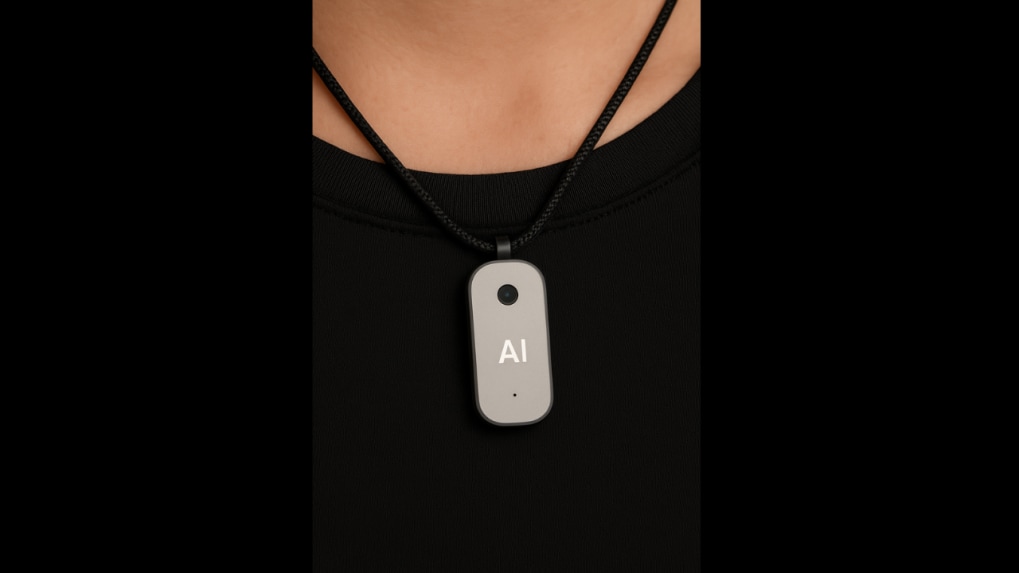
Artificial intelligence-powered pendants and brooches made a prominent return at the Consumer Electronics Show (CES), with devices equipped with cameras and microphones designed to observe and listen throughout the day, positioning themselves as vigilant personal assistants.
The renewed presence of such wearables comes roughly a year after the discontinuation of the Humane AI Pin, which was widely criticised by reviewers following its launch in early 2024 despite high expectations. The revival also coincides with developments in the broader AI hardware space, as OpenAI chief executive Sam Altman and renowned industrial designer Jony Ive are collaborating on a new AI interaction device expected to be ready by next year, according to an AFP report.
The resurgence has not been without criticism. AI pendants have drawn backlash from privacy advocates, with slogans such as “Go make some real friends” appearing as graffiti on New York City subway advertisements for Friend-branded AI pendants late last year, in protest against what critics described as surveillance capitalism.
Despite concerns, manufacturers at CES in Las Vegas showcased AI pendants as practical tools for note-taking and capturing meaningful moments during the day. Advances in technology, including more efficient chips, have helped address early issues such as poor battery life, unstable software and awkward conversational performance that plagued first-generation devices.
China-based technology company Lenovo unveiled a prototype AI pendant through its Motorola subsidiary, featuring voice control for its AI assistant Qira. The neck-worn device is designed to capture audio and images hands-free. In parallel, Amazon last year agreed to acquire wearable AI startup Bee, while Meta has acquired AI device company Limitless.
Bee’s wearable devices can be worn on the wrist, belt or lapel and function primarily as assistants by taking notes, offering reminders and managing calendars. Meta, meanwhile, has prioritised the development of AI “superintelligence” and has already integrated AI capabilities into its Ray-Ban smart glasses.
Companies are experimenting with different form factors for wearable AI. Startup Vocci has opted for a ring focused on AI-assisted note-taking, while Plaud has introduced both a pin and a slim rectangular device barely thicker than a credit card to record spoken content.
Chinese startup iBuddi presented a prototype companion medallion aimed at reducing screen fatigue. iBuddi founder Yin Haitian informed AFP that the company’s core philosophy is to create a body-worn AI companion that replaces some phone interactions rather than adding another attention-grabbing screen. He added that the product is designed to react only to important moments rather than continuously recording everything, with a commercial launch targeted for July.
By contrast, the Looki L1 AI wearable continuously captures the wearer’s point of view, offering features such as advice on caffeine intake, contextual information about surroundings and daily summaries presented as comic strips.
Techsponential analyst Avi Greengart stated that while consumer expectations around privacy have not disappeared, they are evolving, noting that people are already subject to widespread surveillance through smartphones, city camera networks and smart home devices. He added that wearable AI is unlikely to replace smartphones in the near term but is expected to become a common addition alongside smartwatches, rings and glasses.
For users uneasy about constant monitoring, one startup at CES showcased Wearphone, a mask fitted with built-in earbuds and microphones designed to help keep conversations private.
From purpose-driven work and narrative-rich brand films to AI-enabled ideas and creator-led collaborations, the awards reflect the full spectrum of modern creativity.
Read MoreLooking ahead to the close of 2025 and into 2026, Sorrell sees technology platforms as the clear winners. He described them as “nation states in their own right”, with market capitalisations that exceed the GDPs of many countries.