Advertising
From Pink Slips to Silent Sidelining: Inside adland’s layoff and anxiety crisis
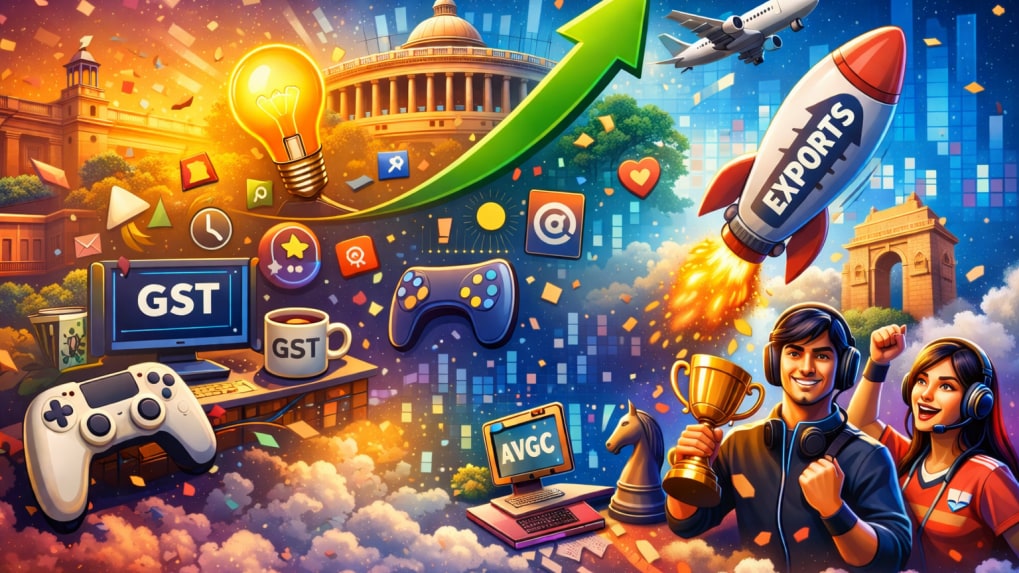
As Finance Minister prepares to present the Union Budget 2026 on February 1, India’s rapidly expanding gaming and esports industry is looking to the government for clear fiscal and policy signals that can unlock its next phase of growth.
Industry stakeholders are seeking formal recognition of esports as a sport, targeted budgetary support for original game intellectual property (IP), relief from financial and banking frictions, and a sharper export-oriented push under the AVGC-XR framework, as they position gaming as a driver of jobs, cultural exports and digital soft power.
In a rare parliamentary move, the Union Budget 2026 will be presented on Sunday, February 1 at 11 am, a departure from the convention of weekday budget announcements. Lok Sabha Speaker Om Birla confirmed the timing, with Parliament scheduling a special sitting, underscoring the importance attached to the upcoming fiscal roadmap. The Budget session will run from January 28 to April 2, 2026, in two phases, as per the government-approved calendar.
A rapidly expanding industry
India’s gaming market has seen sharp growth over the past few years. According to a PwC India report, online gaming revenues stood at approximately ₹33,000 crore ($4 billion) in 2023 and are projected to double to ₹66,000 crore ($8.9 billion) by 2028–29, growing at a CAGR of about 14.5%.
India is also among the largest gaming markets globally by user base, with an estimated 591 million gamers in 2025, accounting for nearly one-fifth of the global gaming population. Industry bodies believe this scale gives India a natural advantage in building globally relevant gaming intellectual property (IP), provided policy support aligns with long-term industry needs.
The Promotion and Regulation of Online Gaming Bill, 2025, passed by Parliament in August last year, banned real-money gaming (RMG) over concerns related to financial and psychological harm. While the move brought regulatory clarity, it also accelerated confidence and investment in the free-to-play and esports-driven gaming ecosystem, shifting industry focus toward skill-based competition, content creation and exports.
What the industry wants from Budget 2026
Esports recognition and tax parity
Industry leaders say one of the most pressing asks is the formal recognition of esports as a sport, which would bring parity in taxation and institutional support.
Akshat Rathee, co-founder and managing director of NODWIN Gaming, said that despite the sector’s scale, competitive gaming continues to be treated inconsistently. “If esports is recognised on par with traditional sports, prize winnings should receive the same tax treatment as other sporting disciplines,” he said.
Rathee also flagged a persistent structural challenge: financial institutions categorising gaming companies as “high risk” even after regulatory clarity. “This affects developers, publishers and esports organisations alike, impacting access to banking, credit and payment infrastructure,” he said, calling for immediate correction.
Original IP and AVGC funding
A recurring theme across stakeholder comments is the need for dedicated funding for original Indian gaming IPs under the AVGC (Animation, Visual Effects, Gaming and Comics) framework.
Rathee argued that India’s global standing in gaming will be built through homegrown intellectual property, not services alone. “Dedicated AVGC funding earmarked for Indian game development IPs is essential to compete internationally,” he said, also urging state governments to integrate esports events into sports and culture budgets to drive tourism and local economic activity.
Rajan Navani, chairman of JetSynthesys and co-chairman of the CII National Committee on Media & Entertainment, echoed this view, positioning gaming as a soft power lever. “Budgetary support that incentivises original IP creation, supports R&D in immersive and real-time technologies, and enables global distribution can help Indian games and digital narratives reach global audiences at scale,” he said.
Navani added that gaming, AVGC and XR sit at the intersection of storytelling, culture and technology, making them powerful cultural exports. A focused fiscal push, he said, could help India transition from being a production base to a creator of globally recognised digital IP, while generating high-value jobs and long-term economic returns.
Skilling, incubation and exports
From a development perspective, industry bodies are calling for long-term capacity building rather than short-term incentives.
Sridhar Muppidi, chairperson of the Game Developer Association of India (GDAI), said the Budget should prioritise apprentice programmes, studio-focused incubation and skilling initiatives that allow early-stage teams to spend sustained time building games and studios.
“Countries that invest in capability building for game creation can export their stories, creative styles and IP worldwide,” Muppidi said. He added that targeted support for talent development, incubation and global market access could help Indian studios scale internationally, strengthening India’s creative soft power alongside film and music.
GDAI has set an ambitious target of $10 billion in annual gaming content exports by 2035, with the potential to create around two million jobs over the next decade.
Esports as a cultural export
Esports entrepreneurs see the Budget as an opportunity to formally anchor competitive gaming within national policy frameworks.
Rohit Jagasia, founder of Revenant Esports, said India is emerging as a serious player in global esports. “This industry represents a convergence of culture, technology and youth engagement. The opportunity lies not just in scale, but in cultural exports,” he said.
According to Jagasia, incentives for Indian IPs and formal recognition within the AVGC-XR framework could enable India to become a net exporter of esports talent and competitive IP, with Indian teams already making their mark internationally.
With its scale, youth-driven demand and export potential, industry stakeholders argue that gaming now deserves a clearer place in India’s economic and cultural policy framework — something they hope Union Budget 2026 will begin to address.
From purpose-driven work and narrative-rich brand films to AI-enabled ideas and creator-led collaborations, the awards reflect the full spectrum of modern creativity.
Read MoreLooking ahead to the close of 2025 and into 2026, Sorrell sees technology platforms as the clear winners. He described them as “nation states in their own right”, with market capitalisations that exceed the GDPs of many countries.