How it Works
WPP, Havas, Omnicom: Are advertising’s biggest holdcos recasting agencies as AI Operating Systems?
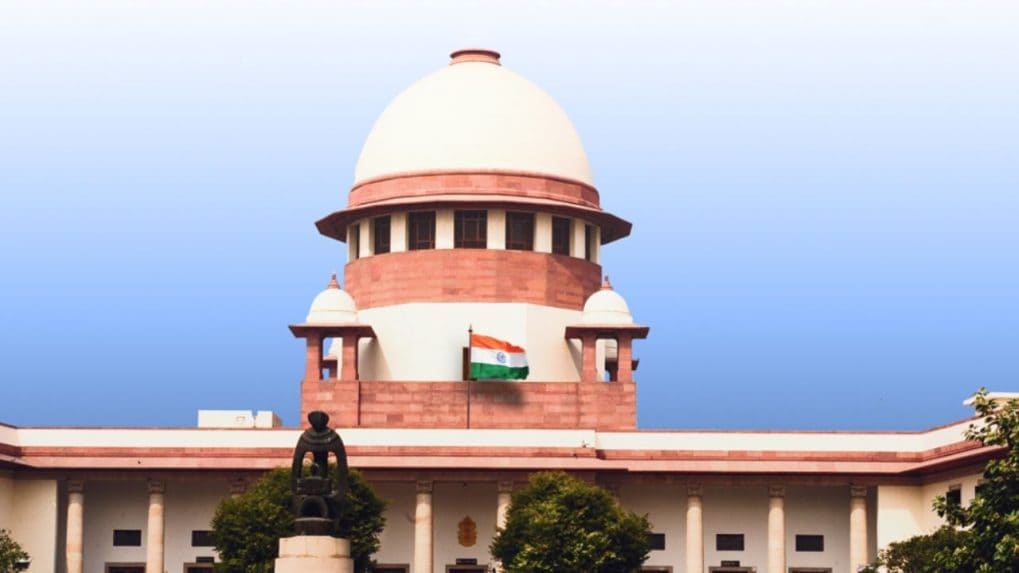
The Supreme Court on Friday pulled up evangelist and politician Dr K.A. Paul during a hearing on challenges to the Promotion and Regulation of Online Gaming Act, 2025, firmly cautioning him against seeking publicity and attempting to widen the proceedings beyond the legal questions before the court, as the bench made it clear that celebrity endorsements and allegations were not relevant to the constitutional validity of the law under challenge.
The Supreme Court heard two petitions challenging the constitutional validity of the Promotion and Regulation of Online Gaming Act, 2025 (PROGA), with a bench led by Chief Justice Surya Kant underscoring the need to remain confined to legal issues while examining the sweeping restrictions imposed by the law.
A bench comprising Chief Justice Surya Kant and Justices Joymalya Bagchi and Vipul Pancholi took up the petitions, one filed by evangelist and politician Dr K.A. Paul and another by a Delhi-based advocate and professional poker player, raising distinct but overlapping concerns over the Act’s blanket prohibition on online money games.
Dr Paul’s petition alleges that online betting and gaming applications are trapping millions of Indians—particularly the youth—into what he described as an illegal and addictive ecosystem, infringing the right to life guaranteed under Article 21 of the Constitution. The petition claims that the social consequences of such platforms have been severe, alleging that in Telangana alone, 1,023 people have died by suicide due to the influence of betting apps.
The petitioner also alleged that more than 25 celebrities from Bollywood and Tollywood are under investigation for endorsing online betting platforms. When Dr Paul urged the court to implead celebrities in the matter, the bench firmly declined.
“Do not seek publicity and be confined to the law which has been challenged,” Chief Justice Surya Kant told the petitioner. The Chief Justice further observed that the conduct of celebrities was not germane to the legal questions before the court, adding that the focus must remain on the constitutional challenge to the statute.
“Celebrities should be included in the party? How are you concerned about it? Be confined to legal issues only. Celebrities, what they are doing, let them do it. We will take care of that,” the Chief Justice remarked.
The court noted that notices had earlier been issued to all states, significantly widening the scope of the proceedings. Notices are also to be served on respondents numbered 10 to 14. The bench directed that copies of the petitions be shared with the Attorney General and the Solicitor General of India.
Fresh petition by poker professional challenges blanket ban
In a separate but connected development, the Supreme Court took on record a fresh petition filed under Article 32 by Vaibhav Arora, a Delhi-based advocate who also describes himself as a nationally recognised professional poker player. Arora has challenged the constitutional validity of PROGA, 2025, arguing that the law’s blanket ban on online money games violates fundamental rights and exceeds Parliament’s legislative competence.
Arora has sought the striking down of the entire Act or, in the alternative, specific provisions including Sections 2(1)(g), 5, 6, 7 and 9, which prohibit online money games, advertising, fund transfers and impose criminal penalties. According to the petition, the Act unlawfully collapses the long-recognised legal distinction between games of skill and games of chance, treating all online money games as gambling solely because they involve monetary stakes.
The petitioner contends that this approach runs contrary to settled constitutional jurisprudence, including landmark Supreme Court rulings such as R.M.D. Chamarbaugwala v. Union of India and K.R. Lakshmanan v. State of Tamil Nadu, which recognised that games where skill predominates constitute protected business activities under Article 19(1)(g).
The petition further argues that skill-based games such as poker, rummy and fantasy sports do not become gambling merely because they are played for stakes. It also points to Section 12 of the Public Gambling Act, 1867, which expressly excludes games of skill from the ambit of gambling laws.
To establish locus and direct impact, Arora has detailed his professional credentials, stating that he has participated in more than 1,600 online poker tournaments, earning cumulative profits of over ₹23.3 lakh with a return on investment exceeding 100%. He also cited his recognition as the highest winner for the year 2019–20 at the Indian Poker Championship organised by PokerHigh in Goa.
According to the petition, the impugned law poses a direct threat to his livelihood, reputation and income, violating not only Article 19(1)(g) but also Article 21, which encompasses the right to livelihood and personal autonomy.
The Supreme Court allowed Arora’s petition to be tagged with the existing batch of cases challenging PROGA and listed the matter for further hearing on 21 February 2026.
From purpose-driven work and narrative-rich brand films to AI-enabled ideas and creator-led collaborations, the awards reflect the full spectrum of modern creativity.
Read MoreThe Storyboard18 Awards for Creativity have unveiled a Grand Jury comprising some of India’s most influential leaders across advertising, business, policy and culture, positioning it among the country’s most prestigious creative award platforms.