How it Works
WPP, Havas, Omnicom: Are advertising’s biggest holdcos recasting agencies as AI Operating Systems?
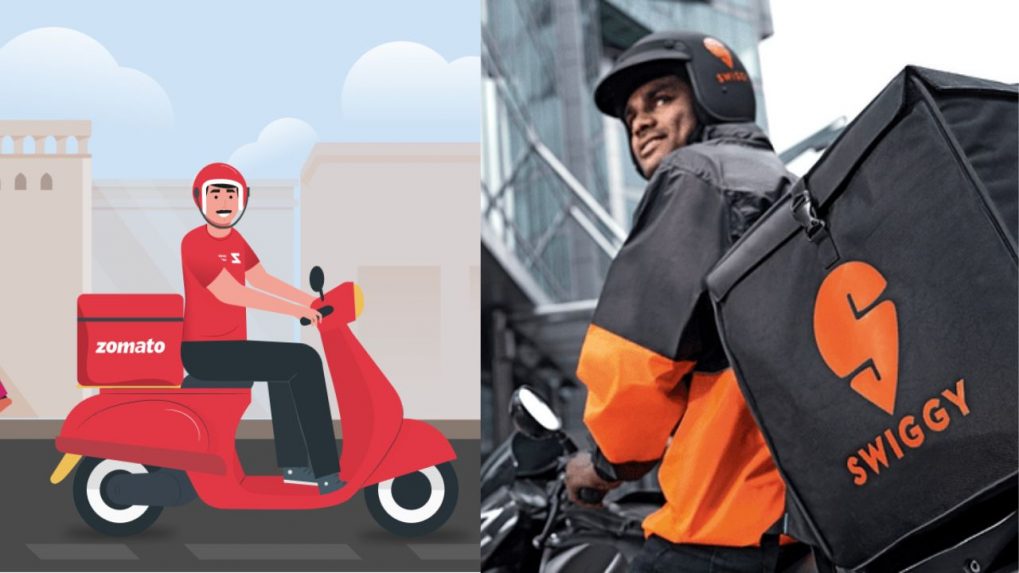
As India’s gig economy expands deeper into tier-2 and tier-3 cities, industry leaders say Budget 2026 must move beyond legal recognition toward income stability, enforceable protections, and portable social security systems that match the realities of platform-based work.
Anupama Bhimrajka, Vice President, Marketing at foundit, argues that the central challenge for gig workers today is not job availability but unstable and unpredictable earnings, especially outside metro markets.
“What is missing today is income predictability and enforceability,” Bhimrajka said. “While recent steps around registration and healthcare are important, gig workers particularly in non-metro regions remain exposed to irregular pay cycles, delayed payments and abrupt demand shifts.”
She added that income discontinuity remains the most acute risk in tier-2 and tier-3 cities, even when workers continue to find work. “The core risk in gig work today is not unemployment, but income discontinuity despite ongoing work,” she said.
Bhimrajka also flagged skill vulnerability as a structural threat. Without continuous upskilling, gig workers risk falling out of demand, amplifying income instability. “Legal recognition, without systems that ensure predictable earnings and continuous skill renewal, risks falling short of meaningful protection especially for gig workers in non-metro markets,” she said.
Looking ahead to Budget 2026, she said the strongest signal would be portable, income-linked protections combined with skilling pathways, given that many gig workers operate across multiple platforms and serve metro or global demand remotely from smaller cities.
“Benefits tied to a single platform or geography fail to reflect real work patterns,” she said, calling for capitalisation of the gig worker social security framework and benefits linked to hours worked or income earned rather than employer classification. She also recommended regulatory clarity around payment timelines, escrow-based settlements, and income-shock buffers to address instability without limiting flexibility.
“Skilling is not just about employability. It is one of the most effective income-stability tools in the gig economy, especially outside metros,” Bhimrajka said.
She pointed to implementation capacity and system fragmentation at the state and district level as the biggest bottleneck in turning labour code promises into reality. “The challenge is not policy intent, but system readiness,” she said, noting that gig work is expanding fastest in regions with limited administrative and skilling capacity.
“As gig work becomes mainstream across tier-2 and tier-3 India, enforceable protection will depend not just on welfare, but on income stability, portability and continuous skilling,” she added.
Balasubramanian A, Senior Vice President at TeamLease Services, highlighted the scale and formalisation momentum of India’s gig workforce, which he said has grown from about 7.7 million in 2020 to roughly 12 million currently, with projections reaching 23.5 million by 2029–30.
“Platforms are central to this growth curve, embedding on-demand services deeply into urban and increasingly tier-2 and tier-3 markets,” he said. With digital platforms, tasks are logged, payments receive formal records, and income trails are created, marking a shift away from invisible cash-based informal work.
He said India’s four new labour codes represent a meaningful shift, formally recognising gig and platform workers, mandating written contracts, setting wage floors, and extending social protections for the first time. However, he described the ecosystem as being in an adjustment phase as income structures and employment norms continue to evolve.
Balasubramanian identified platform accountability as the top policy priority going into Budget 2026. “Without clear accountability around transparent rating systems, algorithm fairness, grievance redressal, worker data rights, minimum pay triggers, reforms will not translate into real protections,” he said.
He argued that accountability mechanisms are essential to balancing economic efficiency with worker rights, particularly as platforms expand into semi-urban and domestic markets.
Vijay Vasanth, Senior Vice President, Sales at GI Group Holding, echoed concerns about execution gaps, saying slow implementation is driven less by resistance and more by coordination challenges.
“The labour codes today recognize gig workers, but putting them into practice requires coordination between the Centre, state and industry,” he said. Differences in state-level adoption, unclear operating guidelines, and time needed for platforms to adjust to compliance requirements continue to slow progress.
“With better alignment and clearer processes, implementation will improve and result in more meaningful protection and stability for gig workers,” he said.
Jayanth Neelakanta, Founder and CEO of Equip, said Budget 2026 represents a critical inflection point as it is the first Union Budget after the Labour Codes came into effect.
“The Code on Social Security has laid a solid foundation. Gig workers are formally recognized, aggregators are required to contribute to a social security fund, and there is an Aadhaar-linked system for portability. That is meaningful progress,” he said.
However, he described the biggest gap as the last-mile experience for workers, many of whom do not know whether platforms are contributing on their behalf or how to access benefits.
“A gig worker today has no simple way to check whether their platform has contributed to their account, what benefits they are entitled to, or how to access them,” he said. “Most delivery partners I have spoken to do not even know these protections exist.”
Neelakanta recommended budgetary funding for a worker-facing digital portal, similar to UPI or CoWIN, where gig workers can track contributions and entitlements. He also suggested awareness campaigns and fiscal incentives for states to speed up implementation.
“The real bottleneck is that no one has built the connective tissue that makes this work for the person it is meant to serve,” he said.
He proposed government co-investment in the gig worker social security fund to accelerate benefits and signal commitment, along with tax incentives for platforms that exceed compliance requirements.
“If a Swiggy driver can open an app and see exactly what has been contributed on their behalf, like checking a bank balance, compliance pressure on platforms and states becomes automatic,” he said. “Empower the worker, and implementation follows.”
Other industry voices stressed the need to balance income guarantees with market flexibility.
Sanjeeta Mohta, Finance and Talent Manager at Learning Spiral, said minimum earnings guarantees could reduce income insecurity caused by fluctuating demand and protect workers from earning below sustainable levels after factoring in fuel, maintenance, and platform commissions.
However, she warned that overly rigid pay floors could distort platform pricing and reduce demand. She recommended linking pay floors to net earnings by location and hours worked to minimise market disruption.
She added that while Budget 2026 cannot eliminate income volatility entirely, it can reduce its impact through stronger social security systems, expanded health and accident insurance, pension mechanisms, and emergency welfare programs.
Anil Agarwal, Founder of InCruiter, said gig work in India is becoming more structured and professional, expanding beyond delivery roles into technology, marketing, HR, and other skilled sectors.
“Platformisation is still growing faster than formalisation, but digital platforms are becoming more organised, compliance is improving, and worker data is more visible,” he said. While full formalisation will take time, he said the direction is clear.
Agarwal argued that gig work is increasingly a long-term labour model, reflecting shifting worker and employer mindsets. Younger professionals value flexibility, learning, and income diversification, while companies see gig talent as a way to stay agile and control costs.
“This is not a short-term response to a jobs gap. It reflects a deeper change in how talent and organisations approach work,” he said.
As Budget 2026 approaches, a consistent theme emerges across industry voices: the next phase of India’s gig economy will depend less on legal recognition and more on execution, transparency, income stability, and worker-centric digital infrastructure.
From purpose-driven work and narrative-rich brand films to AI-enabled ideas and creator-led collaborations, the awards reflect the full spectrum of modern creativity.
Read MorePraveen Someshwar, Managing Director and CEO of Diageo India, joins the Grand Jury of the Storyboard18 Awards for Creativity, highlighting the awards’ focus on work that blends cultural relevance with strategic and commercial impact.