How it Works
WPP, Havas, Omnicom: Are advertising’s biggest holdcos recasting agencies as AI Operating Systems?
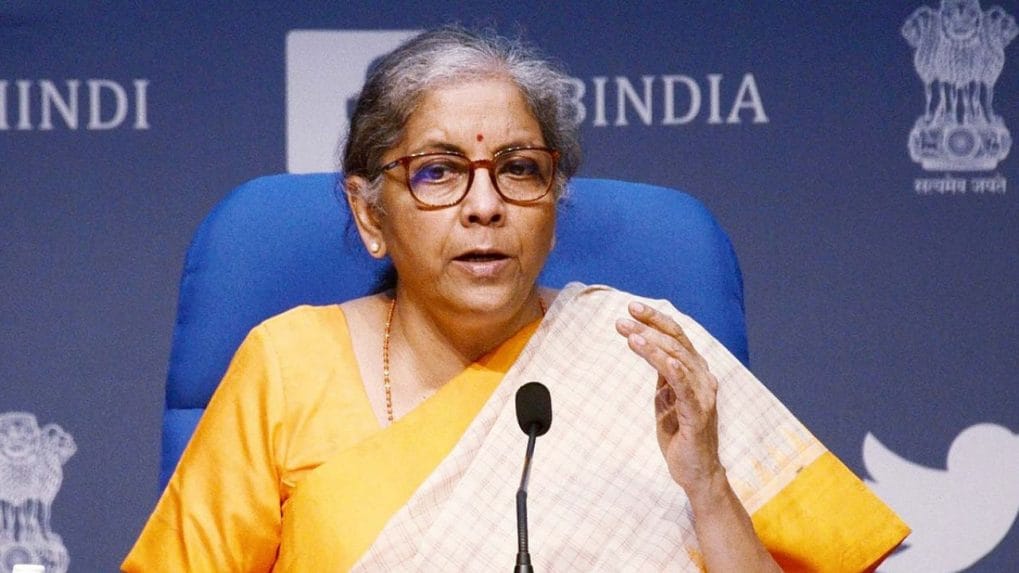
The Indian government has sharpened its focus on early-stage skilling and workforce alignment in the Union Budget for FY2026-27, as last week's economic survey highlighted a widening gap between educational attainment and labour market requirements.
Presenting her ninth consecutive budget, Union Finance Minister Nirmala Sitharaman outlined a series of measures aimed at strengthening vocational education, particularly for the services sector, which accounts for more than half of India's gross value added (GVA). According to the Economic Survey 2024-25, only 4.9% of Indians aged 15-29 have received formal vocational or technical training, while 21.2% rely on informal sources.
The survey underscored a mismatch between education and occupational skill needs, calling for vocational education to be embedded within the schooling system to enable earlier acquisition of job-relevant skills. The estimates cited in the survey had suggested that a 12 percentage point increase in the formally skilled workforce could lift employment in labour-intensive sectors by more than 13% by 2030.
A separate National Skill Gap Study in 2025 found that weak foundational skills, limited industry alignment, and slow adaptation to emerging technologies remained key constraints on employability.
Also Read: Union Budget on AI
To address these challenges, FM Sitharaman announced the formation of an Education to Employment and Enterprise committee, mandated to recommend measures for growth, employment, and exports in the service sector. The committee will also assess the impact of emerging technologies, including artificial intelligence, on job creation and evolving skill requirements.
The government set an ambitious target of positioning India as a global services hub, aiming for a 10% share of the global services market by 2047, when the country marks 100 years of independence.
"India doesn’t lack training; it lacks outcomes-led skilling," Shantanu Rooj, Founder and CEO, TeamLease Edtech, welcomed the intent but warned that execution would be decisive.
"The challenge is conversion into jobs. Recent Budget and Policy announcements show intent by pushing employability, industry relevance and technology-linked skilling, but success will depend on execution at scale. Independent studies show that nearly 75% of higher-education institutions remain misaligned with industry needs. If India is serious about its services ambition, skilling must move decisively toward apprenticeships, work-integrated learning and continuous reskilling".
The budget also included targeted intervention across creative industries, healthcare and tourism. Support will be expanded to the Indian Institute of Creative Technologies in Mumbai to establish animation, visual effects, gaming and comics (AVGC)content labs in 15,000 secondary schools and 500 colleges, a demand for skilled professionals in the sector is projected to reach 2 million by 2030.
In healthcare, the finance minister proposed the creation of new Allied Health Professionals Institutions, both public and private, to add one lakh trained professionals over the next five years. Additional NSQF-aligned programmes in wellness, yoga, and medical device operations are expected to generate employment for 150,000 caregivers in the coming year. The government has eyed promoting India as a hub for medical tourism through integrated healthcare complexes combining treatment, education, and research.
Tourism and hospitality sector skilling will be supported through a pilot programme to train 10,000 tourist guides across 20 iconic destinations, while rural employment generation will be targeted through a credit-linked subsidy programme in animal husbandry.
Despite the push for upskilling, the labour market outcomes remained uneven. According to the latest Periodic Labour Force Survey, 56.2 crore people aged 15 and above were employed between July and September in fiscal 2026- an increase of 8.7 lakh jobs from the previous quarter.
Analysts cautioned that the success of the skilling drive will depend on its ability to translate training into sustained employment. "The focus needs to shift from the volume of training to measurable labour-market outcomes," said Arindam Mukherjee, co-founder and CEO of NextLeap, adding that employer alignment and accountability would be critical to avoid repeating earlier skilling missteps.
From purpose-driven work and narrative-rich brand films to AI-enabled ideas and creator-led collaborations, the awards reflect the full spectrum of modern creativity.
Read MoreThe Storyboard18 Awards for Creativity have unveiled a Grand Jury comprising some of India’s most influential leaders across advertising, business, policy and culture, positioning it among the country’s most prestigious creative award platforms.