How it Works
WPP, Havas, Omnicom: Are advertising’s biggest holdcos recasting agencies as AI Operating Systems?
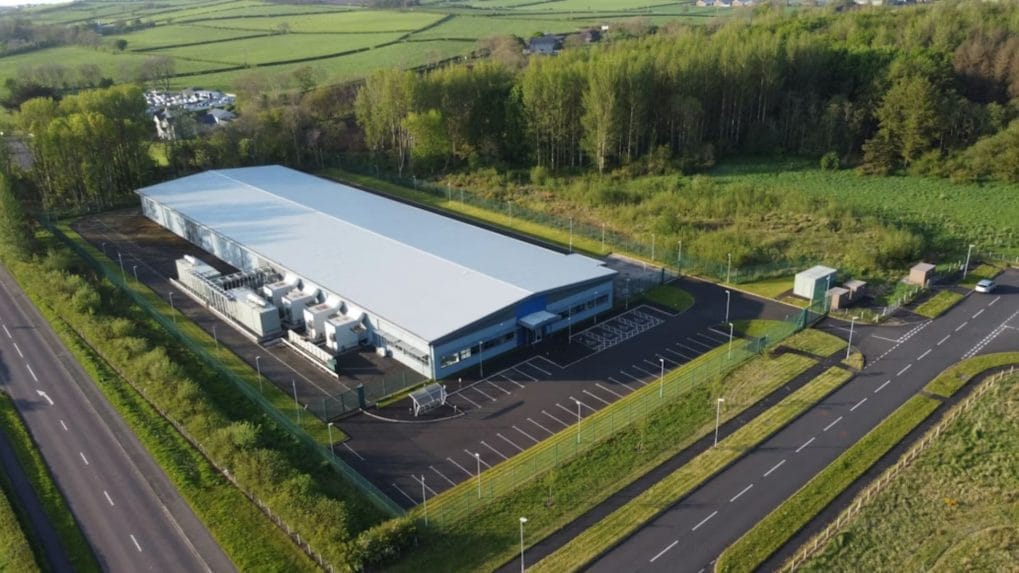
South India is rapidly becoming the country's data infrastructure hub, as global technology giants and domestic operators invest billions of dollars in building large-scale, AI-ready data centres across the region.
This year, search engine giant Google announced a $15 billion artificial intelligence (AI) hub in Visakhapatnam (Vizag), its largest investment of this kind in India, slated for completion between 2026 and 2030. The Silicon Valley firm will deploy the company's full AI stack and is expected to accelerate India's adoption of advanced machine learning tools.
Meanwhile, OpenAI, the maker of ChatGPT, has signalled its own ambitious plan for the region. As part of its $500 billion Stargate infrastructure program, the company plans to build a data centre with at least 1 gigawatt of capacity--its most significant expansion in Asia.
They join a growing cluster of existing domestic players. Firms such as Yotta, CtrlS, and Sify Technologies are already scaling up AI-focused capacity across Mumbai, Hyderabad and Bengaluru.
According to Colliers India, the southern cities, including Bengaluru, Chennai and Hyderabad, account for more than one-third of India’s 1.3 GW of data centre capacity. Analysts say the region's rise is anchored in three fundamentals: strong global connectivity, stable power infrastructure and greater climate resilience compared with other parts of the country.
Vivek Rathi, National Director- Research, Knight Frank India, told Storyboard18 that Tamil Nadu, Karnataka, Andhra Pradesh and Telangana governments have seized on this "AI data centres" moment, signing a string of agreements with private developers.
For instance, Tamil Nadu has secured investments from firms including STT GDC India, which plans to develop up to 80 MW of capacity. Equinix recently opened a Rs 574 crore data centre in Siruseri.
Karnataka has signed a Rs 20,000 crore agreement with Web Werks for a data centre park and connectivity hub, alongside earlier commitments from STT GDC India.
Andhra Pradesh government has drawn nearly Rs 98,000 crore in planned investment from the Reliance-Brookfield- Digital Realty consortium for a 1 GW AI data-centre campus in Visakhapatnam, along with additional commitments from Anant Raj.
Telangana has inked MoUs for multiple large-scale projects, including a 400 MW AI cluster by CtrlS, a 300 MW facility by Tillman Global Holdings, and others from TT Data, Neysa Networks and Adani Enterprises.
"These hubs are poised for multifold growth over the next five to six years," said Vimal Nadar, National Director & Head, Research at Colliers India. He noted that more than half of India's new supply is expected to come from southern states by 2030.
'South India-an attractive destination for data centre investment'
With competitive incentives, deep submarine cable connectivity, and lower seismic risk than northern India, the southern corridor is rapidly becoming the preferred destination for the country's most ambitious digital infrastructure projects.
"With more than half of the country’s new DC supply expected to come from southern cities by 2030, these hubs are poised for multifold growth in their overall DC capacity in the next 5-6 years", said Nadar.
Saraiya highlighted Techno Digital's new 36 MW hyperscale facility in Chennai--built above flood levels, optimised for GPU-heavy workloads, and engineered for energy-efficient cooling as a template for the next generation of Indian data centres.
'South's pro-data centre policies'
Much of the region's rapid expansion is tied to state-level policies designed to lure long-term investments, said Rathi.
Tamil Nadu offers subsidised electricity tariffs, tax waivers, and stamp duty concessions. The state is also offering developers pre-approved, large land parcels in state-developed IT SEZs spanning 1,377 acres across major cities.Telangana’s data center policy subsidized electricity rates, provides dual power grid networks for uninterrupted supply and exemption from statutory power cuts. Under Karnataka’s data centre policy (2022-2027), the state offers a 10% land subsidy and a 100% stamp duty exemption on land up to 10 acres. Andhra Pradesh's data centre policy targets 6 GW capacity by 2030, backed by a 25% discount on land costs, 100% stamp duty exemptions and 10% capital subsidy on machinery for 10 years.
'Sectors investing in data centres'
The shift is being fueled by a surge in AI workloads, real-time analytics, cloud-native applications, and data sovereignty and localisation, said Ankit Saraiya, Director and CEO, Techno Digital.
Sectors such as banking, telecom, retail, e-commerce, and OTT typically prefer controlled colocation or custom-built data centres to bolster security, achieve compliance, manage costs for stable workloads, deliver low-latency, and satisfy regulatory demands. In contrast, direct-to-consumer startups primarily use public cloud and edge data centres for greater flexibility and to avoid upfront investment.
'High investment, high stakes'
Despite the momentum, data centres remain one of the most capital-intensive forms of infrastructure. Anarock estimates that greenfield projects require Rs 60–70 crore per MW of capacity--a cost structure that favours hyperscalers and big institutional developers.
According to Saraiya, "The investments are significant," Saraiya said, pointing to the price of land in strategic markets, resilient power architecture, advanced cooling systems, and stringent compliance standards. Still, he added, enterprises increasingly view data centres as long-term strategic assets critical to AI readiness and cyber resilience.
Yet profitability remains uneven. The business is operationally complex, energy-intensive and highly sensitive to technological shifts. "These assets are better suited for specialised operators," said Shobhit Agarwal of Anarock Capital.
India produces nearly one-fifth of the world's data but hosts only about 3% of global data centre capacity. That gap, experts said, is now driving one of the country's most significant infrastructure build-outs in decades, and positioning South India as its centre.
From purpose-driven work and narrative-rich brand films to AI-enabled ideas and creator-led collaborations, the awards reflect the full spectrum of modern creativity.
Read MorePraveen Someshwar, Managing Director and CEO of Diageo India, joins the Grand Jury of the Storyboard18 Awards for Creativity, highlighting the awards’ focus on work that blends cultural relevance with strategic and commercial impact.