How it Works
WPP, Havas, Omnicom: Are advertising’s biggest holdcos recasting agencies as AI Operating Systems?
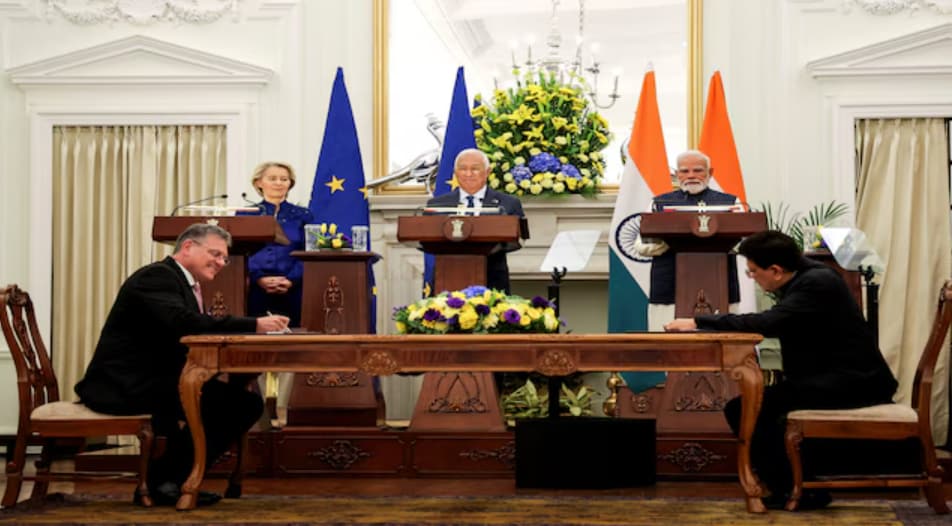
India and the European Union have concluded their most wide-ranging free trade agreement to date, committing to extensive tariff reductions on goods traded between the two economies, though its commercial impact will depend on regulatory execution and carbon-related costs.
Under the agreement, India will eliminate or significantly reduce import duties on about 96–97% of EU tariff lines over seven to ten years. In return, the EU will open nearly 98–99.5% of its tariff lines to Indian exports, making the pact one of the largest trade liberalisation exercises undertaken by either side.
Sensitive sectors have been addressed through phased and quota-based mechanisms. India will lower automobile import duties for up to 250,000 European vehicles annually, with tariffs eventually falling to 10%. Duties on wine, beer and spirits, currently as high as 150%, will be reduced in stages to a 30–50% range, primarily affecting the premium segment.
The agreement has not yet come into force and must undergo legal review and ratification by the European Parliament, a process that could take more than a year.
A key uncertainty is the exclusion of the EU’s Carbon Border Adjustment Mechanism (CBAM), which began implementation in January 2026. Indian exports such as steel and aluminium will face carbon-linked costs, potentially offsetting some of the benefits from lower tariffs.
Moody’s has described the pact as credit positive for India, citing its potential to support manufacturing, investment and labour-intensive exports. However, the agency noted that gains will depend on domestic reforms, regulatory clarity and exporters’ ability to meet EU sustainability standards.
Sectors such as textiles, apparel, footwear, gems and jewellery and marine products are expected to benefit from reduced tariffs, while European carmakers and beverage producers could gain access to India’s premium consumer segments. Analysts caution that non-tariff barriers and compliance costs may limit gains for smaller exporters.
From purpose-driven work and narrative-rich brand films to AI-enabled ideas and creator-led collaborations, the awards reflect the full spectrum of modern creativity.
Read MorePraveen Someshwar, Managing Director and CEO of Diageo India, joins the Grand Jury of the Storyboard18 Awards for Creativity, highlighting the awards’ focus on work that blends cultural relevance with strategic and commercial impact.