How it Works
WPP, Havas, Omnicom: Are advertising’s biggest holdcos recasting agencies as AI Operating Systems?
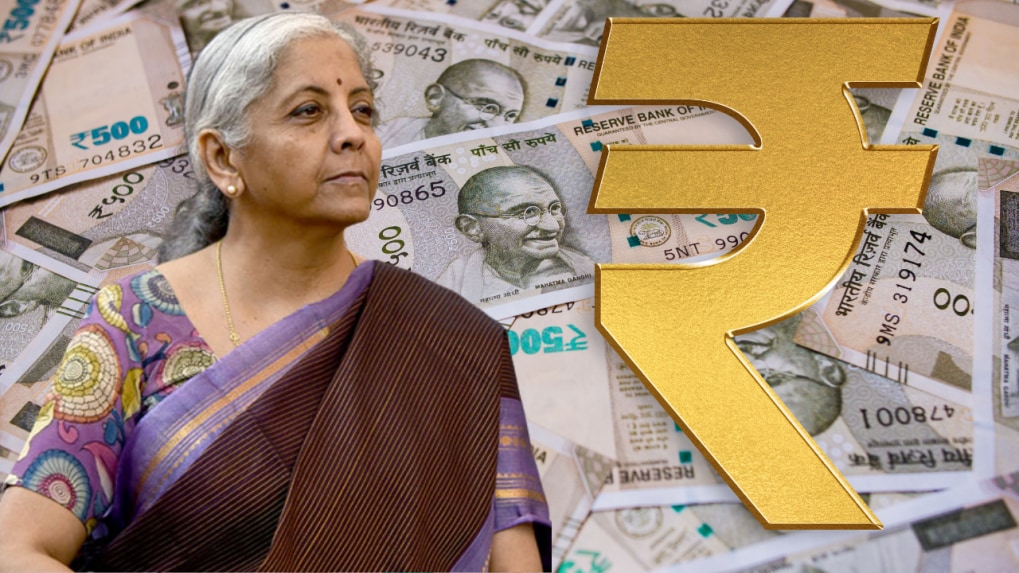
On February 1, Finance Minister Nirmala Sitharaman presented the Union Budget 2026, her ninth consecutive Budget, outlining a reform-led roadmap anchored in technology, employment generation and economic resilience. Framed around three kartavya — accelerating growth, fulfilling aspirations and ensuring inclusive access — the Budget positioned artificial intelligence, services-led expansion and tax simplification as central pillars of India’s development strategy.
Key announcements included the expanded use of AI across governance, agriculture and education, a renewed push for high-value crops such as coconut, cashew and cocoa, targeted programmes for jobs and skills in services, AVGC and textiles, and significant changes to direct and indirect tax frameworks aimed at easing compliance. The Budget also underscored investments in health, biopharma manufacturing and emerging technologies, signalling a continued shift towards productivity-driven and globally competitive growth.
Artificial Intelligence and Emerging Technologies
Our aim is to transform aspiration into achievement and potential into performance, as we ensure that the dividends of growth reach every farmer, the scheduled caste, the scheduled tribes, the nomads, the youth, the poor and the women.
In the Viksit Bharat Young Leaders Dialogue 2026, several innovative ideas were shared with our Prime Minister, which have inspired many of the proposals, making this a unique Yuva Shakti-driven Budget.
Our Government’s Sankalp is to focus on our poor, underprivileged and the disadvantaged. To deliver on this Sankalp, and given that this is the first Budget prepared in Kartavya Bhawan, we are inspired by 3 kartavya.
Our first kartavya is to accelerate and sustain economic growth, by enhancing productivity and competitiveness, and building resilience to volatile global dynamics.
Our second kartavya is to fulfil aspirations of our people and build their capacity, making them strong partners in India’s path to prosperity.
Our third kartavya, aligned with our vision of Sabka Sath, Sabka Vikas, is to ensure that every family, community, region and sector has access to resources, amenities and opportunities for meaningful participation.
This threefold approach requires a supportive ecosystem. The first requirement is to sustain the momentum of structural reforms—continuous, adaptive, and forward-looking. Second, a robust and resilient financial sector is central to mobilising savings, allocating capital efficiently and managing risks. Third, cutting-edge technologies, including AI applications, can serve as force multipliers for better governance.
Emerging Technologies, Including AI
The 21st Century is technology driven. Adoption of technology is for the benefit of all people – farmers in the field, women in STEM, youth keen to upskill and Divyangjan to access newer opportunities.
The Government has taken several steps to support new technologies through AI Mission, National Quantum Mission, Anusandhan National Research Fund, and Research, Development and Innovation Fund.
Our second kartavya is to fulfil aspirations and build capacity. Close to 25 crore individuals have come out of multidimensional poverty through a decade of our Government’s sustained and reform-oriented efforts.
Our Government has therefore decided to place a renewed emphasis on the Services Sector to provide a pathway to fulfilling aspirations of a youthful India, with the following measures.
AI in Agriculture: Bharat-VISTAAR
I propose to launch Bharat-VISTAAR—a multilingual AI tool that shall integrate the AgriStack portals and the ICAR package on agricultural practices with AI systems. This will enhance farm productivity, enable better decisions for farmers and reduce risk by providing customised advisory support.
AI in Education and Employment
Indicative Terms of Reference of the High-Level Education-to-Employment and Enterprise Standing Committee identify services sub-sectors with potential for growth, employment and exports, identify sector-specific gaps and measures to unlock employment potential; identify cross-sectoral policy and regulatory issues, including standards-setting and accreditation; examine areas for services export; assess the impact of emerging technologies, including AI, on jobs and skill requirements;
propose specific measures for embedding AI in the education curriculum from school level onwards and upgrading State Councils of Educational Research and Training institutes for teacher training;
propose measures for upskilling and re-skilling of technology professionals/engineers in AI and emerging technologies; and propose measures for AI enabled matching of workers, jobs and training opportunities.
AVGC and the Orange Economy
India’s Animation, Visual Effects, Gaming and Comics (AVGC) sector is a growing industry, projected to require 2 million professionals by 2030. I propose to support the Indian Institute of Creative Technologies, Mumbai in setting up AVGC Content Creator Labs in 15,000 secondary schools and 500 colleges.
Design Education
The Indian design industry is expanding rapidly and yet there is a shortage of Indian designers. I propose to establish through challenge route, a new National Institute of Design to boost design education and development in the eastern region of India.
Empowering Divyangjan
Divyangjan Kaushal Yojana: IT, AVGC sectors, Hospitality and Food and Beverages sectors offer task-oriented and process-driven roles, which are suitable for Divyangjans. We will ensure dignified livelihood opportunities through industry-relevant and customized training specific to each divyang group.
Employment and Skills Development Education to Employment Standing Committee
identify services sub-sectors with potential for growth, employment and exports, identify sector-specific gaps and measures to unlock employment potential.
Textiles and Labour-Intensive Sectors
For the labour-intensive Textile Sector, I propose an Integrated Programme with 5 sub-parts.
The National Fibre Scheme for self-reliance in natural fibres such as silk, wool and jute, man-made fibres, and new-age fibres.
Textile Expansion and Employment Scheme to modernise traditional clusters with capital support for machinery, technology upgradation and common testing and certification centres.
A National Handloom and Handicraft programme to integrate and strengthen existing schemes and ensure targeted support for weavers and artisans.
I propose to set up a High-Powered Education to Employment and Enterprise Standing Committee to recommend measures that focus on the Services Sector as a core driver of Viksit Bharat. This will make us a global leader in services, with a 10% global share by 2047. The Committee will prioritise areas to optimise the potential for growth, employment and exports. They will also assess the impact of emerging technologies, including AI, on jobs and skill requirements and propose measures thereof.
Tourism and Hospitality Employment
The Tourism sector has the potential to play a large role in employment generation, forex earnings and expanding the local economy.
I propose to set up a National Institute of Hospitality by upgrading the existing National Council for Hotel Management and Catering Technology. It will function as a bridge between academia, industry and the Government.
I also propose a pilot scheme for upskilling 10,000 guides in 20 iconic tourist sites through a standardized, high-quality 12-week training course in hybrid mode, in collaboration with an Indian Institute of Management.
Sports and Employment Generation
The Sports Sector provides multiple means of employment, skilling and job opportunities. Taking forward the systematic nurturing of sports talent which is set in motion through the Khelo India programme, I propose to launch a Khelo India Mission to transform the Sports sector over the next decade.
The Mission will facilitate an integrated talent development pathway supported by training centres at foundational, intermediate and elite levels; systematic development of coaches and support staff; integration of sports science and technology; competitions and leagues to promote sports culture and provide platforms; and development of sports infrastructure for training and competition.
Agriculture and High-Value Crops
High Value Agriculture: To diversify farm outputs, increase productivity, enhance farmers’ incomes, and create new employment opportunities, we will support high value crops such as coconut, sandalwood, cocoa and cashew in our coastal areas. Agar trees in North East and nuts such as almonds, walnuts and pine nuts in our hilly regions will also be supported.
India is the world’s largest producer of coconuts. About 30 million people, including nearly 10 million farmers, depend on coconuts for their livelihood.
To further enhance competitiveness in coconut production, I propose a Coconut Promotion Scheme to increase production and enhance productivity through various interventions including replacing old and non-productive trees with new saplings, plants or varieties in major coconut growing States.
A dedicated programme is proposed for Indian cashew and cocoa to make India self-reliant in raw cashew and cocoa production and processing, enhance export competitiveness and transform Indian Cashew and Indian Cocoa into premium global brands by 2030.
Sandalwood is closely linked to India’s social and cultural heritage. Our Government will partner with State Governments to promote focused cultivation and post-harvest processing to restore the glory of the Indian Sandalwood ecosystem.
To rejuvenate old, low-yielding orchards and expand high-density cultivation of walnuts, almonds and pine nuts, we will support a dedicated programme to enhance farmer incomes and in bringing value addition by engaging youth.
Health and Strategic Manufacturing
Biopharma SHAKTI
India’s disease burden is observed to be shifting towards non-communicable diseases, like diabetes, cancer and autoimmune disorders. Biologic medicines are key to longevity and quality of life at affordable costs.
To develop India as a global Biopharma manufacturing hub, I propose the Biopharma SHAKTI with an outlay of ₹10,000 crores over the next 5 years. This will build the ecosystem for domestic production of biologics and biosimilars.
The Strategy will include a Biopharma-focused network with 3 new National Institutes of Pharmaceutical Education and Research and upgrading 7 existing ones. It will also create a network of over 1000 accredited India Clinical Trials sites.
We propose to strengthen the Central Drugs Standard Control Organisation to meet global standards and approval timeframes through a dedicated scientific review cadre and specialists.
I propose to set up 3 new All India Institutes of Ayurveda, upgrade AYUSH pharmacies and Drug Testing Labs for higher standards of certification ecosystem, and upgrade the WHO Global Traditional Medicine Centre in Jamnagar to bolster evidence-based research, training and awareness for traditional medicine.
Taxes
In July 2024, I announced a comprehensive review of the Income Tax Act, 1961. This was completed in a record time and the Income Tax Act, 2025 will come into effect from 1st April, 2026.
The simplified Income Tax Rules and Forms will be notified shortly, giving adequate time to taxpayers to acquaint themselves with its requirements. The forms have been redesigned such that ordinary citizens can comply without difficulty.
I propose that any interest awarded by the Motor Accident Claims Tribunal to a natural person will be exempt from Income Tax, and any TDS on this account will be done away with.
I propose to reduce TCS rate on the sale of overseas tour program package from the current 5 percent and 20 percent to 2 percent without any stipulation of amount.
I propose to reduce TCS rate for pursuing education and for medical purposes under the Liberalized Remittance Scheme from 5 percent to 2 percent.
Supply of manpower services is proposed to be specifically brought within the ambit of payment to contractors for the purpose of TDS to avoid ambiguity. Thus, TDS on these services will be at the rate of either 1 percent or 2 percent only.
I propose a scheme for small taxpayers wherein a rule-based automated process will enable obtaining a lower or nil deduction certificate instead of filing an application with the assessing officer.
I propose to enable depositories to accept Form 15G or Form 15H from the investor and provide it directly to various relevant companies.
I propose to extend time available for revising returns up to 31st March with the payment of a nominal fee.
I also propose to stagger the timeline for filing of tax returns.
To address practical issues of small taxpayers like students, young professionals, tech employees, relocated NRIs, and others, I propose to introduce a one-time 6-month foreign asset disclosure scheme.
From purpose-driven work and narrative-rich brand films to AI-enabled ideas and creator-led collaborations, the awards reflect the full spectrum of modern creativity.
Read MoreThe Storyboard18 Awards for Creativity have unveiled a Grand Jury comprising some of India’s most influential leaders across advertising, business, policy and culture, positioning it among the country’s most prestigious creative award platforms.