Advertising
From Pink Slips to Silent Sidelining: Inside adland’s layoff and anxiety crisis
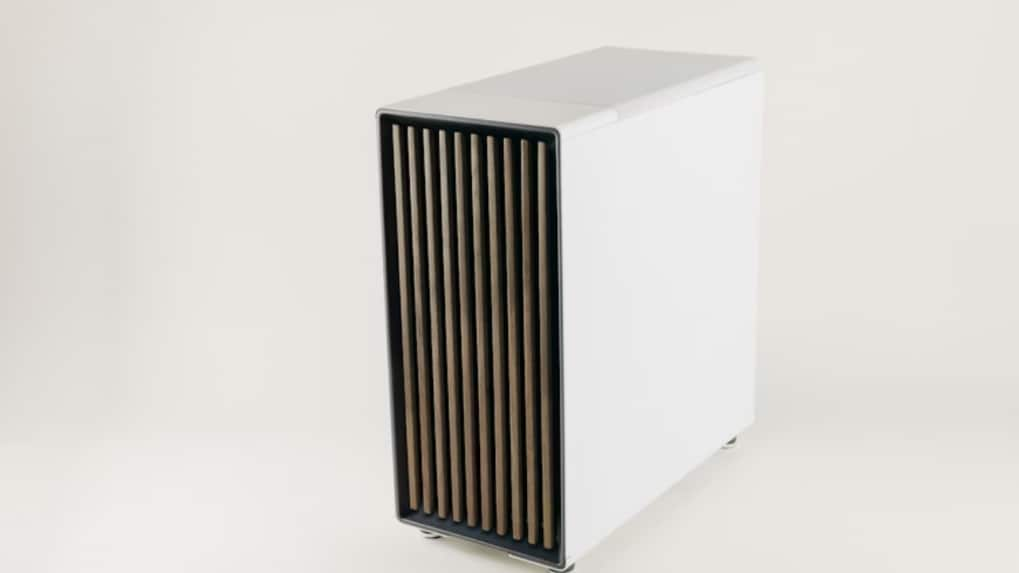
The Delhi High Court on Wednesday said that an urgent meeting of the Goods and Services Tax Council should be convened to examine the classification of air purifiers as medical devices and consider reducing the GST levied on them from 18 per cent to 5 per cent, as reported in the matter of Kapil Madan vs Union of India and others.
A Division Bench comprising Chief Justice Devendra Kumar Upadhyaya and Justice Tushar Rao Gedela noted that a Parliamentary Standing Committee, in a report submitted in December, had recommended that the government take a sympathetic view and either abolish or lower the GST on air purifiers or HEPA filters used in such devices. The Bench stated that the issue should be taken up at the earliest by the GST Council in light of the severe air quality conditions in Delhi and surrounding areas.
The Court directed that the question of lowering or removing GST be considered promptly, while noting that the GST Council is a pan-India body and convening a meeting may take time. However, it observed that given the prevailing air pollution levels, an early meeting was warranted. Government counsel Akash Panwar was asked to seek instructions on how soon the Council could meet.
The Bench ordered the matter to be listed on December 26, allowing counsel for the Union government to obtain instructions on the timeline for the meeting. It also observed that if a physical meeting was not feasible, the Council could consider meeting through video conferencing.
The Court was hearing a petition seeking directions to categorise air purifiers as medical devices and reduce the applicable GST rate to 5 per cent. According to the petition filed by advocate Kapil Madan, air purifiers could not be treated as luxury items in view of the extreme emergency created by severe air pollution in Delhi. The plea stated that imposing GST at the highest slab on air purifiers, which have become indispensable for ensuring minimally safe indoor air, rendered them financially inaccessible to large sections of the population and imposed an arbitrary and unreasonable burden.
The petition further stated that air purifiers satisfied the criteria of a medical device under a 2020 notification issued by the Centre, as they enable safe respiration and mitigate life-threatening exposure, thereby serving preventive and physiological support functions. It argued that levying 18 per cent GST on such devices was arbitrary, unreasonable and disproportionate, and that continued imposition of the higher tax rate despite their medically recognised role amounted to an unjustified fiscal classification lacking a rational nexus with public health objectives.
The Bench remarked that if authorities were unable to provide clean air to citizens, the minimum relief would be to reduce GST on air purifiers. The Court asked the government counsel to take instructions and report back by 2.30 pm the same day, observing that even a temporary exemption could be considered by treating the situation as an emergency.
Counsel for the Central government informed the Court that decisions on tax rates were policy matters taken by the GST Council, which includes members from all states, and that convening a meeting required action by the Union finance minister.
Senior advocate Arvind Nayar, appearing for the petitioner, stated that the government could reduce GST by including air purifiers under a February 2020 notification. The Court observed that such a step would require directions to the Ministry of Health and Family Welfare to issue a notification, following which the matter could be placed before the GST Council. The Bench stated that it would record the concerns raised and ask the nodal officer to place the issue before the Council, which would then seek instructions and report back within a few days.
The petition was filed through advocates Gurmukh Singh Arora and Rahul Matharu, while advocate Akash Panwar appeared for the Central Board of Indirect Taxes.
From purpose-driven work and narrative-rich brand films to AI-enabled ideas and creator-led collaborations, the awards reflect the full spectrum of modern creativity.
Read MoreLooking ahead to the close of 2025 and into 2026, Sorrell sees technology platforms as the clear winners. He described them as “nation states in their own right”, with market capitalisations that exceed the GDPs of many countries.