How it Works
WPP, Havas, Omnicom: Are advertising’s biggest holdcos recasting agencies as AI Operating Systems?
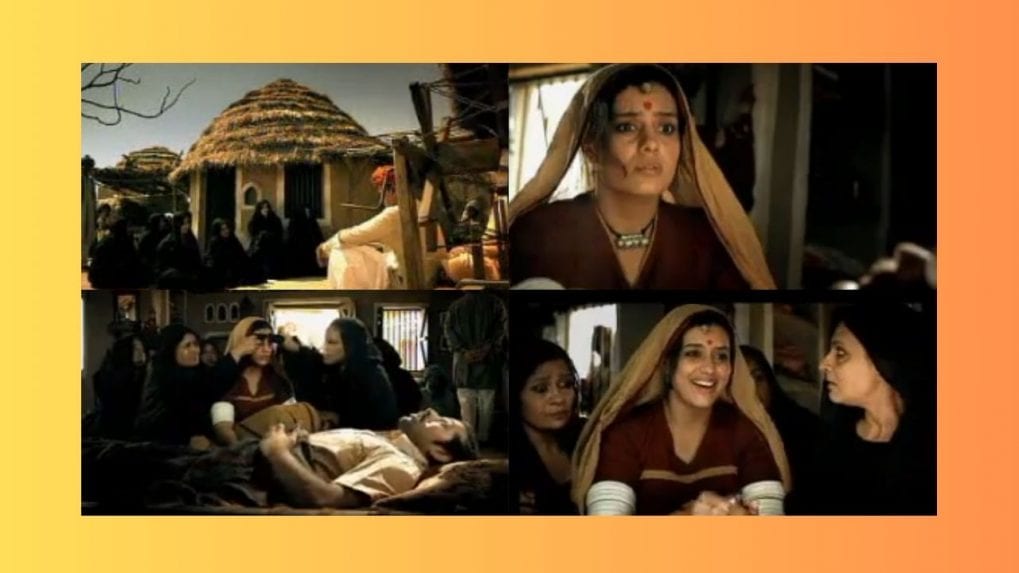
In India, symbolism runs deep. Bangles, lockets, and the vermilion mark on a woman’s forehead are not mere adornments—they are cultural codes, layered with belief, ritual, and emotion. The sindoor, in particular, is tied to marriage and longevity, a visible marker of a husband’s life and a woman’s ‘suhaag’. It can be washed away easily—but what if it couldn’t?
That provocative question lay at the heart of one of Indian advertising’s most unforgettable films.
Released in 2006 by Lowe Lintas for Camlin (now Kokuyo Camlin), the permanent marker commercial did something no one had attempted before: it took a low-interest, utilitarian product and embedded it within a deeply emotional, culturally charged narrative—one that unfolded in a Rajasthani village, among grief, ritual, and dark humour.
A funeral, a marker, and an unexpected twist
The film opens in a familiar cinematic register. A man lies on his deathbed. Outside, a group of Rudalis—professional mourners traditionally hired to weep at funerals—wait impatiently for their cue. When the oil lamp’s flame flickers out, signalling death, the village gathers. The Rudalis step in, performing the rituals of widowhood: bangles are removed, jewellery taken off, symbols of marriage erased.
All except one.
No matter how hard they try, the vermilion mark on the woman’s forehead refuses to come off. As they scrub harder, the impossible happens—the “dead” man suddenly gasps back to life. A flashback reveals the reason: in a moment of desperation, the husband had used a Camlin permanent marker instead of sindoor.
The message lands with wicked clarity: permanent really means permanent.
Making the invisible visible
For Priti Nair, former creative head at Lowe Lintas, the challenge was clear from the start. Marker pens, she explains, are a classic non-involvement category. “Nobody in an office really knows—or cares—which brand of marker is being used. The purchase decision is usually made by the admin department, not the end user. There’s no loyalty, no emotional connection.”
Ironically, that invisibility was also the opportunity. Low-involvement, need-based categories—like adhesives, plywood, or stationery—offer fertile ground for creativity precisely because their functional benefits are generic. “When the benefit is the same across brands, storytelling becomes the only differentiator,” Nair says.
Camlin, once a household name, wanted to reclaim its place in public memory. The permanent marker was its hero product, and the brief was to establish its core benefit—permanency—in a way people would never forget.
A bold idea, carefully handled
Lowe Lintas’s former copywriter Arun Iyer, who wrote the script, recalls that the idea did not arrive fully formed. Multiple scenarios were explored—women in the rain, sindoor being wiped away in everyday contexts—but each felt predictable. The breakthrough came when the team decided to push the product completely out of its expected environment.
“Rudalis are associated with grief and mourning—very serious, emotional moments,” Iyer says. “Turning that into humour is risky. It can easily offend if handled poorly.”
Read More: From efficiency to emotion: The Nokia campaign that redefined mobile advertising in India
The solution was to lean into the contrast, but with restraint. The permanence of the marker was layered onto the symbolism of the bindi, traditionally linked to a husband’s long life. The result was a narrative that was unexpected, slightly absurd, and yet rooted in cultural logic.
“It wasn’t meant to be hyper-logical,” Iyer adds. “We took deliberate creative leaps. The goal was to entertain, spark conversation, and pull a low-interest category into public consciousness.”
Craft, casting, and client courage
Director Abhinay Deo of Ramesh Deo Production brought a distinctly cinematic sensibility to the film, shooting over two days at Film City, Goregaon, on a hilltop set designed to resemble rural Rajasthan. With a reported budget of around Rs 50 lakh, as per reports, the production relied more on craft than spectacle.
Casting was critical. The Rudalis had to feel authentic, not exaggerated. The performances needed to balance pathos and humour without slipping into parody. Music, too, played a vital role—the score begins in tragedy and subtly transitions into comedy, guiding the audience through the tonal shift.
Equally important was client backing. Shriram Dandekar, Vice Chairman & Executive Director of Kokuyo Camlin since 2024, backed the idea without hesitation. “It was a creative leap of faith,” Iyer says. “That kind of courage from a client is rare. Without it, a film like this simply doesn’t get made.”
Mahesh Joshi, the brand’s then marketing head, was closely involved throughout, ensuring alignment between ambition and execution.
Limited media, maximum impact
Despite its cultural ambition, the campaign ran on a modest media budget. Instead of spreading the spend thinly, the team chose precision. The film aired primarily on Kingfisher Airlines’ in-flight screens—at a time when even economy class featured TVs—ensuring exposure among office-going professionals. It was also broadcast just once during the Filmfare Awards, as explained by Nair.
The strategy worked. The ad travelled through word of mouth, conversation, and recall—proof that a memorable idea can outperform brute-force frequency.
Debate, awards, and lasting recall
The response was immediate and polarised. Some viewers criticised the film as regressive; others celebrated its audacity. What mattered was that everyone talked about it. The campaign went on to win awards at the New York Festivals and in Japan—recognition that came without aggressive award chasing, reminisced Nair.
More importantly, it restored Camlin to cultural relevance.
Looking back, Nair sums up the philosophy behind the film simply: “Permanency is a generic benefit. The trick isn’t the benefit—it’s how you dramatise it. By placing a modern product in a deeply traditional ritual, we created contrast, tension, and memory.”
From purpose-driven work and narrative-rich brand films to AI-enabled ideas and creator-led collaborations, the awards reflect the full spectrum of modern creativity.
Read MorePraveen Someshwar, Managing Director and CEO of Diageo India, joins the Grand Jury of the Storyboard18 Awards for Creativity, highlighting the awards’ focus on work that blends cultural relevance with strategic and commercial impact.