How it Works
WPP, Havas, Omnicom: Are advertising’s biggest holdcos recasting agencies as AI Operating Systems?
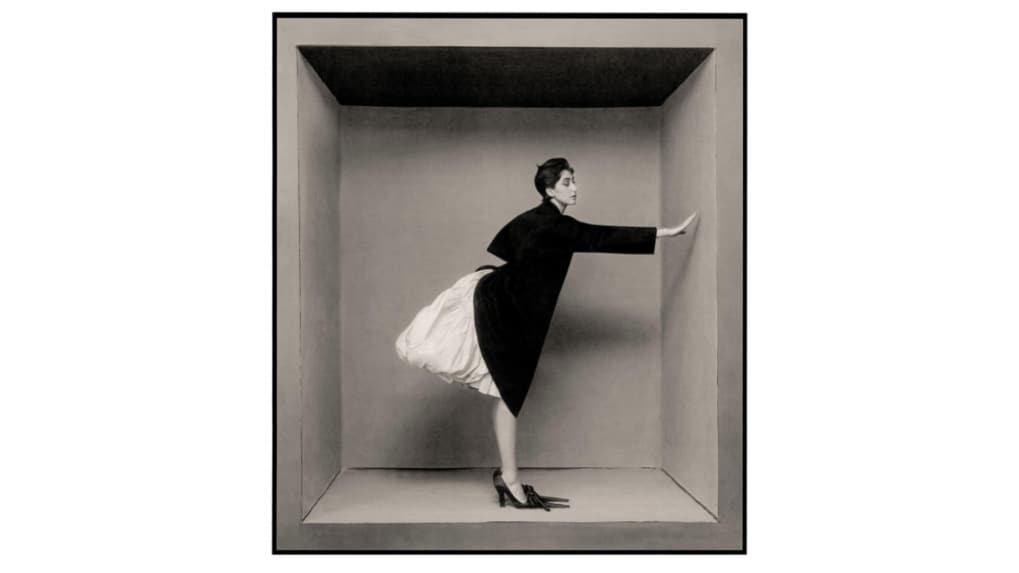
Ever since Zohran Mamdani’s historic victory in the 2025 New York City mayoral election, public attention has steadily shifted to the woman standing beside him. But Rama Duwaji, a 28-year-old Syrian-American artist and activist, has defied the familiar expectations attached to the role of a political spouse. Instead of adopting a traditional, carefully managed public image, she has emerged as a cultural figure in her own right, one that the internet has enthusiastically crowned the “Gen Z Princess Diana.”
Born in Houston to Syrian parents and raised partly in Dubai, Duwaji represents a distinctly global, post-traditional identity. She studied fine arts at the Virginia School of Fine Arts before completing her education at the School of Visual Arts in New York. Long before her husband’s election, she had already established herself as a respected illustrator, collaborating with publications such as Vogue US, The New York Times, and The Washington Post, and exhibiting work at institutions including Tate Modern. Her art, spanning illustration, ceramics and animation, consistently engages with themes of women’s rights, minority representation and global humanitarian crises, particularly Palestine.
What has propelled Duwaji into pop culture territory, however, is not just her résumé but her refusal to separate aesthetics from activism. At Mamdani’s victory speech, she wore a custom denim top by Palestinian-Jordanian designer Zeid Hijazi, embroidered with traditional tatreez. The look quickly went viral, interpreted as a subtle yet pointed political statement. In a media landscape saturated with performative symbolism, Duwaji’s approach, quiet, intentional and culturally rooted, struck a chord.
Much like Princess Diana in the 1990s, Duwaji’s fashion choices are being read as narrative tools rather than trends. Her preference for independent designers, boxy silhouettes, vintage pieces and unfussy styling has earned her a reputation for what some fashion commentators have called “uncolonized cool.” Even her haircut, a pixie-bob hybrid or “bixie,” has sparked widespread imitation, drawing inevitable comparisons to Diana’s iconic short style and reinforcing the sense of cultural déjà vu.
Beyond style, it is Duwaji’s perceived accessibility that has fuelled the Diana comparison. She and Mamdani met on the dating app Hinge in 2021 and married four years later in a low-key civil ceremony at New York City Hall. Photos of the couple riding the subway, dressed casually and smiling without ceremony, circulated widely online. For Gen Z audiences raised on curated political branding, the images felt disarmingly human.
Despite her growing visibility, Duwaji has remained notably media-shy. She rarely gives interviews and allows her artwork to do most of the public speaking. According to profiles published in US media, she continues to work independently as an artist, running workshops and producing activist illustrations while maintaining a degree of distance from formal political life. This restraint, visibility without spectacle, has further reinforced the parallels with Diana’s early public image.
As New York City’s first Muslim and Gen Z First Lady, Duwaji also occupies unprecedented symbolic ground. Living with Mamdani in Astoria, Queens, the couple represents a generational shift in political culture: younger, more diverse, openly progressive, and fluent in the language of social media without being consumed by it. Their unconventional marriage and Duwaji’s outspoken activism have drawn criticism from conservative quarters, which she has largely met with silence and continued creative output.
Whether the “Gen Z Princess Diana” label endures or fades, its existence reveals something deeper about the current cultural moment. In an era marked by distrust of institutions and hunger for authenticity, Duwaji’s appeal lies in her refusal to dilute herself to fit power. She is neither ornamental nor oppositional, neither celebrity nor cipher. Instead, she occupies a space at the intersection of art, politics and pop culture, reshaping what public partnership looks like in the process.
Rama Duwaji may not be seeking the spotlight, but for a generation searching for figures who feel real, principled and culturally fluent, she has become impossible to ignore.
From purpose-driven work and narrative-rich brand films to AI-enabled ideas and creator-led collaborations, the awards reflect the full spectrum of modern creativity.
Read MorePraveen Someshwar, Managing Director and CEO of Diageo India, joins the Grand Jury of the Storyboard18 Awards for Creativity, highlighting the awards’ focus on work that blends cultural relevance with strategic and commercial impact.