Advertising
From Pink Slips to Silent Sidelining: Inside adland’s layoff and anxiety crisis
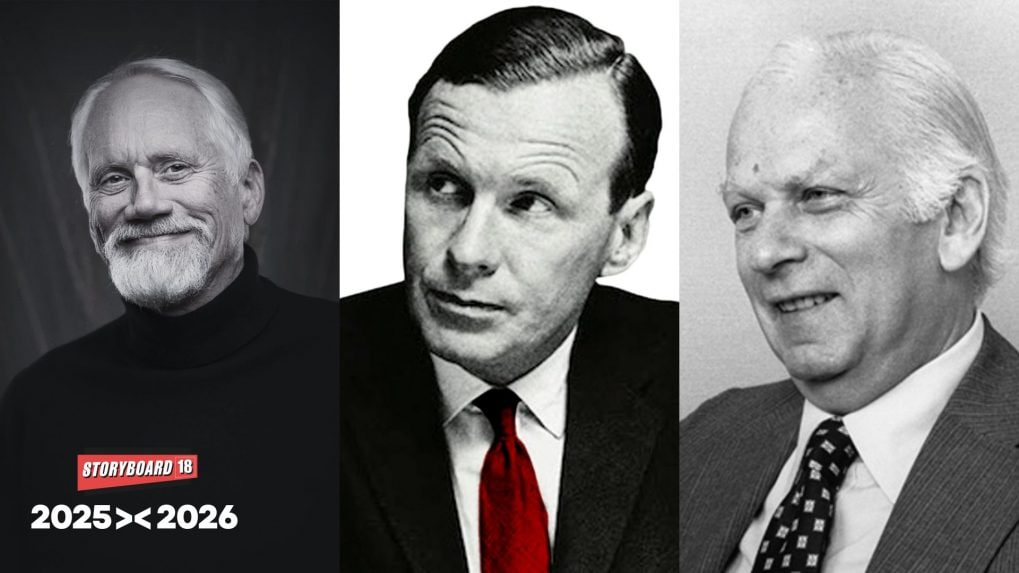
Advertising has always lived at the intersection of persuasion, imagination and commerce. What has changed—dramatically in recent years—is the scale, speed and complexity at which ideas are created, shaped and deployed. Artificial intelligence, data-led targeting and platform-driven formats have raised the bar, but the core challenge remains unchanged: how to create work that cuts through.
Across decades of disruption, some of the industry’s most influential thinkers have returned to a few enduring truths about creativity. Their words, drawn from speeches, interviews and essays over time, reveal how originality, restraint, chaos and humanity continue to define great advertising—regardless of tools or trends.
Creativity begins with an idea, not a formula
David Ogilvy, often called the “Father of Advertising” and founder of Ogilvy & Mather (now Ogilvy), as stated in articles, repeatedly warned against mistaking cleverness for effectiveness. For him, creativity was inseparable from results. An idea that didn’t move people to act simply didn’t qualify as creative. Ogilvy also believed that the strongest ideas often arrive disguised as humour—suggesting that wit and levity unlock sharper thinking than rigid logic ever could.
That view echoed across generations. Rosser Reeves, one of the pioneers of the Unique Selling Proposition, argued that the job of advertising was not to make ads flashy but to make products interesting. Technique, he insisted, could never compensate for a weak core idea.
Bill Bernbach, co-founder of Doyle Dane Bernbach (DDB), took this thinking further by rejecting the notion that advertising was a precise science. Persuasion, he believed, was closer to art—dependent on sensitivity, intuition and talent. An idea, Bernbach famously suggested, could turn into something magical or completely meaningless depending on the creative hands shaping it.
Originality is often about recombination
Modern creative leaders have expanded this definition. Elvis Chau, executive creative director and partner at Anomaly Shanghai, has pointed out that advertising is rarely created in a vacuum. Instead, originality often comes from how existing elements are mixed, combined and reframed into something distinctive. Creativity, in this sense, is less about invention from scratch and more about unexpected synthesis.
Rei Inamoto, former chief creative officer at AKQA, framed creativity as the ability to solve obvious problems in unexpected ways—or unexpected problems in obvious ways. He consistently emphasised that creativity should serve businesses and people, rather than disruption for disruption’s sake.
Fear, chaos and discomfort are creative catalysts
Several legends have highlighted that discomfort is not a side effect of creativity—it is central to it.
Lee Clow, former chairman and global chief creative officer of TBWA\Worldwide, believed that truly strong ideas should feel unsettling at first. If an idea doesn’t provoke fear or doubt, he argued, it likely isn’t pushing boundaries far enough.
Dan Wieden, co-founder of Wieden+Kennedy, went even further. He described chaos as a necessary ally—one that forces growth, reinvention and originality. In his view, order rarely produces breakthroughs; uncertainty does.
Sir John Hegarty, co-founder of Bartle Bogle Hegarty (BBH), as stated in articles, shared a similar belief. Creativity, he argued, cannot be predictable. It must challenge, surprise and occasionally feel dysfunctional. Denying the messy nature of the creative process, Hegarty warned, often leads to failure.
Creativity thrives on curiosity and difference
Mary Wells Lawrence, founder of Wells Rich Greene, believed creativity was fed by curiosity beyond one’s immediate world. Reading unfamiliar subjects, travelling widely and engaging with people unlike oneself were, for her, essential disciplines—not indulgences. Stretching one’s perspective, she argued, was the only way to avoid creative stagnation, added the articles.
Leo Burnett, whose agency shaped some of advertising’s most enduring icons, which include Tony the Tiger, the Marlboro Man, and the Pillsbury Doughboy, consistently returned to simplicity and humanity. He believed ideas flourished best in environments that preserved a spirit of fun. While business was serious, Burnett insisted that joy and playfulness were not incompatible with commercial success. He also maintained that advertising worked best when it helped people—because helping people ultimately helped businesses.
Rebellion, risk and restraint
Many of advertising’s greatest figures have stressed the importance of nonconformity. Ogilvy believed that talent was often found among rebels and dissenters—people willing to escape what he called the “tyranny of reason.” Excessive rationality, he argued, frequently blocked imagination.
At the same time, David Droga, founder of Droga5, has spoken about the value of restraint. Just because technology enables something doesn’t mean it should be done. For Droga, creativity ultimately comes down to a simple battle: good versus bad. Tools don’t decide the outcome—judgement does.
Seth Godin, marketing expert, echoed this sentiment from a different angle, reminding creatives that no book or framework can replace the willingness to fail. Bad ideas, he argues, are not obstacles but necessary steps toward meaningful ones.
The practical power of creativity
Despite its mystique, many legends have insisted that creativity is not abstract or indulgent—it is deeply practical. (Bill) Bernbach rejected the idea that creativity was esoteric, calling it one of the most useful tools a businessperson could employ. Burnett similarly described advertising as the ability to interpret the emotional heartbeat of a business and translate it into words and images that resonate.
American advertising executive Alex Osborn, the man who popularised brainstorming, summed up this pragmatism with a simple metaphor: success requires participation. You may fail if you try—but if you don’t try at all, failure is guaranteed.
From purpose-driven work and narrative-rich brand films to AI-enabled ideas and creator-led collaborations, the awards reflect the full spectrum of modern creativity.
Read MoreLooking ahead to the close of 2025 and into 2026, Sorrell sees technology platforms as the clear winners. He described them as “nation states in their own right”, with market capitalisations that exceed the GDPs of many countries.