How it Works
WPP, Havas, Omnicom: Are advertising’s biggest holdcos recasting agencies as AI Operating Systems?
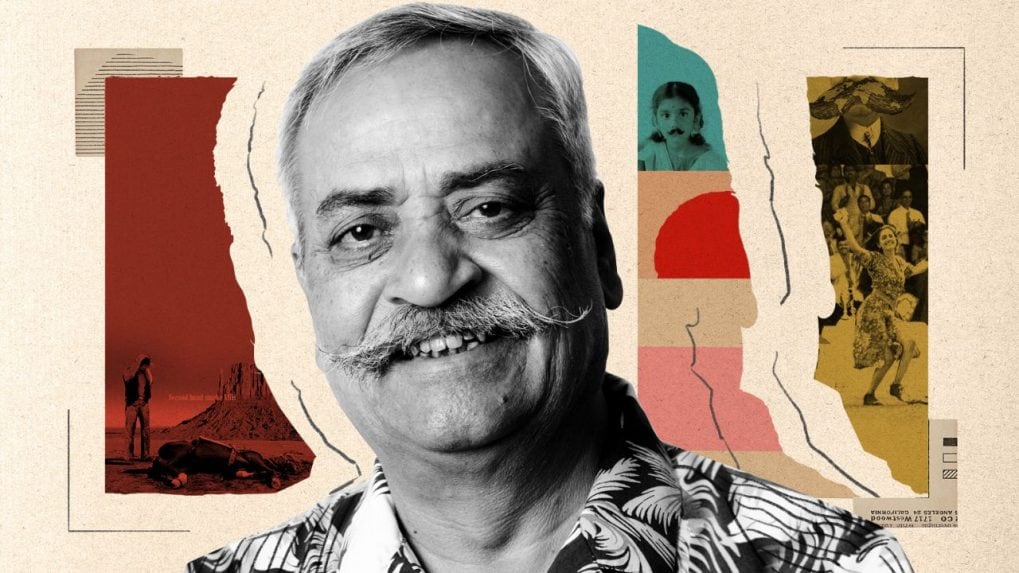
When the Indian government announced a posthumous Padma Bhushan for Piyush Pandey, it was less a surprise than a formal acknowledgment of something the industry — and much of the country — had long accepted: that few individuals outside cinema or politics have shaped modern India’s public language as profoundly as he did.
Pandey, who died in 2025, was not merely an advertising executive. Over four decades at Ogilvy India, he became the defining creative force behind a generation of campaigns that altered how brands spoke — and whom they spoke to. In honoring him, the state has effectively recognized advertising as a cultural craft, not just a commercial one.
At a time when Indian advertising largely addressed its audience in polished, aspirational English, Pandey insisted on speaking in the cadences of the street. He joined Ogilvy in 1982 after a series of unlikely early careers — as a cricketer, tea taster and construction worker — and entered an industry whose tone felt distant from the lives of most Indians. He changed that, decisively.
Campaigns like Cadbury’s “Kuch Khaas Hai,” Asian Paints’ “Har khushi mein rang laaye,” and a long line of Fevicol advertisements did more than sell products. They became part of everyday conversation, quoted across class and geography. Pandey did not simply introduce Hindi into advertising; he legitimized emotion, humor and local idiom as powerful tools of persuasion.
“He changed not just the language of Indian advertising,” a longtime colleague once said. “He changed its grammar.”
That influence extended well beyond consumer brands. Pandey also helped shape political communication, most notably with the slogan “Ab ki baar, Modi sarkar,” a line that entered electoral folklore. Yet even his critics acknowledged that his central contribution was not ideology, but instinct — an unerring sense of what would resonate with a mass audience.
Despite his stature, Pandey was famously reluctant to cast himself as a creative auteur. He described advertising as a team sport and resisted the cult of individual genius. “A Brian Lara can’t win for the West Indies alone,” he once said, deflecting praise with characteristic humor. Under his leadership, Ogilvy India became one of the world’s most awarded agencies and a training ground for generations of creative leaders who absorbed his emphasis on empathy over cleverness.
International recognition followed. In 2018, Pandey and his younger brother, the filmmaker Prasoon Pandey, became the first Asians to receive the Lion of St. Mark at the Cannes Lions International Festival of Creativity, a lifetime achievement award that placed Indian advertising firmly on the global creative map.
Yet Pandey remained skeptical of trends and technological hype. Long before artificial intelligence and data-driven creativity became industry obsessions, he cautioned against mistaking novelty for meaning. Advertising, he argued, must first move people. “Somewhere, you need to touch the hearts,” he said. “No audience is going to see your work and say, ‘How did they do it?’ They will say, ‘I love it.’”
When he stepped down as executive chairman of Ogilvy India in 2023, taking on an advisory role, it was a quiet exit from an unusually public career. His influence, however, never receded. His ideas continued to circulate — in campaigns, in classrooms, in the instincts of younger creatives trained in his image.
The Padma Bhushan, awarded after his death, situates Pandey in a lineage typically reserved for industrialists, artists and statesmen. It reflects a broader recognition that in a country of extraordinary linguistic and cultural diversity, shaping how millions speak, laugh and feel about everyday life is no small legacy.
Pandey often said that the best ideas came “from the street, from life, from listening.” In listening so closely to India, he gave its advertising something enduring: a voice that sounded unmistakably like home.
From purpose-driven work and narrative-rich brand films to AI-enabled ideas and creator-led collaborations, the awards reflect the full spectrum of modern creativity.
Read MorePraveen Someshwar, Managing Director and CEO of Diageo India, joins the Grand Jury of the Storyboard18 Awards for Creativity, highlighting the awards’ focus on work that blends cultural relevance with strategic and commercial impact.