How it Works
WPP, Havas, Omnicom: Are advertising’s biggest holdcos recasting agencies as AI Operating Systems?
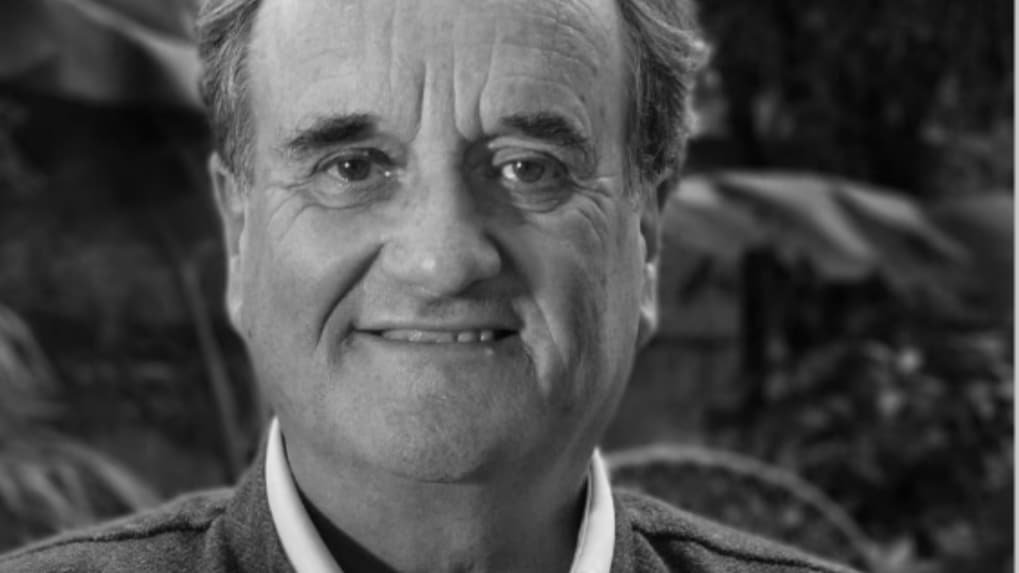
Sir Mark Tully, the broadcaster and journalist whose resonant voice and deep immersion in Indian life made him one of the most influential foreign correspondents of his generation, died at 90. For decades, he served as the British Broadcasting Corporation’s defining interpreter of India to the world, reporting with unusual fluency, cultural intimacy and moral seriousness on a nation in constant upheaval.
From war and famine to political assassinations and communal violence, Sir Mark covered many of the events that shaped modern India. His reporting spanned the 1984 Bhopal gas disaster, the Indian army’s assault on the Golden Temple in Amritsar, and the long, often violent recalibration of India’s secular identity.
Jonathan Munro, the interim chief executive of BBC News and Current Affairs, said in a statement that Sir Mark “opened India to the world through his reporting, bringing the vibrancy and diversity of the country to audiences in the UK and around the world,” adding that he was widely respected in both Britain and India.
Sir Mark’s authority as a correspondent rested not only on longevity but on immersion. Born in 1935 in Calcutta—now Kolkata—during the final years of the British Raj, he grew up in India and returned to live there for most of his adult life. Though British by nationality, he rejected the label of a transient expatriate. India, he insisted, was home.
Fluent in Hindi—a rarity among foreign correspondents in Delhi—Sir Mark earned the affectionate honorific “Tully sahib” and the trust of politicians, editors and civil society leaders across ideological lines. His ability to navigate India’s complexities, without theatrical detachment or easy moralizing, distinguished his work in an era when foreign reporting was often episodic and extractive.
Educated in Britain after World War II, Sir Mark studied history and theology at Cambridge and briefly considered entering the clergy. Journalism, however, became his vocation. He joined the BBC in 1965, initially in an administrative role, before moving into reporting and eventually becoming the corporation’s bureau chief in Delhi.
His broadcasting style—measured, reflective and sometimes idiosyncratic—stood apart from the urgency-driven tone that later came to dominate television news. Admirers praised his insistence on context and continuity; critics argued that he was at times too forgiving of India’s entrenched inequalities. Sir Mark acknowledged the tension but remained unapologetic about his central concern: the survival of India’s pluralistic ethos.
India formally recognized his contribution by awarding him two of its highest civilian honors, the Padma Shri and the Padma Bhushan—an unusual distinction for a foreign national. Britain knighted him in 2002 for services to journalism, an honor he described as “an honour to India.”
In later years, Sir Mark continued to write extensively—producing books of essays, analyses and short fiction, often in collaboration with his partner, Gillian Wright. He lived quietly in south Delhi, far from the diplomatic enclaves and television studios that increasingly defined international journalism.
From purpose-driven work and narrative-rich brand films to AI-enabled ideas and creator-led collaborations, the awards reflect the full spectrum of modern creativity.
Read MorePraveen Someshwar, Managing Director and CEO of Diageo India, joins the Grand Jury of the Storyboard18 Awards for Creativity, highlighting the awards’ focus on work that blends cultural relevance with strategic and commercial impact.