Advertising
From Pink Slips to Silent Sidelining: Inside adland’s layoff and anxiety crisis
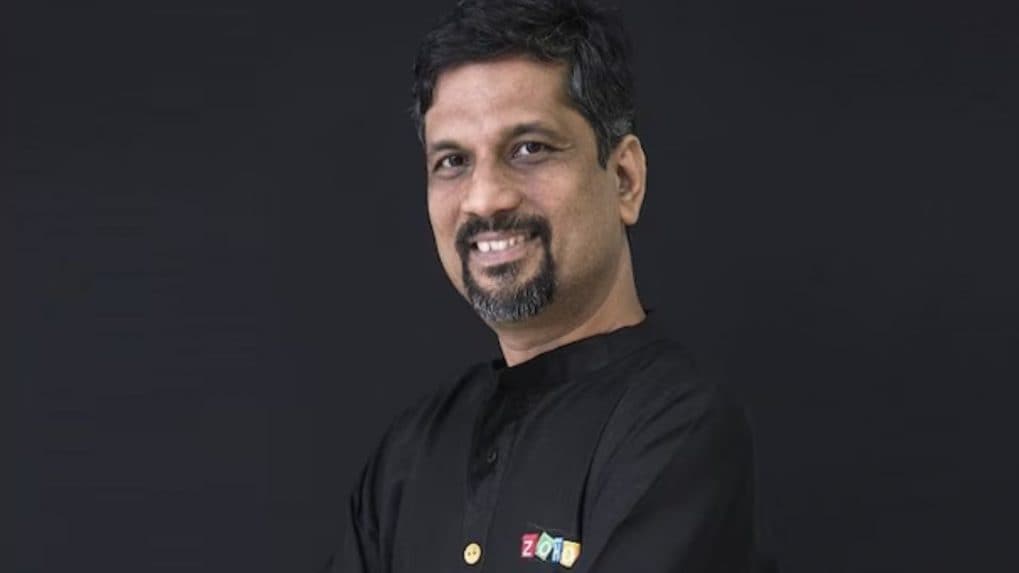
Zoho co-founder and Padma Shri awardee Sridhar Vembu has said that India’s global image has “transformed” over the past decade, crediting Prime Minister Narendra Modi for the shift, remarks that have triggered a heated debate online over how such perceptions should be measured.
Vembu made the comments in a post on X while responding to a journalist who had shared an article from The Hindu titled ‘A year of dissipating promises for Indian foreign policy’, which argued that India must acknowledge the “limits of performative diplomacy”.
Those of us who lived abroad for a long period (like I did, 30 years spent abroad) know just how much India's image abroad has transformed in the past 10 years. That is the real yardstick. We have to thank our Prime Minister for this and that is the reason his popularity is so… https://t.co/qqgUkJyF83
— Sridhar Vembu (@svembu) December 27, 2025
Drawing on his personal experience, Vembu wrote that people who have lived abroad for extended periods are better positioned to sense the change. “Those of us who lived abroad for a long period (like I did, 30 years spent abroad) know just how much India’s image abroad has transformed in the past 10 years… We have to thank our Prime Minister for this,” he said.
However, his assessment was met with strong disagreement from several users, who questioned the absence of measurable indicators to support the claim. One user asked what could be considered an “objective metric” for evaluating India’s global image and pointed to foreign tourist arrivals as a commonly used proxy, arguing that the trend appeared to be weakening rather than improving.
Vembu responded by attributing the decline in tourist numbers to pandemic-era travel restrictions, asking critics to factor in “serious travel restrictions for a few years”.
Another line of criticism focused on India’s passport strength. A user noted that in 2025, Indian passport holders reportedly have visa-free or visa-on-arrival access to only 59 countries, arguing that international trust in citizens is a key indicator of a country’s global standing.
In reply, Vembu said passport strength was closely linked to economic fundamentals, particularly income levels. “Our GDP per capita is still too low… To raise the GDP per capita 10x is a monumental effort and takes decades,” he wrote.
Some users pushed back more sharply, claiming that India’s international perception had deteriorated compared with earlier decades, particularly the mid-2000s. Others cited anecdotal experiences abroad to argue that stereotypes and negative impressions had intensified rather than diminished.
At the same time, a smaller group of commenters supported Vembu’s view, suggesting that conversations about India overseas have shifted from poverty and overpopulation to technology-led narratives. They pointed to growing global recognition of India’s digital public infrastructure, startup ecosystem and platforms such as UPI as signs of changing perceptions.
From purpose-driven work and narrative-rich brand films to AI-enabled ideas and creator-led collaborations, the awards reflect the full spectrum of modern creativity.
Read MoreLooking ahead to the close of 2025 and into 2026, Sorrell sees technology platforms as the clear winners. He described them as “nation states in their own right”, with market capitalisations that exceed the GDPs of many countries.