Digital
Why OpenAI is hiring 100 ex-bankers: Inside the ChatGPT-maker's secret project to automate Wall Street's grunt work
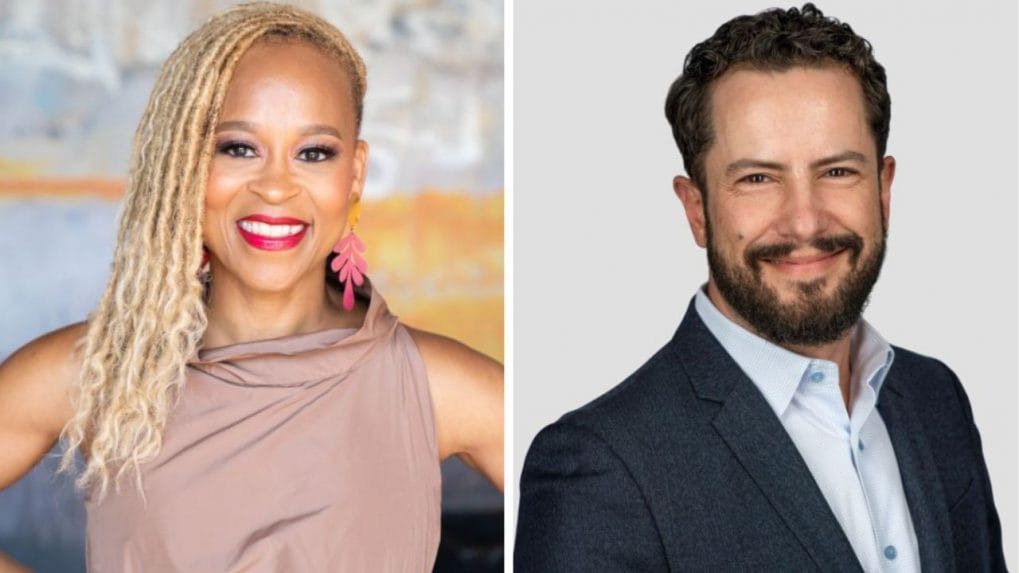
Unilever Chief Marketing and Growth Officer (CMGO) Esi Eggleston Bracey will leave the company in January 2026, marking the end of an eight-year tenure with the business. Unilever confirmed that the CMGO position will not be replaced with a direct successor. Instead, Leandro Barreto, currently the Chief Marketing Officer for Unilever Beauty and Wellbeing, will expand his responsibilities to oversee the company’s broader enterprise marketing agenda, as per a report by ADWEEK.
The leadership change coincides with a shift in Unilever’s marketing structure aimed at integrating global capabilities directly into its specific business groups. This decentralization follows the 2023 reorganization of the company into five distinct units: Personal Care, Beauty and Wellbeing, Nutrition, Home Care, and Ice Cream. The Ice Cream division was subsequently spun off as the Magnum Ice Cream company in December 2025. Eggleston Bracey will remain through January to facilitate the leadership transition.
During her time as CMGO, Eggleston Bracey managed the digital marketing, media, and commerce hubs for over 400 brands, including Dove, Hellmann’s, and Persil. Her tenure involved scaling AI-driven content efficiencies and leading social-impact initiatives such as the Crown Act. She previously served as EVP and COO of the North American personal care division starting in 2018.
Barreto, who has been with Unilever for 23 years, takes over these enterprise duties as CEO Fernando Fernandez seeks to transform the company into a "marketing and sales machine." Under Fernandez, Unilever has committed to allocating 30% to 50% of its $8 billion annual advertising budget toward social-first campaigns and significantly increasing influencer partnerships. The Beauty and Wellbeing unit, previously under Barreto's sole marketing leadership, recently reported a 3.9% year-on-year profit increase in October.
For decades, Unilever perfected the art of scale: big brands, big budgets and broadcast messages designed to travel the world intact. Now, under Fernando Fernandez, the company is betting that scale alone is no longer enough, and that trust, increasingly, must be borrowed rather than declared.
Recently, at a fireside chat with Celine Pannuti, head of consumer staples at JPMorgan, Fernando Fernandez described what he called a “real revolution” in the way Unilever markets its products, one that moves decisively away from traditional top-down advertising and toward what he sees as a more fragmented, credibility-driven model.
“I believe that broadcasting messages from big brands now can become suspicious,” Fernandez said.
The alternative, he argued, lies in what Unilever calls “said by others”-recommendations delivered not by corporations but by people. When Fernandez took over, he made a point of publicly committing to an aggressive expansion of the company’s influencer ecosystem. Today, that network has reached a scale few global companies can match: nearly 170,000 influencers in the Beauty and Wellbeing division alone, and close to 300,000 across the group.
The shift reflects a broader change in consumer behavior. Fernandez likened brand discovery to choosing a restaurant: increasingly guided by ratings, reviews and peer validation rather than advertising claims. In that environment, he said, brands must build infrastructure that enables third-party advocacy at scale—not simply buy attention.
Yet Fernandez was notably unsentimental about the company’s progress so far. He rated Unilever’s current marketing execution at “a six or six and a half,” well short of the eight or nine he wants the company to reach. The ambition, he said, is not incremental improvement but a step change—one that touches everything from product development to how brands are validated in the market.
“This is just where I spend,” he said, referring to the disproportionate share of his time devoted to people. About 20 percent of his focus, Fernandez said, is on talent, reflecting a belief that culture and capability, not just capital, will determine whether the strategy succeeds.
From purpose-driven work and narrative-rich brand films to AI-enabled ideas and creator-led collaborations, the awards reflect the full spectrum of modern creativity.
Read MoreIn a wide-ranging interview with Storyboard18, Sorrell delivers his frankest assessment yet of how the deal will redefine creativity, media, and talent across markets.