Advertising
From Pink Slips to Silent Sidelining: Inside adland’s layoff and anxiety crisis
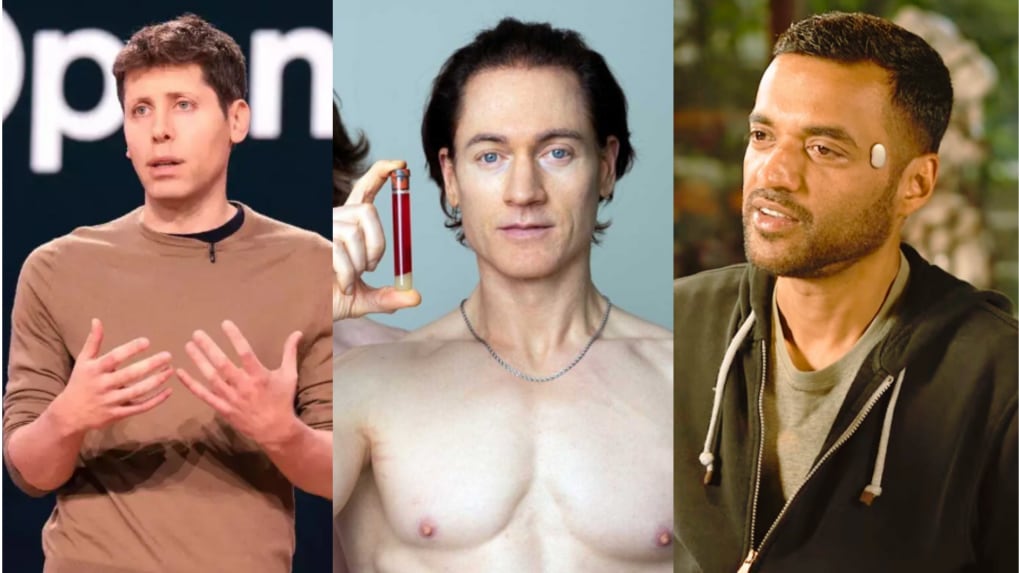
In Silicon Valley and its global echo chambers, the most valuable commodity is no longer just growth or scale. It is time. Over the past decade, wealthy tech founders and startup entrepreneurs have become increasingly preoccupied with slowing, reversing or outsmarting ageing — not as a philosophical exercise, but as a technical problem. Their bodies, much like their companies, are treated as systems to be measured, stress-tested and optimised. Wearables, blood panels, sleep scores and biological-age estimates have become part of an emerging executive toolkit, turning longevity into both a personal obsession and a serious business frontier.
What was once dismissed as fringe “biohacking” has matured into a capital-intensive ecosystem, backed by some of the most influential figures in technology.
Sam Altman, the chief executive of OpenAI, is among the most prominent investors in the space. He has backed Retro Biosciences, a San Francisco-based startup whose stated goal is to add 10 healthy years to the human lifespan. The company has attracted attention not only for its ambition but for the scale of its funding, including hundreds of millions of dollars committed by Altman himself, and for its focus on cellular reprogramming and age-related diseases. Longevity, in this framing, is not about living forever, but about extending “healthspan” — the years lived without chronic illness — a distinction that has helped make the field more palatable to investors and regulators.
The appeal is structural. Founders who have spent their careers debugging software and redesigning markets are instinctively drawn to the idea that biology, too, can be instrumented and improved. Ageing represents the ultimate inefficiency: slow, cumulative decline with no obvious lever to pull. Longevity science offers a familiar promise — that with enough data, iteration and capital, even mortality might yield incremental gains.
That logic is increasingly visible in the consumer technologies founders embrace and promote. Products like Oura and Whoop, which track sleep, recovery and cardiovascular metrics, have become status symbols in certain tech circles, reframing health as a set of dashboards and scores. These tools sell not just wellness, but foresight — a sense that decline can be anticipated and managed rather than endured.
The founder-as-test-subject model has also taken on a public dimension. Bryan Johnson, the entrepreneur who sold Braintree to PayPal, has turned his extreme longevity regimen into a personal brand and commercial venture, Blueprint. His daily routines, biological-age claims and supplement stacks have been widely reported and debated, emblematic of a culture that treats the human body as a prototype. Yet scrutiny has followed visibility. Reporting by The New York Times has examined the legal and organisational structures around Johnson’s project, highlighting how the longevity economy, like any other, sits at the intersection of science, commerce and power.
The movement is not confined to the United States.
In India, Deepinder Goyal, the co-founder of Zomato and chief executive of Eternal, has offered a striking example of how longevity thinking is spreading among global tech elites. When Goyal appeared on a popular YouTube podcast late last year, viewers fixated less on his comments than on a small metallic device affixed to his temple. Online speculation ranged from satire to conspiracy before Goyal clarified that the object, called “Temple,” was an experimental sensor designed to measure blood flow to the brain in real time.
The device is part of Goyal’s personal research into what he calls the “Gravity Ageing Hypothesis” — the idea that gravity, acting over decades, reduces cerebral blood flow and accelerates brain ageing, which in turn hastens decline across the body. Goyal has committed significant personal capital to exploring the theory under Eternal, emphasising that the work is experimental, open-source in spirit and separate from Zomato’s commercial operations. The sensor itself is not a consumer product and is not available for public use.
The reaction to Goyal’s project has been mixed, reflecting a broader ambivalence about the longevity movement. Supporters see curiosity and long-term thinking; critics see speculative logic and elite indulgence. That tension runs through the entire field. While investment and research have surged, ageing remains a regulatory challenge: it is not classified as a disease, complicating clinical trials and approvals. The science is promising, but far from settled.
There is also a growing backlash within tech itself. Some founders have begun to question whether constant tracking and optimisation improve health or merely amplify anxiety. A recent viral critique by an AI startup executive described abandoning wearables altogether, arguing that the pursuit of perfect metrics had become counterproductive.
Still, the momentum is unmistakable. Longevity now sits at the convergence of three forces tech understands well: fear, ambition and capital. Fear of decline. Ambition to remain productive, relevant and in control. Capital willing to fund moonshots that promise even marginal extensions of vitality.
Whether biology ultimately cooperates remains an open question. But for the world’s wealthiest entrepreneurs, ageing has already become the next system to challenge — and perhaps the most personal startup they will ever run.
From purpose-driven work and narrative-rich brand films to AI-enabled ideas and creator-led collaborations, the awards reflect the full spectrum of modern creativity.
Read MoreLooking ahead to the close of 2025 and into 2026, Sorrell sees technology platforms as the clear winners. He described them as “nation states in their own right”, with market capitalisations that exceed the GDPs of many countries.