Digital
Why OpenAI is hiring 100 ex-bankers: Inside the ChatGPT-maker's secret project to automate Wall Street's grunt work
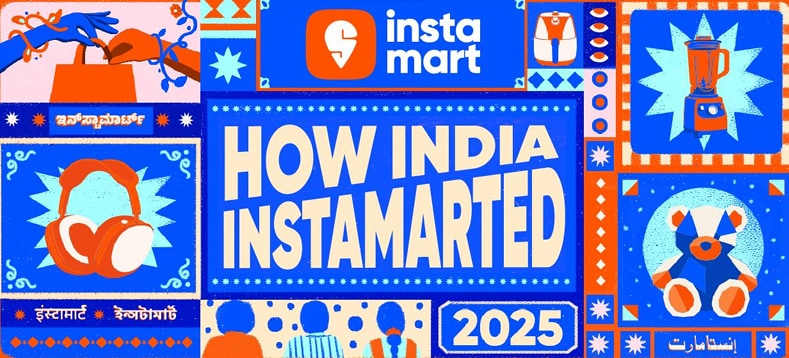
From a ₹10 printout in Bengaluru to a ₹4.3 lakh cart stacked with iPhones in Hyderabad, India’s relationship with quick commerce reached a new inflection point in 2025. According to How India Instamarted 2025, Swiggy Instamart’s annual order analysis, convenience shopping has firmly moved beyond emergency grocery runs to become part of everyday life across cities and categories.
The fifth edition of the report, based on millions of orders placed between January and November across more than 128 cities, highlights how Indians increasingly turned to Instamart for everything from daily staples and late-night snacks to electronics, gold, gifting and wellness products, all delivered within minutes.
From essentials to indulgence
Daily consumption remained the backbone of the platform. Milk emerged as the most frequently ordered item, with Indians ordering over four packets every second through the year. Dairy continued to dominate household baskets, with paneer outselling cheese by a wide margin and butter remaining a breakfast staple across cities. Late-night cravings were equally predictable, as masala-flavoured potato chips topped after-hours orders in nine of the ten largest markets.
At the same time, high-value purchases gained visibility. The largest single cart of the year was recorded in Hyderabad, where a customer spent ₹4.3 lakh on three iPhone 17 devices. Bengaluru shoppers added precious metals to festive carts, including a one-kilogram silver brick worth nearly ₹2 lakh during Diwali. Gold purchases surged sharply on Dhanteras, with Instamart reporting over 400% growth in gold orders compared to the previous year.
Across repeat purchases, the platform’s top spender clocked more than ₹22 lakh in 2025, buying everything from smartphones and gold coins to everyday essentials such as milk, fruits and confectionery.
Speed as a differentiator
Speed remained central to Instamart’s value proposition. In some of the fastest deliveries recorded this year, a pack of instant noodles reached a customer in Lucknow in under two minutes, while smartphones were delivered in as little as three minutes in cities such as Pune and Ahmedabad during the iPhone 17 launch.
The data also shows clear shopping patterns. Peak ordering hours were concentrated between 7 am and 11 am, followed by an evening window between 4 pm and 7 pm, reflecting how quick commerce has been woven into daily routines.
Gifting, discretion and new categories
Beyond groceries and electronics, gifting and personal care emerged as strong growth drivers. Valentine’s Day saw rose orders peak at 666 per minute nationally, while Bengaluru alone recorded 1,780 rose-and-chocolate orders per minute during peak hours. Raksha Bandhan, Friendship Day and Valentine’s Day ranked among the most gifted occasions of the year.
The report also points to rising demand for discreet purchases. One in every 127 Instamart orders in 2025 included condoms, with September emerging as the peak month. A single account in Chennai placed 228 condom orders over the year, spending over ₹1 lakh.
Health and wellness categories posted strong momentum, particularly in smaller markets. Bhopal recorded a 16-fold year-on-year increase in wellness orders, while Tier-II cities such as Rajkot, Ludhiana and Bhubaneswar emerged as key growth engines for quick commerce.
Tier-II momentum and consumer behaviour shifts
While metros continued to lead in absolute volumes, the report highlights accelerating adoption beyond major urban centres. Rajkot logged nearly ten times growth year on year, followed by strong expansion in Ludhiana and Bhubaneswar. First-time buyers from Tier-II and Tier-III cities accounted for a significant share of orders during Instamart’s Quick India Movement sale, which the company said helped shoppers save around ₹500 crore collectively.
Consumer behaviour also reflected a mix of value consciousness and indulgence. The smallest cart of the year, a ₹10 printout, was recorded in Bengaluru, underscoring the platform’s role in meeting micro-needs as much as big-ticket aspirations.
A snapshot of India’s evolving cart
Taken together, Instamart’s 2025 data offers a snapshot of how Indian consumers are redefining convenience, blending speed with scale, routine purchases with impulse splurges, and metro-led trends with rising Tier-II participation.
As quick commerce platforms expand their assortments and reach, the report suggests that India’s “add to cart” moment is no longer limited by category, city or occasion, but shaped increasingly by immediacy and ease.
From purpose-driven work and narrative-rich brand films to AI-enabled ideas and creator-led collaborations, the awards reflect the full spectrum of modern creativity.
Read MoreIn a wide-ranging interview with Storyboard18, Sorrell delivers his frankest assessment yet of how the deal will redefine creativity, media, and talent across markets.