Digital
Why OpenAI is hiring 100 ex-bankers: Inside the ChatGPT-maker's secret project to automate Wall Street's grunt work
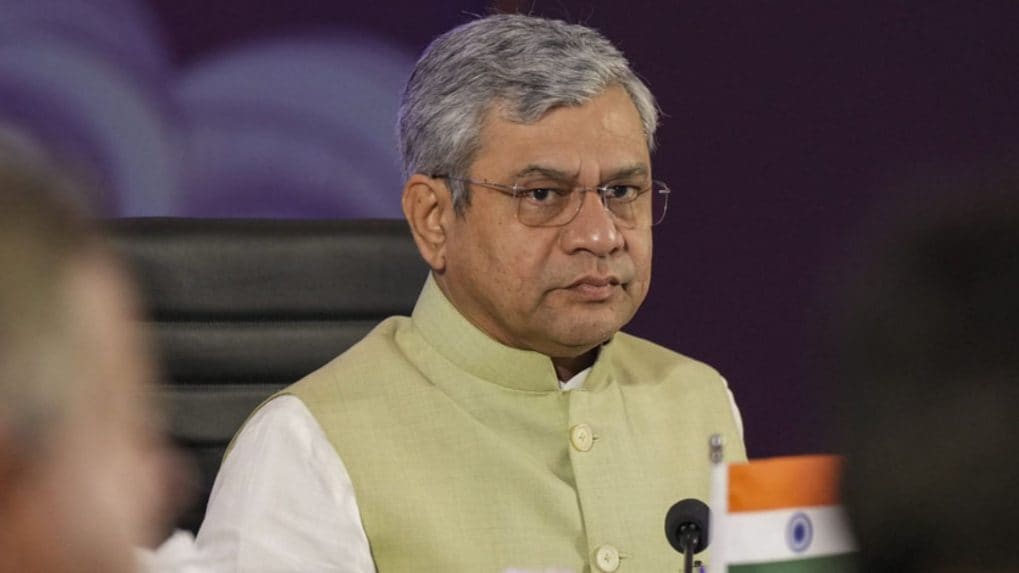
In a stark warning delivered during the Winter Session of Parliament on Tuesday, Union Information and Broadcasting Minister Ashwini Vaishnaw raised an alarm over the escalating crisis of AI-generated deepfakes and fake news, calling them a direct attack on India’s constitutional values and democratic integrity.
Speaking in the Lok Sabha, Vaishnaw said the unchecked spread of manipulated digital content across social media platforms now amounts to a violation of the Indian Constitution, particularly the fundamental rights enshrined in Article 21, which protects privacy and personal liberty. Deepfakes, he stressed, weaponise personal data and identity without consent, eroding dignity and enabling large-scale misinformation.
The minister described the phenomenon as an “existential threat” to democracy, urging Parliament to consider stringent new laws to combat the accelerating crisis. His comments come as deepfakes increasingly permeate political communication, especially during election cycles.
India witnessed its earliest documented electoral deepfake incident in 2020, when videos of Delhi politician Manoj Tiwari — fabricated in multiple languages — circulated on WhatsApp. Since then, the sophistication and volume of such digital forgeries have surged, mirroring global trends. Studies worldwide, including recent research from Pakistan’s 2024 elections, show synthetic media significantly intensifying political polarisation beyond what traditional misinformation can achieve.
Vaishnaw underscored that deepfakes fundamentally breach constitutional protections linked to privacy and identity. The misuse of facial features, biometric markers, and voice data constitutes unauthorised processing, directly clashing with the principles of the Digital Personal Data Protection (DPDP) Act, 2023.
While India’s current laws — including Sections 66C, 66D and 66E of the IT Act — criminalise impersonation, identity theft and privacy violations, Vaishnaw acknowledged a widening gap between the law and technological advancements. His call for reinforced legal mechanisms signals the government’s recognition that current tools are insufficient for the scale of the threat.
Coinciding with Vaishnaw’s speech, the Parliamentary Standing Committee on Communications and Information Technology tabled a scathing report declaring that India’s existing framework to curb fake news is “inadequate” against the sophistication of modern misinformation.
Central to the panel’s message was a clear critique of Big Tech’s opaque algorithms. The committee argued that tech giants must face stronger regulatory scrutiny, advocating:
Greater algorithmic transparency
Strict penalties for repeat offenders
Mechanisms to correct algorithmic bias
Tighter interpretations of safe-harbour protections
Mandatory India-based nodal officers for quick compliance and coordination
The report also emphasised the need for nationwide media literacy, beginning at the school and college levels, to build citizens’ long-term resilience against misinformation.
Together, Vaishnaw’s warning and the committee’s recommendations signal an inflection point in India’s approach to information disorder. The government is already considering measures to broaden regulatory powers — including proposals to allow the Press Council of India to oversee social media influencers and content creators.
If adopted, the reforms proposed in Parliament could mark India’s most comprehensive attempt yet to revamp its misinformation governance — placing Big Tech accountability, constitutional protections, and AI regulation at the heart of the debate.
In a wide-ranging interview with Storyboard18, Sorrell delivers his frankest assessment yet of how the deal will redefine creativity, media, and talent across markets.