How it Works
WPP, Havas, Omnicom: Are advertising’s biggest holdcos recasting agencies as AI Operating Systems?
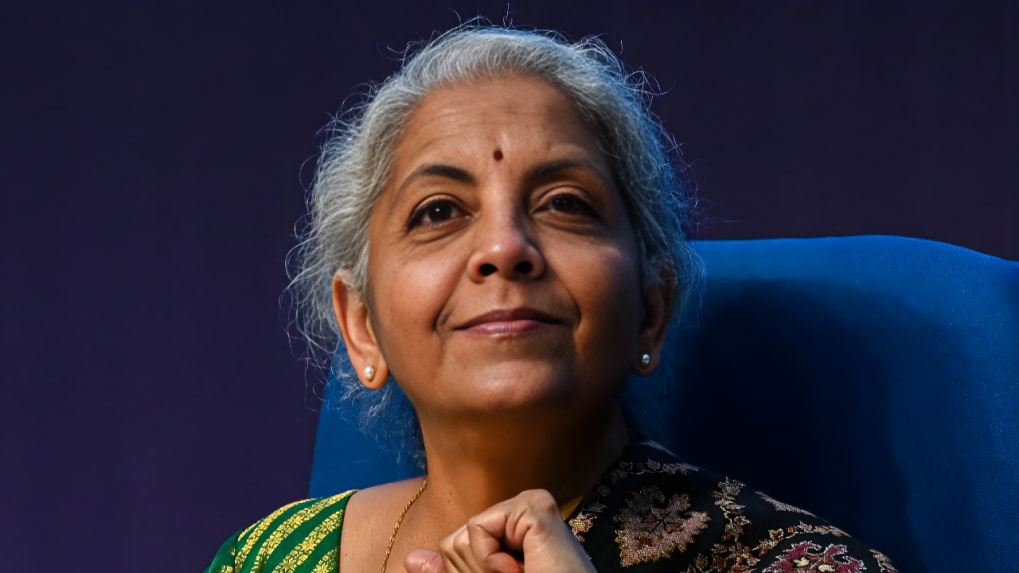
Union Finance Minister Nirmala Sitharaman has placed India’s creative industries firmly on the policy map, proposing targeted support for the country’s growing ‘orange economy’ as part of the Union Budget 2026-27.
Calling Animation, Visual Effects, Gaming and Comics (AVGC) a rapidly expanding sector, Sitharaman said the industry could require nearly two million professionals by 2030, positioning it as a key engine for future-ready jobs. A central pillar of this push is the proposal to support the Indian Institute of Creative Technologies (IICT), Mumbai, in setting up AVGC content creator labs across 15,000 secondary schools and 500 colleges, aimed at widening access to creative and technical tools beyond major metros.
The emphasis mirrors the Economic Survey 2025-26, which identified creativity-led sectors such as media, entertainment, culture and intellectual property as potential drivers of employment, urban services and tourism.
But while policy is now focused on training and access, the harder question lies beyond classrooms: how much long-term value does India actually retain from its creative output? That is where industry voices see both opportunity and friction.
India’s creative workforce is global. Its ownership isn’t.
Viraj Sheth, co-founder and CEO of Monk Entertainment, sees India’s global reputation in AVGC as both an asset and a ceiling.
“Currently, we are still known globally for being dependable execution partners. Indian VFX and animation teams work on projects for studios like Marvel Studios and Netflix, but the ownership of characters, formats, and long term rights usually sits outside India. That keeps us in the value chain, but not at the top of it.”
The distinction, he argues, is not about capability but about control. When Indian companies move from execution to ownership, the economics shift decisively.
“Where we do own IP, the story changes. Films like RRR or franchises like Chhota Bheem show what happens when ideas, not just labor, travel.”
That mindset shift, from vendor to rights holder, is what Sheth believes the next phase of India’s creator economy must prioritise.
Training at scale is a win. Absorption is the real stress test.
The Budget’s emphasis on labs and access is widely seen as a positive first step, particularly for students outside traditional creative hubs.
“Access will absolutely improve. A student outside the big metros can now learn tools like Unreal Engine and build a portfolio that was earlier out of reach. That part is a clear win.”
But scaling training without matching industry demand carries its own risks.
“The pressure point comes after training. If industry absorption does not keep pace, entry level wages will get squeezed.”
For Sheth, the solution lies in tighter integration between education and production. “Labs have to be wired into real studio pipelines, whether with animation houses like Green Gold Animation or gaming players like Nazara Technologies, so talent moves quickly from classroom to billable work.”
Without this linkage, the creator push risks producing skilled talent without sustainable employment pathways.
Platforms give reach. IP creates enterprise value. While India’s creator economy has exploded on digital platforms, Sheth warns against mistaking visibility for durability.
“A lot of creator income today is tied to platforms like YouTube and Instagram. That gives reach, but revenue visibility is limited and rules change fast. It is hard to build long term enterprise value on that alone.”
What scales, he argues, are assets, not campaigns.
“The companies that scale tend to own libraries, formats, or characters.”
He points to legacy and digital-first examples alike.
“Yash Raj Films built decades of value by controlling film IP, music, and distribution across windows. Digital first players like The Viral Fever created shows that travel across platforms and seasons because they controlled the underlying formats.”
Without stronger IP structures, growth in the creator economy remains episodic.
“Without stronger IP structures in the creator economy, growth stays campaign led instead of asset led.”
Why patient capital matters more than ever
The final constraint, according to Sheth, is financial rather than creative.
“Patient capital is the biggest missing piece. Creative IP takes time to mature, whether it is a film slate, an animation franchise, or a game studio. Most funding in India still prefers faster, more predictable cycles.”
Global examples show a different approach.
“In markets like the US, studios and funds backed companies such as A24 for years before the brand fully paid off.”
For India’s orange economy to move up the value chain, similar long-term capital pools will be essential.
“Similar long term capital pools for content and IP in India would give founders the confidence to invest in original worlds, not just short term service revenue.”
From purpose-driven work and narrative-rich brand films to AI-enabled ideas and creator-led collaborations, the awards reflect the full spectrum of modern creativity.
Read MoreThe Storyboard18 Awards for Creativity have unveiled a Grand Jury comprising some of India’s most influential leaders across advertising, business, policy and culture, positioning it among the country’s most prestigious creative award platforms.