Digital
Why OpenAI is hiring 100 ex-bankers: Inside the ChatGPT-maker's secret project to automate Wall Street's grunt work
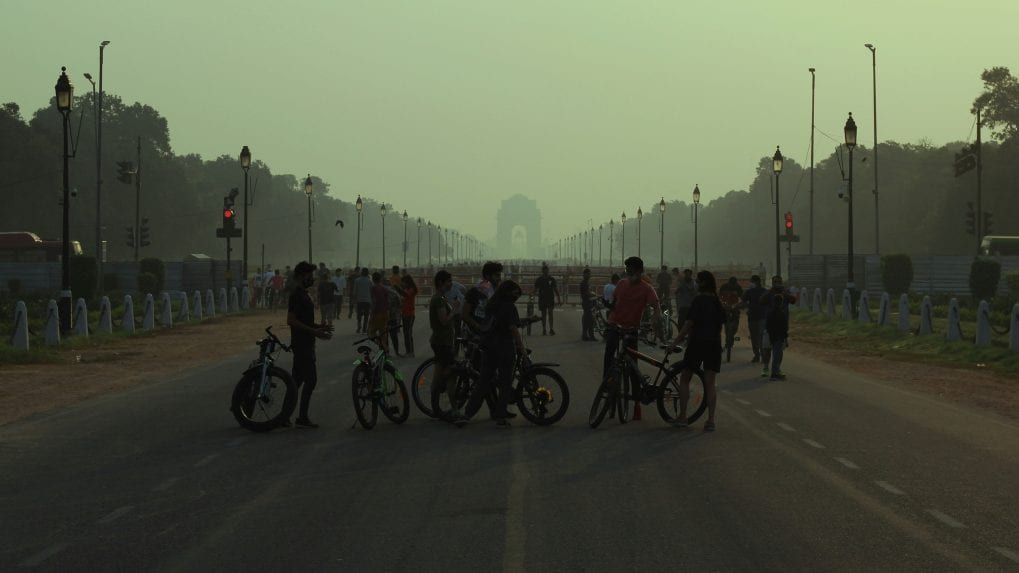
As Delhi’s skyline glittered with fireworks on Diwali night, the celebration quickly turned into a haze of suffocating smog. Despite the Supreme Court’s restriction allowing only a two-hour window (8–10 pm) for bursting green firecrackers, the national capital saw rules go up in smoke, quite literally.
By late Monday night, fireworks continued well past midnight, blanketing the city in thick fumes. Within hours, Delhi’s air quality plunged to “very poor” and “severe” levels across most neighbourhoods.
Data from the Central Pollution Control Board (CPCB) showed that 36 of 38 monitoring stations in the city turned red, signalling hazardous air quality.
At 5:30 am on Tuesday, Delhi’s average Air Quality Index (AQI) stood at 346, firmly in the “very poor” category. Wazirpur topped the charts with an AQI of 423, followed closely by Dwarka (417), Ashok Vihar (404) and Anand Vihar (404).
By afternoon, Delhi’s 24-hour average AQI climbed further to 345, up from Sunday’s 326, showing a sharp deterioration overnight.
Officials warn that the situation could worsen through Tuesday and Wednesday, as stagnant weather and calm winds trap pollutants near the surface. According to the CPCB, AQI between 301–400 is classified as very poor, and 401–500 as severe, a range known to cause serious health impacts, especially for children, the elderly, and those with respiratory conditions.
The toxic cloud wasn’t confined to Delhi alone. The NCR region woke up to equally alarming numbers: Noida and Ghaziabad each recorded 412, Faridabad stood at 412, and Gurugram logged 402, all indicating “severe” air quality.
Data from the Decision Support System (DSS) revealed that industry emissions contributed 23.3%, transport added 15.6%, while local factors such as open waste burning and construction dust made up the rest.
The Commission for Air Quality Management (CAQM) had already implemented Stage II of the Graded Response Action Plan (GRAP) ahead of Diwali, based on warnings from the IMD and IITM.
From purpose-driven work and narrative-rich brand films to AI-enabled ideas and creator-led collaborations, the awards reflect the full spectrum of modern creativity.
Read MoreIn a wide-ranging interview with Storyboard18, Sorrell delivers his frankest assessment yet of how the deal will redefine creativity, media, and talent across markets.