How it Works
WPP, Havas, Omnicom: Are advertising’s biggest holdcos recasting agencies as AI Operating Systems?
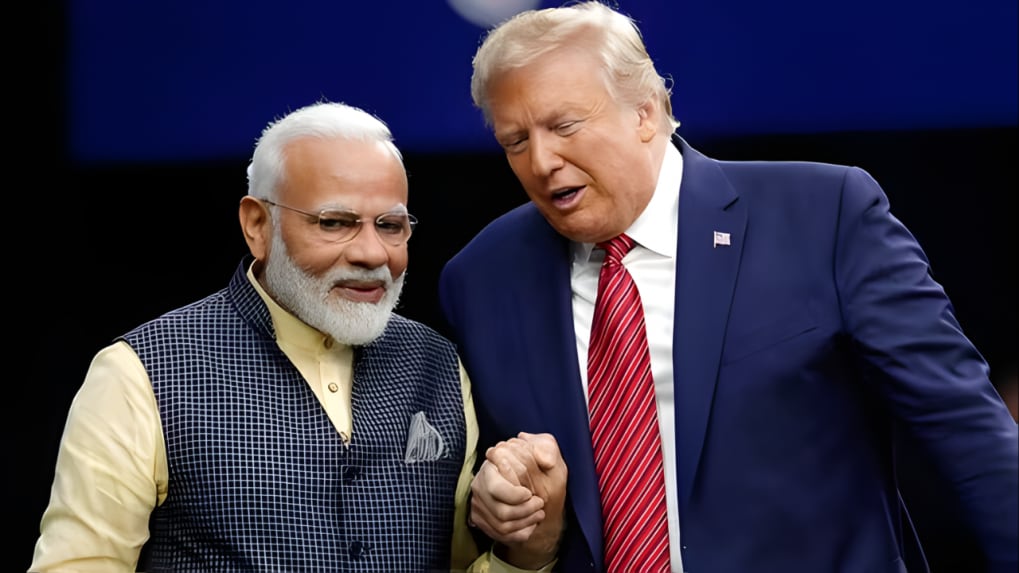
The United States’ decision to cut reciprocal tariffs on Indian goods to 18 percent from 50 percent under a new bilateral trade agreement is expected to significantly strengthen India’s fast-growing electronics and semiconductor ecosystem, according to industry executives and analysts quoted by Moneycontrol.
The agreement, announced by US President Donald Trump, also includes a rollback of non-tariff barriers by Washington, while India has committed to easing its own trade restrictions and increasing imports of US energy, technology and agricultural products.
Although electronics were already protected from fresh duties under Section 232 provisions, industry leaders said the broader tariff reset meaningfully reduces systemic trade risk across global value chains and improves policy predictability, a critical factor for capital-intensive manufacturing sectors such as electronics and semiconductors.
The timing of the deal is particularly notable given the sharp rise in electronics exports from India to the US, led by smartphones. Commerce department data shows that smartphone exports to the US rose more than threefold year-on-year between April and November of FY26 to $12.54 billion, compared with $4.1 billion in the same period last year. This growth helped offset weakness in several traditional export categories even as concerns mounted over steep tariff levels earlier.
While Section 232 safeguards electronics from additional levies, analysts told Moneycontrol that lower reciprocal tariffs across the broader trade framework enhance certainty for manufacturers operating deeply integrated global supply chains, where components often cross borders multiple times before final assembly.
A more stable India–US trade corridor also improves India’s positioning as a credible alternative manufacturing hub to China, particularly for high-value electronics.
Global technology firms have already been expanding production capacity in India. Apple now manufactures multiple iPhone models locally, with exports accounting for a growing share of output, while its key contract manufacturer Foxconn has stepped up investments across Tamil Nadu and Karnataka alongside a widening supplier ecosystem.
Pankaj Mohindroo, Chairman of the India Cellular and Electronics Association (ICEA), said the deal leaves India well placed relative to competing manufacturing economies. “At the agreed 18 percent rate, India remains competitive and attractive as a global manufacturing and export base,” he said.
“While the finer details are awaited, the direction supports India’s strategy of scaling manufacturing and integrating more deeply into US-led global value chains, particularly in electronics. Electronics trade alone could reach $100 billion within the broader $500 billion India–US trade ambition,” Mohindroo added.
Ashok Chandak, President of SEMI India and IESA, said the agreement could serve as a major catalyst for India’s electronics, semiconductor and technology ecosystem by improving market access and facilitating smoother flows of capital equipment and advanced technologies.
“When complemented by initiatives such as iCET and TRUST, the deal strengthens trusted supply chains and deepens technology collaboration, enhancing India’s attractiveness as a global manufacturing and innovation hub,” Chandak said, adding that it could accelerate semiconductor design, manufacturing and high-skill job creation.
Tarun Pathak, Research Director at Counterpoint, said the India–US trade agreement, along with India’s free trade pact with the European Union, sends a strong signal of stability to global supply chain players.
“With these agreements in place, companies that were earlier hesitant are now more likely to expand in India. Stability is crucial for building alternative global supply chains,” Pathak said, adding that access to skilled talent, advanced packaging and ATMP investments would further strengthen India’s role in global technology and semiconductor value chains.
From purpose-driven work and narrative-rich brand films to AI-enabled ideas and creator-led collaborations, the awards reflect the full spectrum of modern creativity.
Read MoreThe Storyboard18 Awards for Creativity have unveiled a Grand Jury comprising some of India’s most influential leaders across advertising, business, policy and culture, positioning it among the country’s most prestigious creative award platforms.