Advertising
From Pink Slips to Silent Sidelining: Inside adland’s layoff and anxiety crisis
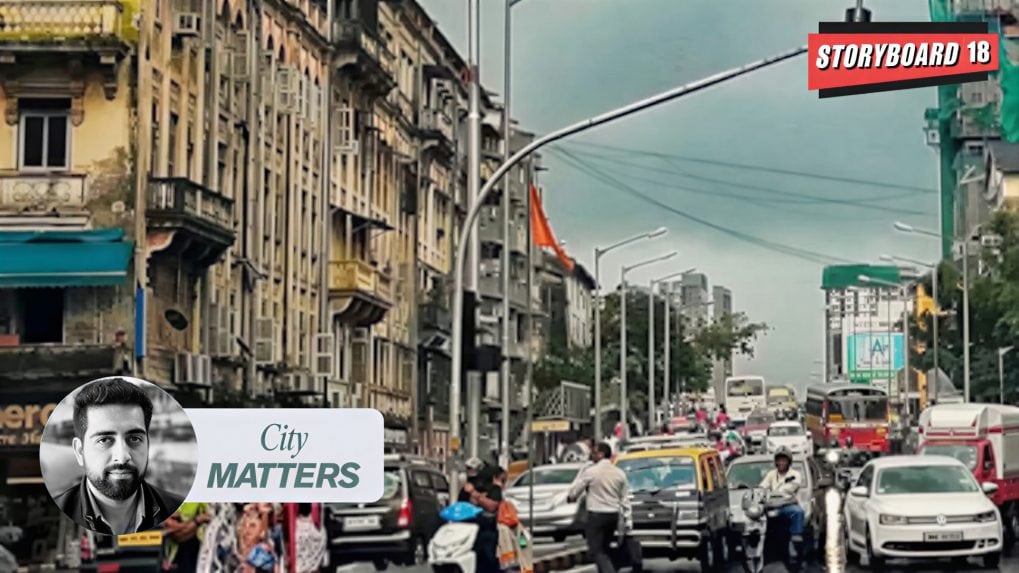
India’s economic engine is increasingly shouldered by a narrow segment of the population—often referred to as India A. This group, roughly five to six crore people strong, drives consumption across sectors, pays a disproportionate share of direct taxes, and fuels corporate growth. Yet the cities in which they live and work are becoming steadily less affordable, less livable, and less humane.
The cost of urban life in India today bears little relationship to the quality of life on offer. Congestion, pollution, unreliable infrastructure, and shrinking public spaces have become the norm. For India A, income levels may increasingly resemble those of Singapore or parts of Europe, but the lived experience outside gated communities, premium condominiums, and private clubs falls dramatically short.
Ironically, while public policy rightly focuses on supporting the poorest through food security and basic welfare, there is almost no strategic thinking around sustaining India’s tax-paying, consumption-driving middle and upper-middle classes. Their incomes and quality of life are badly misaligned. Money can buy private schools, private healthcare, and private security—but it cannot buy clean air, uncongested roads, or functional cities. If it could, India’s affluent would have solved these problems long ago.
This mismatch explains a visible and accelerating trend: wealth and brain drain. Those who can leave do so. Those who cannot ensure their children leave as soon as schooling is complete. Look around any corporate office or residential society and count how many families have sent their kids to colleges abroad. The silent vote of India A is already being cast—with passports and student visas.
The Failure of Incremental Urbanism
India has repeatedly attempted to retrofit its existing cities into global hubs—Mumbai into Shanghai, Delhi into Dubai, Bengaluru into Silicon Valley. These efforts have largely failed. Even newer corporate hubs such as Gurgaon and Noida, once symbols of modern India, are already showing signs of urban decay: infrastructure stress, water shortages, flooding, and declining livability.
The government once envisioned building 100 greenfield cities. That ambition was eventually diluted into the Smart Cities Mission, which focused on incremental upgrades to existing urban centers. While well-intentioned, it has not delivered genuine urban rejuvenation or fundamentally improved quality of life.
Build New Cities from Scratch
If India is serious about retaining its emerging affluent classes and addressing the growing crisis of toxic urban pollution, it must commit to building five or six entirely new cities from the ground up, away from existing urban clusters. These cities should be planned with long-term horizons, strong governance frameworks, and infrastructure that does not collapse within two decades, unlike what we have seen in Noida or Gurgaon.
Critics may argue that such cities would create islands of prosperity. But the alternative—allowing India’s talent, capital, and future generations to exit the country—is far more damaging. There is a compelling case for building a few genuinely world-class urban centers, even if it involves difficult trade-offs.
India often admires the success of small island nations with limited land and resources. Yet India itself has hundreds of islands along its eastern and western coasts. Select islands—excluding ecologically sensitive zones—could be developed as offshore urban centers with SEZ status, international financial center frameworks, and globally competitive regulations.
A services-led micro-economy, supported by world-class universities, hospitals, and schools, could thrive in such environments. India doesn’t have to go the Saudi way to create something as ambitious as Neom. But try and create more austere but well planned cities such as Chandigarh, which till date has been the pinnacle of urban planning in India.
Cities That Acknowledge the Invisible Workforce
A fundamental failure of Indian urban planning has been its neglect of India B—the workforce that sustains India A: domestic workers, drivers, guards, cooks, cleaners, and service staff. These populations are treated as invisible, pushed into informal housing and unsafe commutes.
New cities offer a rare opportunity to correct this mistake. Inclusive housing, reliable public transport, and dignified living conditions for all income groups must be part of the core design—not an afterthought.
Financing the Future
The appetite for quality living is unmistakable. Flats in Gurgaon, Noida, and Mumbai selling for tens of crores reflect a willingness to pay for better urban life—if it exists. India can leverage this demand by creating a dedicated national city-building vehicle, inviting capital from global sovereign wealth funds, pension funds, and multilateral institutions.
Given recent real estate performance, such a vehicle could generate strong long-term returns while delivering strategic national value. At the same time, global corporations—especially amid the GCC boom—are actively seeking alternatives to overburdened hubs like Bengaluru, Gurgaon, and Noida.
New cities are not a luxury; they are a necessity. They are essential to retaining India’s emerging affluence, sustaining the tax base, attracting global capital, and offering future generations a reason to stay. Done right, they can become modern, breathable, inclusive cities—symbols not of exclusion, but of aspiration.
India has the talent, capital, and ambition. What it needs now is the courage to start again—on clean ground.
From purpose-driven work and narrative-rich brand films to AI-enabled ideas and creator-led collaborations, the awards reflect the full spectrum of modern creativity.
Read MoreLooking ahead to the close of 2025 and into 2026, Sorrell sees technology platforms as the clear winners. He described them as “nation states in their own right”, with market capitalisations that exceed the GDPs of many countries.