How it Works
WPP, Havas, Omnicom: Are advertising’s biggest holdcos recasting agencies as AI Operating Systems?
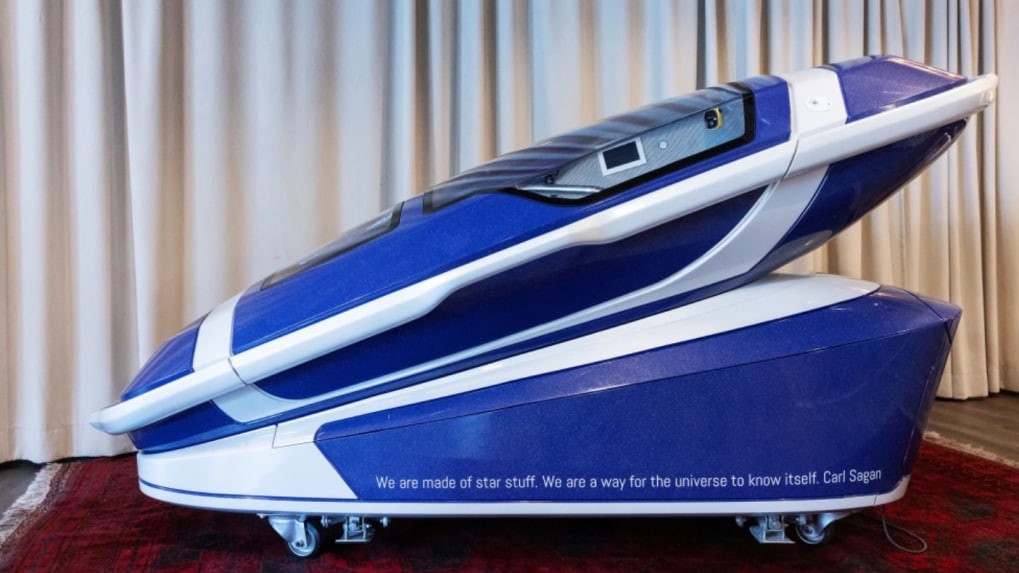
The Sarco pod, a controversial assisted-dying device that operates without medical supervision, has once again come under global attention after its inventor revealed plans for a new version that would allow couples to die together.
Australian physician and euthanasia advocate Philip Nitschke, who designed the 3D-printed capsule, said he is developing a larger model known as the “Double Dutch” Sarco. The new version, he claims, would require both occupants to activate the device simultaneously and would include an artificial intelligence system to assess users’ mental capacity before use.
The Sarco pod first drew international focus in 2024 after a 64-year-old American woman reportedly used the device at a secluded location in Switzerland. Swiss authorities later seized the pod and detained several individuals who were present at the scene. While early reports suggested investigators were examining the possibility of intentional homicide, prosecutors eventually chose not to pursue international homicide charges.
Assisted suicide is not illegal in Switzerland provided it is carried out without selfish motives. However, Swiss authorities have maintained that the Sarco pod does not comply with product safety standards and may breach chemical regulations, particularly due to its use of nitrogen. Officials have also warned that anyone who assists a death using the device could still face criminal liability.
Speaking in interviews with UK media, Nitschke said he has received interest from couples who wish to die together, including one British couple who told him they wanted to spend their final moments “in each other’s arms.” He added that the Double Dutch version is not intended for widespread use, but rather for those who make a deliberate and informed choice.
A key change in the proposed new model is the introduction of artificial intelligence to assess mental capacity. According to Nitschke, users would complete an online evaluation guided by an AI avatar, which would determine whether they meet the required threshold of mental competence before the device can be activated.
The announcement has reignited debate around the role of technology in assisted dying, as well as concerns over safeguards, regulation and accountability. Legal experts note that while Switzerland permits assisted suicide under limited conditions, the introduction of AI-based assessments and non-medical devices adds a new layer of complexity that has yet to be tested in court.
For now, the legal status of the Double Dutch Sarco remains unclear, with Swiss authorities continuing to caution against its use and reiterating that involvement in such deaths could still attract criminal charges.
From purpose-driven work and narrative-rich brand films to AI-enabled ideas and creator-led collaborations, the awards reflect the full spectrum of modern creativity.
Read MorePraveen Someshwar, Managing Director and CEO of Diageo India, joins the Grand Jury of the Storyboard18 Awards for Creativity, highlighting the awards’ focus on work that blends cultural relevance with strategic and commercial impact.