How it Works
WPP, Havas, Omnicom: Are advertising’s biggest holdcos recasting agencies as AI Operating Systems?
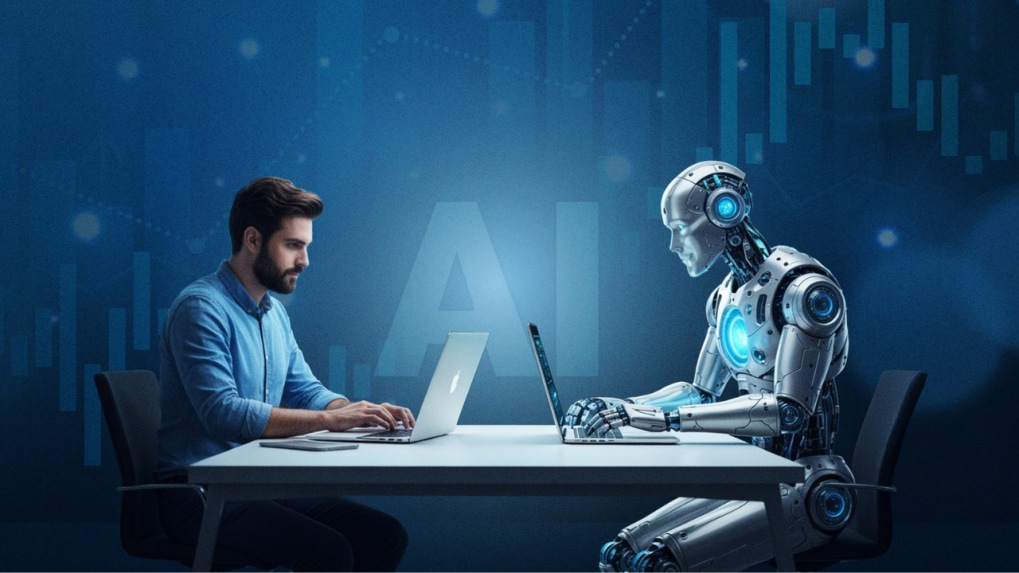
An Indian software engineer with nearly a decade of experience at some of the world’s largest technology companies has said that artificial intelligence has fundamentally altered how software engineers are interviewed and what skills are now required to secure a job.
In an as-told-to essay published by Business Insider, Akaash Vishal Hazarika, a 29-year-old senior software engineer based in Seattle, reflected on his eight-year career spanning companies such as Google, Amazon, Splunk and Salesforce. Drawing on his experience, Hazarika said traditional interview preparation methods are no longer sufficient in the age of AI.
“I’ve had a front-row seat to witness the changes in the tech landscape,” he wrote, adding that software engineers today are expected to bring more than just strong coding fundamentals to the table.
While knowledge of data structures, algorithms and system design remains essential, Hazarika said these skills are now treated as baseline requirements. With AI tools increasingly used for coding, code reviews and design, companies, particularly startups, are raising expectations around how engineers leverage AI in real-world problem-solving.
Hazarika said he regularly uses AI tools to generate boilerplate code, freeing up time to focus on complex system design and business logic. As a result, engineers are now expected to be proficient in areas such as prompt engineering, AI-assisted debugging, error handling and understanding when AI-based solutions are appropriate.
“You’re still expected to have fundamental knowledge of core system design, data structures, and algorithms,” he noted. However, interviewers continue to test debugging and reasoning skills, as AI-generated code can still contain logical flaws.
He added that some companies have begun allowing candidates to use AI tools during live coding interviews to evaluate how effectively they combine engineering judgment with AI assistance. Recalling a 2024 interview with a Silicon Valley startup, Hazarika said he failed after choosing not to use AI, despite being explicitly permitted to do so. “That was an eye-opener for me about AI’s new role in this field,” he wrote.
According to Hazarika, system design interviews have also evolved, with candidates now asked to address AI integration, model lifecycle management and trade-offs related to cost, reliability and scalability. In some cases, engineers are given a small codebase and asked to deliver a feature within an hour, a task he described as nearly impossible without AI support.
For fresh graduates, Hazarika advised building a production-oriented mindset by contributing to open-source projects, developing AI-powered applications deployed on the cloud and continuing algorithm practice. For experienced professionals, he stressed the importance of pairing domain expertise with AI skills and using AI to improve workflows.
Concluding his advice, Hazarika urged engineers to position themselves as “hybrid engineers” who can bridge traditional software engineering with AI-driven development.
From purpose-driven work and narrative-rich brand films to AI-enabled ideas and creator-led collaborations, the awards reflect the full spectrum of modern creativity.
Read MorePraveen Someshwar, Managing Director and CEO of Diageo India, joins the Grand Jury of the Storyboard18 Awards for Creativity, highlighting the awards’ focus on work that blends cultural relevance with strategic and commercial impact.