Digital
Why OpenAI is hiring 100 ex-bankers: Inside the ChatGPT-maker's secret project to automate Wall Street's grunt work
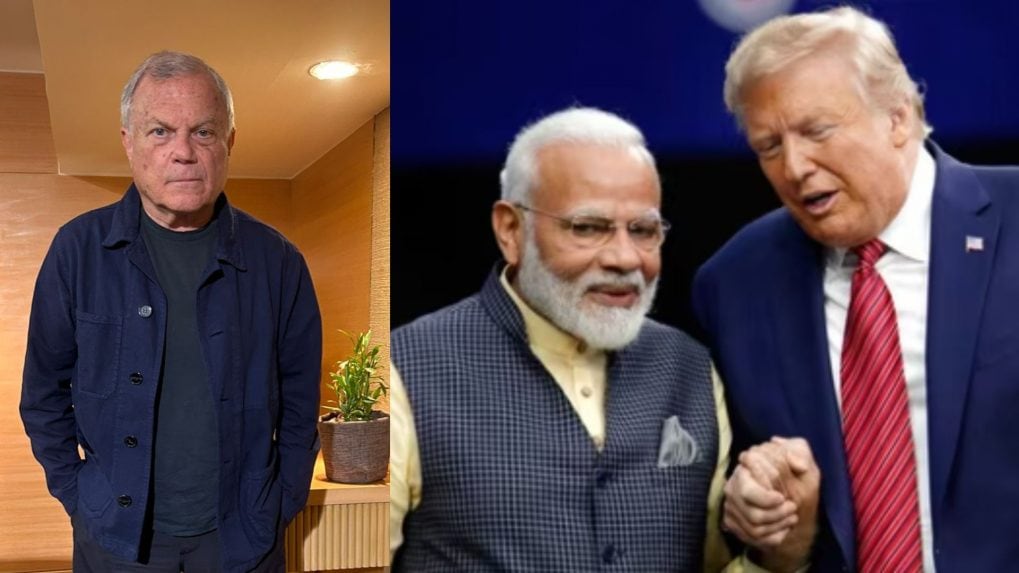
As the world economy recalibrates amid geopolitical uncertainty, trade realignments and rapid technological change, two leaders stand out for the scale of their influence and the sharply different ways in which they exercise power — US President Donald Trump and Indian Prime Minister Narendra Modi. According to Sir Martin Sorrell, founder of Monks and executive chairman of S4 Capital, both leaders are central to understanding how politics, economics and global business will evolve in the coming decade.
Speaking in a wide-ranging interview with Storyboard18, Sorrell described Trump as “an acquired taste” — a deeply polarising but politically astute leader whose instincts resonate strongly with large sections of American society. While Sorrell does not align with all of Trump’s policy positions, particularly on global trade, he acknowledges the former president’s strategic clarity and electoral skill.
Sorrell pointed out that Trump has repeatedly highlighted the dangers of excessive short-termism in corporate and financial markets, arguing against quarterly reporting and in favour of longer-term thinking — a position Sorrell himself supports. “Chinese policymakers think long term, while companies think in three-month cycles,” Trump has argued publicly, a critique Sorrell believes has merit.
However, Sorrell remains sceptical about the broader global impact of Trump’s tariff-driven trade policies. While tariffs may serve domestic political and fiscal objectives in the US, Sorrell believes they run counter to the principles of free trade that have historically supported global growth. From a globalist perspective, he argues, protectionism risks fragmenting supply chains and slowing economic momentum worldwide.
Despite these concerns, Sorrell credits Trump with exceptional political instincts. Winning the US presidency twice, including a comeback after electoral defeat, reflects a deep understanding of voter sentiment, particularly outside America’s coastal power centres. Trump’s appeal to what he has called “middle America” has proven decisive, reinforcing his position as one of the most consequential political figures of the era.
In contrast, Sorrell views Prime Minister Narendra Modi as one of the strongest and most effective leaders currently on the global stage. He credits Modi with a clear grasp of “Brand India” — not just as an economic proposition, but as a geopolitical and cultural force. According to Sorrell, Modi has successfully elevated India’s global standing by projecting confidence, stability and long-term ambition.
Sorrell believes Modi understands the importance of national branding in a way few leaders do, aligning economic growth, diplomacy and global perception into a coherent narrative. Under Modi’s leadership, India has strengthened its voice in international forums while positioning itself as a critical growth engine in the global economy.
With India already the world’s most populous nation and one of the fastest-growing major economies, Sorrell expects its influence to rise steadily. By 2050, he projects India will be the world’s third-largest economy, behind only China and the United States. This trajectory, he says, makes India indispensable for multinational companies seeking alternatives to over-dependence on China amid geopolitical risk, particularly around Taiwan.
Sorrell situates both Trump and Modi within a broader shift in global power dynamics. He argues the world is no longer unipolar, but firmly a “G2” system dominated by the US and China, with emerging economies — including India — playing increasingly pivotal roles. As economic power tilts toward the Global South and the BRICS nations, leaders like Modi are navigating a delicate balance between maintaining strong US ties while engaging constructively with China.
This balancing act, Sorrell notes, is becoming more complex as US–China relations harden over technology, trade and national security. In such an environment, India’s strategic autonomy and growing market size offer it leverage that few countries possess.
Ultimately, Sorrell sees Trump and Modi as emblematic of a new era of leadership — one driven less by multilateral consensus and more by national interest, brand positioning and long-term strategic narrative. While their styles and policy choices differ sharply, both leaders, he argues, are reshaping how power is exercised and perceived in a rapidly changing global order.
From purpose-driven work and narrative-rich brand films to AI-enabled ideas and creator-led collaborations, the awards reflect the full spectrum of modern creativity.
Read MoreIn a wide-ranging interview with Storyboard18, Sorrell delivers his frankest assessment yet of how the deal will redefine creativity, media, and talent across markets.