
Omnicom–IPG merger has left clients in India discombobulated: Sir Martin Sorrell
In a wide-ranging interview with Storyboard18, Sir Martin Sorrell assesses the Omnicom–IPG merger, client uncertainty in India, mounting pressure on holding companies, and why platforms continue to dominate. He explains how AI is cutting costs, reshaping jobs and redefining competitive advantage in global advertising ahead of 2026.

ADVERTISEMENT
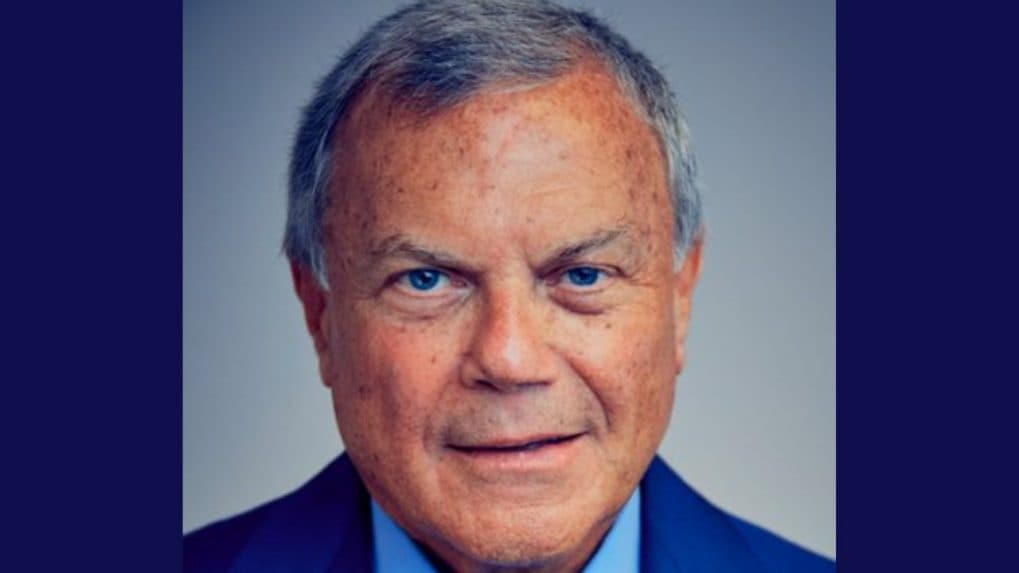
As the global advertising and marketing industry heads into 2026, consolidation, margin pressure and artificial intelligence are reshaping agency economics. In an in-depth conversation, Sir Martin Sorrell, founder of Monks and executive chairman of S4 Capital, during his India visit offered a candid assessment of the Omnicom–IPG merger, client turbulence, AI-led disruption, the shifting global order under US President Donald Trump and India Prime Minister Narendra Modi, and why platforms continue to dominate. Edited excerpts.
The advertising industry is often described as being under stress as it heads into 2026. Is the picture really that gloomy?
It sounds gloomy, but it isn’t if you look at it properly. The industry is actually growing at about 8–10%. The mistake commentators make is treating advertising as one industry. It’s really two.
You have a traditional media industry of about $300 billion that is declining, and a digital media industry of about $700 billion that is growing strongly. Put together, the industry was about $1 trillion last year, around $1.1 trillion this year and likely $1.2 trillion next year.
Traditional media is under huge pressure. If you don’t have live sport, ad revenues are falling 10–15%. With live sport, maybe flat to 5% growth. On the other hand, digital is growing 10–20%, dominated by Google at around $250 billion, Meta at $150 billion, Amazon at $60 billion and TikTok outside China at about $40 billion. Those four alone account for roughly $500 billion of ad revenues. So you have to be nuanced — one part is shrinking, the other is expanding rapidly.
Where does the Omnicom–IPG merger fit into this picture? Is it strategic consolidation or something else?
It’s not really a merger. It’s a takeover of IPG by Omnicom, and it’s fundamentally a reduction-in-capacity move. Omnicom’s top line hasn’t grown for several quarters, IPG fell out of bed, and the same pressures apply to Dentsu and WPP.
Ironically, Publicis and Havas are doing better because they have more exposure to that $700 billion digital segment. Omnicom–IPG is about cost reduction, not strategic repositioning. In my view, it does very little to improve the business strategically, except perhaps increasing concentration in the US.
Are you already seeing signs of this client churn, particularly in markets like India and Asia-Pacific?
Yes, especially in markets like India and APAC, where relationships are deeply local and trust-driven. Clients here are already expressing confusion. Many feel they haven’t been adequately briefed on what the merger means for their accounts. So there will be a lot of discombobulation. 2026 will be the first year where the two companies combine, and it'll take two years for all to be sorted out. I mean, I hear the clients here are discombobulated.
India is a good example because IPG has been relatively strong here, with established creative and media brands. Now, with Omnicom clearly the dominant partner, there is concern about whether IPG leadership and talent are being sidelined, and how that affects continuity.
When clients sense internal instability—people leaving, reporting lines changing, brands being folded or renamed—they naturally start to explore alternatives. That doesn’t always mean immediate exits, but it often leads to parallel conversations and, eventually, formal account reviews.
Do you expect more big mergers after Omnicom–IPG?
My view is no. I don’t see seismic changes in 2026. Dentsu and WPP will likely drift. The scale and complexity are enormous, and the cloud of AI hangs over everything. Investors haven’t sorted out what AI really means for employment and organisational structures.
Look at valuations: Publicis and Omnicom are around $25 billion each. Then you drop to Dentsu at $6–7 billion, WPP at about $4–5 billion, and Havas at $1.5 billion. Either the top two are overvalued — which I doubt — or the others are undervalued. But does anyone have the courage to make that bet at scale? I don’t think so.
As AI and commerce media grow, which parts of the value chain will be most disrupted by 2026? We see five major areas of impact. First is visualisation and copywriting. AI has massively reduced the time and cost of producing content. That means fewer copywriters and art directors.
Second is personalisation at scale. Using first-party data and platform signals from Google, Meta, Amazon, Alibaba, Tencent and ByteDance, you can personalise content at enormous scale — what I call “Netflix on steroids”. That’s an area of potential expansion, though it requires very different production models.
Third is media planning and buying. There are about 250,000 people employed globally today. In three years’ time, there will be far fewer, but they will be much better informed because of algorithms.
Fourth is efficiency. We have a joint venture with NVIDIA, AWS and Adobe that reduces outside broadcast costs by 80–90%. That’s transformative but negative for employment.
The fifth — and most interesting — is organisational change. AI spreads knowledge horizontally, flattens organisations and reduces silos. Net-net, employment will come under pressure, though some areas will expand.
In this environment, does scale still matter, or will smaller agencies do better?
Smaller agencies should, in theory, have an advantage. The Omnicom–IPG integration will cause discombobulation — clients haven’t been fully briefed, conflicts are unclear, and it will take two years to sort out. That creates opportunities for independents.
Scale still matters in the declining $300 billion traditional segment. In the growing $700 billion digital segment, it’s about data, distribution and algorithms, not scale.
S4 Capital has spoken about revenue softness. How are you recalibrating?
About half our revenues come from tech companies like Google, Meta, Amazon and others under NDA. They are shifting spend from OpEx to CapEx — massive investments in AI, data centres and energy.
Our future is pegged to AI adoption at scale. We’re looking for wholesale implementation, like what we’re seeing in autos and financial services. That’s where growth lies for us.
How do you see Donald Trump and Narendra Modi shaping the global environment?
Trump is an acquired taste. Some things he says are right — like criticising short-termism and quarterly reporting. Tariffs? From a global perspective, I’m not a fan. Free trade is better. But politically, you have to hand it to him — he’s extraordinarily astute.
On Modi, I think he’s one of the strongest leaders in the world. He understands brand India and how to project influence globally. India’s position is rising — it will likely be the third-largest economy by 2050. Modi has done a great job promoting Brand India.
Finally, as 2025 closes, who won and who lost in the agency ecosystem — and what should we watch in 2026?
The platforms won and will continue to win. These companies are effectively nation states. When you’re worth $4–5 trillion, you rival major economies. Their investments — over $530 billion in AI-related capex next year — will reinforce their dominance.
Publicis will continue to do well. Havas will do well at a smaller scale. Dentsu and WPP remain question marks. Independents like us have a real opportunity driven by AI and, eventually, quantum computing.
The big question for 2026 is whether we finally see wholesale AI adoption at scale across industries, beyond autos and financial services. That will define the next phase of advertising.