Advertising
From Pink Slips to Silent Sidelining: Inside adland’s layoff and anxiety crisis
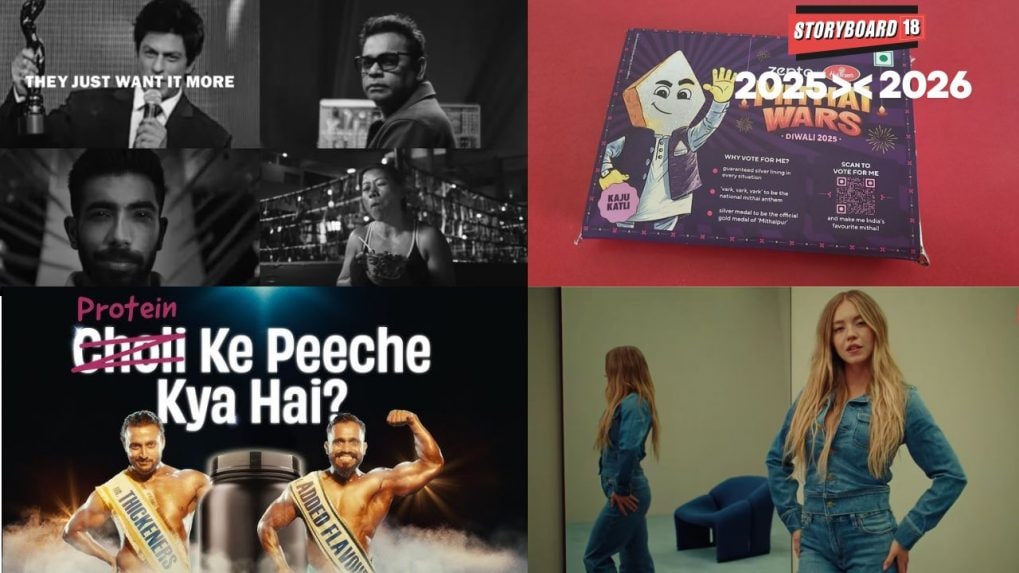
If 2025 taught advertising anything, it’s virality. 2025 was clearly the year of viral ads and for virality no longer needs a blockbuster budget or a perfectly polished script. This was the year ideas outran intent, memes moved faster than media plans and the internet crowned its winners in real time. Humour, controversy, empathy and cultural timing became just as powerful as craft itself. From raw, unscripted moments ripped straight from real life to meticulously staged celebrity collisions, brands embraced the chaos of the feed; sometimes winning hearts, sometimes triggering backlash but almost never going unnoticed. As the scroll sped up and attention spans shrank, these were the campaigns that didn’t just launch, they landed. Let’s take a look at the ad campaigns that made serious noise in 2025:
Zomato’s ‘Fuel Your Hustle’ is less an ad and more a cultural mic-drop. By bringing together Shah Rukh Khan, Mary Kom, AR Rahman and Jasprit Bumrah, the brand assembled a power-packed ensemble that feels earned, not engineered. What made the film click isn’t celebrity sheen, but the honesty of the journeys it chose to spotlight.
The campaign showed childhood frames, early struggles and unseen hours of grind, giving the film emotional depth and credibility. Whether it was AR Rahman’s quiet, relentless dedication behind closed studio doors or Jasprit Bumrah’s obsessive practice on and off the pitch, the film celebrated the unglamorous effort that precedes excellence. Instead of forcing product into the narrative, ‘the campaign positioned the brand as a silent enabler, present in the background, supporting ambition rather than shouting about it.
American Eagle’s campaign starring Sydney Sweeney has done what modern advertising increasingly struggles to achieve: it has cut through the noise and sparked loud conversation. Anchored by the wordplay “Sydney Sweeney has great jeans”, the campaign leaned into classic fashion advertising tropes with a wink. Shot in unapologetic denim-on-denim, Sweeney delivered the now-viral line, “My genes are blue,” the kind of line built for screenshots, reels and debates.
What worked in American Eagle’s favour was the confidence of restraint. At a time when many campaigns attempt to carry social messaging, cultural commentary and brand purpose all at once, this one kept its focus squarely on fashion, personality and recall. By choosing clarity over complexity and playfulness over posturing, American Eagle had delivered a campaign that feels bold in its simplicity. Love it or question it, people are watching, sharing and talking and that’s the hallmark of advertising that lands.
The Whole Truth brought the iconic hook Choli Ke Peeche Kya Hai’ back after three decades, not to provoke, but to enlighten. In a stroke of cultural jujitsu, the brand reclaimed the infamous question and redirected it from bodies to protein tubs, turning nostalgia into a sharp commentary on transparency in India’s supplement industry. The campaign was audacious, self-aware and refreshingly clear in its intent. The film leaned into this trope with deliberate exaggeration, opening on a parade of half-naked men gyrating to cheeky lyrics, before pulling the rug out from under the spectacle.
What begins as parody quickly becomes a pointed critique, flipping bravado into honesty and spectacle into substance. What made the campaign work is its cultural intelligence as it understood the power of memory, controversy and humour. The brand didn’t shy away from discomfort of asking a smarter question: what’s really inside the product you’re consuming every day?
After last year’s wildly popular ‘Make Soan Papdi Great Again’, Zepto returned this Diwali with a sequel that was bigger, bolder and unapologetically political. Teaming up with Haldiram’s, the quick-commerce brand had launched ‘Mithai Wars 2025’, India’s first-ever mithai election, and it’s a masterclass in turning festive nostalgia into full-blown pop culture theatre. The campaign playfully borrows from the theatrics of Indian elections, reimagining Diwali’s age-old sweet debates as a high-octane electoral showdown. Laddoos, barfis and soan papdis weren’t just desserts here, they were candidates with personalities, fan bases and campaign energy.
But where Mithai Wars 2025 truly won is in participation. This wasn’t just something you watch, it was something you vote in. Every Zepto delivery between October 10 and 14 turned up as a mini polling booth. The result was a clever layer of gamification that drove engagement, repeat orders and social chatter. In a crowded Diwali marketing season, Mithai Wars 2025 stood out by doing what great campaigns do best; making people smile, participate and feel part of something bigger.
In a world where being ghosted can feel scarier than any haunted house jump-scare, Tinder had cracked the code on turning modern dating dread into pure entertainment. On Halloween, the dating app unveiled ‘Dating Scaries’, a three-part video series that resurrected some of Indian pop culture’s most iconic villains and puts them to surprisingly good use. But what made the noise most was Episode 1, which starred the OG baddie of television, Urvashi Dholakia aka 'Komolika'.
Starring Urvashi Dholakia, Rajat Bedi and Dilip Tahil, the campaign tapped straight into nostalgia. What made Dating Scaries land is its tonal confidence. By casting legendary villains as guides through today’s dating horrors, the platform transformed uncomfortable conversations into highly shareable, laugh-out-loud moments.
The fantasy sports giant Dream11 delivered yet another campaign ‘Aapki Team Mein Kaun?’ that played like a full-blown blockbuster. Packed with star power, sharp humour and pitch-perfect casting, the film turned fantasy gaming into prime-time entertainment. At the heart of the campaign was a delightful face-off between Aamir Khan and Ranbir Kapoor, two Bollywood heavyweights assembling their own dream squads, Aamir11 and Ranbir11, stacked with cricketing royalty including Rohit Sharma, Hardik Pandya, KL Rahul, Jasprit Bumrah, among others.
Just when the ad seemed to have played its winning shot, Dream11 rolled out a second innings with Aamir vs. Ranbir in a rapid-fire ‘Singh’ game. The ad built up brilliantly, as Aamir quizzed Ranbir on famous Singhs — Dara Singh, Milkha Singh, only to land the ultimate curveball “Tera naam?” Kapoor, in the heat of the moment, blurted out - “Ranbir Singh.” A mic-drop moment that played on Bollywood’s most famous name mix-up, made fans laugh out loud.
Crocs had pulled off a monsoon romance that felt tailor-made for the internet age. In its viral campaign for Crocs Japan, the brand brought together Siddhant Chaturvedi and South Korean actress Chae Soo-bin in a cross-cultural crossover that fuses K-drama swoon with Bollywood charm and the result was pure pop-culture magic.
Built around the beloved enemies-to-lovers trope, the ad film set on a rainy-day felt straight out of a K-drama playbook. Crocs smartly let its product live inside the story; monsoon-themed Jibbitz charms. What truly set the campaign apart was its cultural fluency. By blending Korean drama aesthetics with Indian cinematic sensibilities, Crocs tapped into the growing pan-Asian pop culture moment.
From purpose-driven work and narrative-rich brand films to AI-enabled ideas and creator-led collaborations, the awards reflect the full spectrum of modern creativity.
Read MoreLooking ahead to the close of 2025 and into 2026, Sorrell sees technology platforms as the clear winners. He described them as “nation states in their own right”, with market capitalisations that exceed the GDPs of many countries.