Advertising
From Pink Slips to Silent Sidelining: Inside adland’s layoff and anxiety crisis
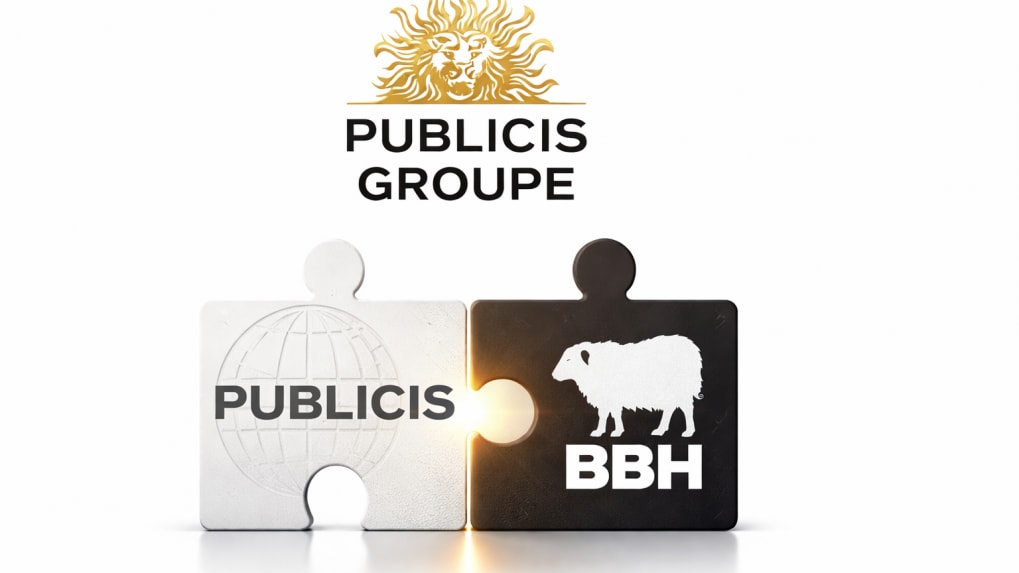
When Publicis Groupe globally merged two of its most influential creative networks—Leo Burnett and Publicis Worldwide—into a single entity branded Leo, the move was positioned as a decisive push towards simplification, scale and a unified creative identity.
In India, however, the group took a markedly different path: the Publicis brand was folded into BBH, diverging from the global mandate where Publicis Worldwide was subsumed into Leo.
The India-specific structure highlights how multinational agency networks are increasingly recalibrating global strategies to reflect local market dynamics—particularly in a market as nuanced, competitive and relationship-driven as India.
Publicis Groupe India spokesperson told Storyboard18, “At Publicis Groupe India, Publicis remains as our group brand, and we are more committed than ever to our strong creative agency brands including Leo, Saatchi & Saatchi and BBH."
The spokesperson said, "This reflects the changes that took place when the Leo Constellation was launched globally last year, with each market given the flexibility to adapt to localized needs. Our clear focus is on delivering the strongest creative firepower and continuity for our clients across our agency brands fully consistent with our global architecture.”
The global rationale: one Leo, one creative engine
Globally, the decision to fold Publicis Worldwide into Leo Burnett to create Leo was driven by three broad considerations. First was structural clarity—reducing overlapping creative brands to simplify the offering for global clients. Second was scale, pooling talent, tools and leadership into a single creative powerhouse. Third was consistency, particularly for multinational advertisers seeking uniform execution across markets.
“From a global HQ perspective, the Leo merger was about removing duplication and presenting a single, muscular creative front,” said a senior executive at a rival holding company, speaking on condition of anonymity. “It’s a classic response to client pressure for fewer partners and more integrated delivery.”
Why India went the BBH route
India, however, presented a different equation. Instead of folding Publicis into Leo, the group chose to integrate Publicis into BBH, a move that insiders say was driven by BBH India’s strong strategic reputation, premium positioning and deep client relationships.
“BBH in India has built a very specific kind of brand—planning-led, strategy-first, and culturally sharp,” said an industry veteran aware of the discussions. “Absorbing Publicis into BBH made more sense locally than forcing everything under the Leo banner.”
Another factor was client continuity. Publicis India serviced several long-standing accounts with distinct expectations around leadership, teams and creative philosophy. Folding these abruptly into Leo risked unsettling clients at a time when marketers are already cautious about agency churn.
“In India, clients value stability over structural elegance,” said a creative media network CEO. “Publicis folding into BBH allowed the group to preserve trust while still aligning with the broader global reset.”
Flip side to global diversion
The flip side is global inconsistency. For multinational clients tracking Publicis’ creative architecture across markets, India’s BBH-led integration may appear misaligned with the global Leo narrative.
“There’s always a branding cost when one large market operates differently,” said a global agency consultant. “Clients may question why Publicis exists under BBH in India but under Leo elsewhere.” There is also the challenge of internal coordination. With Leo, BBH and Saatchi & Saatchi all operating as strong creative brands in India, managing overlaps, pitches and internal competition will require tight governance.
Additionally, India may not fully benefit from the global Leo scale advantage—including shared tools, cross-market briefs, and unified leadership—that comes from complete structural alignment. A broader signal to the market
Despite these risks, industry watchers see the move as a pragmatic acknowledgement that India cannot be treated as a plug-and-play extension of global strategy.
“This is Publicis essentially saying India needs a bespoke creative architecture,” said a senior advertiser who works with multiple global networks. “The real test will be whether BBH, strengthened by Publicis, can deliver disproportionate creative and business impact.”
As global agency holding companies grapple with consolidation, cost pressures and client demands for flexibility, Publicis Groupe’s India exception underscores a larger truth: in high-growth markets, local relevance can sometimes outweigh global uniformity.
From purpose-driven work and narrative-rich brand films to AI-enabled ideas and creator-led collaborations, the awards reflect the full spectrum of modern creativity.
Read MoreLooking ahead to the close of 2025 and into 2026, Sorrell sees technology platforms as the clear winners. He described them as “nation states in their own right”, with market capitalisations that exceed the GDPs of many countries.