How it Works
WPP, Havas, Omnicom: Are advertising’s biggest holdcos recasting agencies as AI Operating Systems?
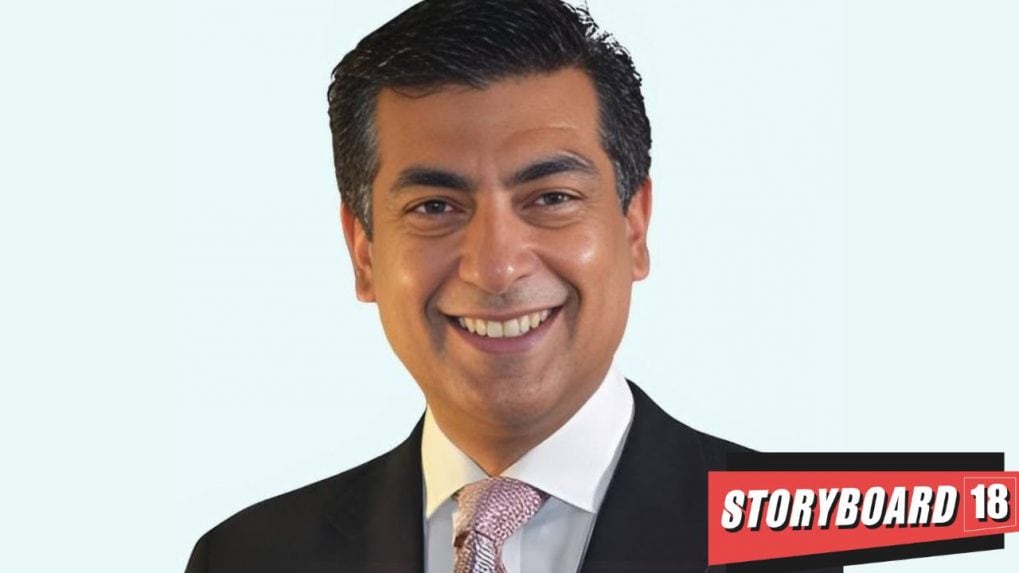
Google India’s Vice President of Marketing, Shekar Khosla, believes that the future of marketing hinges on one fundamental principle: putting users at the center. In a rapidly changing landscape where artificial intelligence often risks becoming just another buzzword, Khosla emphasises that the technology must serve real human needs and cultural moments rather than exist for the sake of novelty.
Speaking to Storyboard18, Khosla explains how Google is using AI to drive meaningful impact—whether through hyper-personalised media delivery, creative acceleration, or campaigns that demonstrate transformative utility in everyday life. From Circle to Search improving shopping discovery to AI Mode enabling deeper accessibility, he says the goal is simple: to showcase possibilities, not just features.
Khosla also weighs in on industry debates around creativity vs efficiency, deepfakes and safety, agency relationships, and how marketing organisations must prepare for 2026. The ‘4-S behaviour’—users streaming, shopping, scrolling, and searching simultaneously—he says, is redefining the rules of engagement and demanding new levels of agility and cultural relevance.
Edited excerpts:
What is the core philosophy shaping Google India’s marketing vision today?
If I pull back and look at the bigger picture, we are really blessed and honored that Google is one of the most trusted and loved brands in India. And I think it holds that to its very grounded and timeless principle of keeping our users first and center in everything we do.
It begins with a very deep understanding of the consumer's life—what their needs and unmet needs are, their aspirations, their concerns, their hopes, and how they are meeting those today, but also the possibilities of what the future can be. In doing so, we uncover and discover moments where our technology can make a step-change for our users.
We’re deeply conscious that in a moment like today, AI can often seem like a bit of a buzzword. It's upon us to make sure that it lands with real benefits and real transformative possibilities. That’s why our recent campaigns have been about making AI truly real across walks of life for the people we serve, and making it truly accessible—not just access defined as for everybody, but access across moments.
Our campaigns and content are not just about showing a feature or a product, but truly showcasing possibilities and the exponential potential it can have, inspiring people through individual stories or collective problems we solve. It comes back to foundationally understanding what the user's life is all about and approaching it from the point of view of a life insight and solving for real problems.
For example, oftentimes you like something but you don’t know how to describe it. Or you watch something on your phone and say, ‘I want to buy something exactly like that.’ It could be a watch, shoe, bag, or clothing. Through our Circle to Search technology, you can simply circle it and it takes you to where you can buy it. We brought it to life through our campaign with the ‘Call Me Bae’ cast, which engages deeply with the younger demographic and integrates the content seamlessly so users can solve for immediacy and convenience and translate curiosity into behavior.
So it's about understanding real user needs, technology that solves real problems, AI that demystifies the world and makes it very human, and embedding ourselves in culture and moments that matter for India. It’s a privilege to be part of culture and embed the brand in those cultural moments. That’s our broad philosophy.
There is an ongoing debate around media versus creativity, and short-term versus long-term impact. How do you approach this balance at Google?
For us, it comes back to the insight—and is that user insight truly an insight or just an observation? We obsess about knowing the user deeply, beyond surface demographics, truly understanding their context, needs, issues, and challenges, and getting to an insight we believe we can uniquely solve or solve better through our products.
Once you have a meaningful insight and a way to uniquely solve it, then it becomes a long-term commitment. It’s a commitment to build solutions as well as campaigns that bring that solution in an inspiring way and encourage adoption and usage. So, it’s not a debate between long and short term; it’s about building solutions that last and have meaningful impact.
This could be very simple things like wanting to buy something now and technology helping you solve that, or profound things like our new AI Mode campaign, which is about ‘Search Like Never Before’, telling the story of parents trying to answer a question about colors to a visually impaired son, where AI Mode helps them describe green and red. It’s a very profound moment. So it's not about long or short, it's about how real you are to the problem you’re solving and sustainably solving it across moments that matter.
How are you leveraging AI within your marketing workflows, particularly in insight mining, campaign development, and performance measurement?
We are leveraging a lot of our AI tools in our own marketing workflows. It starts with insight mining through tools like NotebookLM and deep research in Gemini. Our teams get deep into insights. Gemini helps us craft new ideas and concepts, and through products like Nano Banana, we can articulate concepts for quick research and come to outcomes faster. We’re leveraging AI and media tools to optimize content and campaigns in flight.
We measure outcomes in terms of brand lift and brand love—the emotional resonance of the brand with users and community—but also behavioral impact such as usage, adoption, and frequency of visits. We are finding that AI is helping grow the base of queries; since launching AI Overviews, people are asking more questions, more complex questions, and more often. It speaks to the product and to insatiable human curiosity.
On languages, we leverage tools for auto-captioning and language adaptation.
As AI-generated content becomes mainstream, how are you ensuring authenticity and brand safety?
For me, AI is an enabler, a collaborator, idea generator, assistant. But the original inquiry into that model comes from human intuition and lived experiences. The quality of input decides the output. AI on its own does not think—it generates options based on patterns. But the fundamental input and the ‘why’ behind a campaign must come from us.
I would encourage my colleagues to investigate the insight territory and apply judgment—that always requires a human in the loop. AI is a phenomenal collaborator. It augments creativity, but it does not replace the creator’s vision, voice, or empathy.
What does your media strategy look like today, given fragmentation and changing audience behaviour?
We begin by asking what’s the marketing job to be done. From that, we build the right content creation and go-to-market strategy, which takes us to different media choices: social, traditional, linear, OTT channels, whichever delivers the marketing job to be done.
We also explore impact mediums. Recently we celebrated YouTube creators by projecting their image on the Mumbai Sea Link. That was totally dictated by the medium because it was so attractive.
My encouragement has always been that while you keep your content at the center of go-to-market strategy, look for innovation even in more traditional media. As long as your content strategy is congruous, fragmentation will not occur.
And of course, there’s efficiency, campaigns must be financially efficient and deliver ROI.
Do you believe digital continues to be the most efficient medium for marketers working with restricted budgets?
I think it allows you very good precision targeting. And now with AI, we are reaching that moment where you can design hyper-personalized content and messaging delivered to the right person at the right moment.
We also believe there is this whole ‘4-S’ behavior where users are almost all the time, and quite unpredictably, depicting these behaviors — they are streaming, shopping, searching and scrolling all at the same time.
And it’s only through Google’s AI media stack between Google and YouTube that you’re able to serve content when users are depicting this highly complex ‘4-S’ behavior. The linear path-to-purchase no longer exists.
In this complexity of dynamic user behavior, we truly believe Google’s ad products deliver very efficient ROI and more importantly targeted messaging which is hyper-personalized.
Our philosophy remains the same: we want to make sure our content reaches the right user in moments of highest receptivity. That’s the North Star we chase.
How has the use of AI in creative production and campaign execution influenced cost efficiency and speed-to-market?
Percentages would be hard to give, but we are certainly seeing our speed-to-market going up. We’re able to explode much more creative content. The future of marketing is heading to a place where there will continue to be an explosion of creative expression.
Because of tools like Nano Banana, you can express and bring your imagination to life much better. The quantum of content will also go up.
As marketers, we must ensure we’re not fragmenting our brand message; we’re keeping brand values current and then serving content across the right mediums in moments of highest receptivity.
Depending on industry and context, you need to be agile. Agility, creative quantum and quality explosion on the back of AI, all in the need of serving personalized experiences, is where marketing will head.
As personalised content scales, so do concerns about deepfakes and misrepresentation. What guardrails has Google put in place?
We give extreme importance to the safety of anything that we put out. And as a company, we are committed to responsible AI development.
We’ve implemented several guardrails. Images generated by Google’s AI tools will always include provenance mechanisms such as markup labels and watermarking using SynthID, allowing them to be identified as AI-generated. Verification can be performed within Gemini itself. We are deeply committed to extending this technology to the broader industry.
So are you leaning more on in-house creative capabilities or continuing to depend on external agencies?
It’s always about getting to the best creative outcome. It continues to be a hybrid approach. It comes back to us internally to articulate insights and briefs calling for real needs and real problems.
A lot of internal experimentation is with our own tools, refining concepts and briefs. We’ve also used AI-generated banners and static creative for some campaigns, especially for Android and Google Play Store.
Our hunt is always for the best creative minds, individuals or agencies of any size who deeply understand India, users, and culture.
We don’t have an agency on record. We work with partners on a repeated basis. We also experiment with new agencies. Our latest campaign ‘Search Like Never Before’ on AI Mode was with Zoya Akhtar, who has been a wonderful partner.
Do you find long-term agency partnerships more effective than project-based collaborations?
Trust is foundational irrespective of length of time. More important is jointly understanding user needs and delivering against them. The ability to understand the product, the user need, and bring the two together, that’s paramount.
With consolidation and restructuring in the advertising industry, how does it affect client confidence and collaboration?
It’s more about ensuring the people we work with truly understand the brief and need. Agencies may have legitimate reasons for changes, but what matters is content being delivered to users meaningfully and impactfully.
We’ve worked with people who have stayed with us for some time and also new partners. It’s always an exploration to elevate our game.
As we look ahead to 2026, what are the key trends that will define marketing and advertising in India?
First, embrace that the linear path-to-purchase does not exist. Adopt the 4-S behaviors. As that foundational assumption changes, it brings to the center the role of AI.
The future of marketing will be more personalized content served at scale in moments that matter.
I would also encourage deeper cultural resonance—as with ICC Women’s World Cup where we elevated fan experience with Gemini pitch reports, cards, ‘Fan Chance’, Google Pay Tech Squad, Pixel Shot work, etc.
Our focus is on deeper cultural resonance and bringing technology to elevate experiences.
We see AI as a massive opportunity. Improve productivity and creativity, AI as a phenomenal collaborator. You don’t have to start with a blank page, you can start with a rough idea and augment creativity further.”
What major innovations or collaborations can we expect from Google in the coming year?
We will continue encouraging users to explore possibilities of creation and productivity with gen-AI products across our suite—AI Mode in Search, Gemini, Pixel, and supporting creator community on YouTube. You’ll see momentum accelerate.
From purpose-driven work and narrative-rich brand films to AI-enabled ideas and creator-led collaborations, the awards reflect the full spectrum of modern creativity.
Read MorePraveen Someshwar, Managing Director and CEO of Diageo India, joins the Grand Jury of the Storyboard18 Awards for Creativity, highlighting the awards’ focus on work that blends cultural relevance with strategic and commercial impact.