Digital
Why OpenAI is hiring 100 ex-bankers: Inside the ChatGPT-maker's secret project to automate Wall Street's grunt work
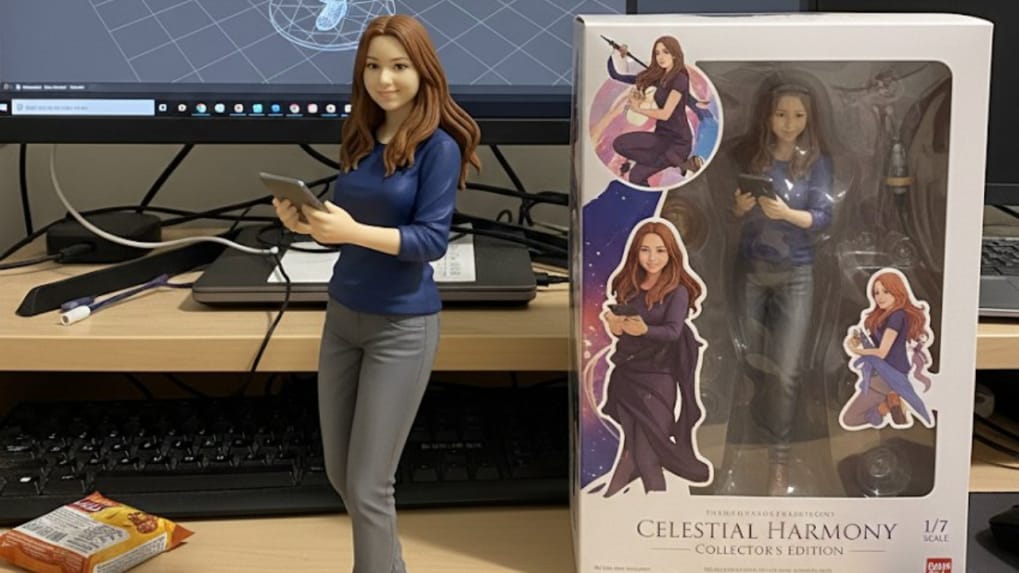
A new trend is dominating social media feeds worldwide, with users rushing to generate miniature digital versions of themselves. Dubbed the Nano Banana trend, the phenomenon has quickly gone viral on platforms such as Instagram and TikTok, where 3D figurine images of people, pets and even fictional characters are being shared in striking detail.
The surge in popularity began when high-profile celebrities and politicians unveiled their own lifelike figurines, sparking widespread curiosity. While 3D figurine experiments had been attempted previously—most notably after the launch of ChatGPT’s 4-o update—Google’s latest artificial intelligence tool, Gemini 2.5 Flash Image, has pushed the trend into the mainstream. Unlike older methods, this new tool requires no specialist design knowledge or advanced software, allowing virtually anyone to create a figurine as effortlessly as editing and uploading a photograph.
At the centre of the craze is Google’s experimental AI, which has been designed to convert a standard 2D photo into a highly detailed 3D model in seconds. The models are celebrated for their sharpness and realism, reproducing intricate elements such as fabric textures, facial features and subtle expressions. Users are also able to customise their figurines by describing additional elements in a prompt, whether that means a steaming cup of coffee, a laptop on a desk or even a playful cat in the frame.
From photo to figurine style in just one prompt.
— Google Gemini App (@GeminiApp) September 1, 2025
People are having fun turning their photos into images of custom miniature figures, thanks to nano-banana in Gemini. Try a pic of yourself, a cool nature shot, a family photo, or a shot of your pup.
Here’s how to make your own ???? pic.twitter.com/e3s1jrlbdT
The process of producing a Nano Banana figurine is deliberately simple and, crucially, free of charge. To begin, users can visit the Google Gemini chatbot or navigate through Google AI Studio, where the Gemini 2.5 Flash Image tool—labelled under the Nano Banana experiment—is hosted.
The first step involves uploading a high-resolution photograph. This is followed by drafting a descriptive prompt, which instructs the AI on how to render the figurine. For instance, a user could upload a photo of their dog and provide a prompt such as: “Generate a hyper-realistic 3D figurine of a cat wearing a tiny astronaut helmet in a garden, with sunshine highlighting its face.”
Once submitted, the AI processes the request within seconds and delivers a fully rendered 3D figurine, ready to be shared online.
With the combination of accessibility, customisation and photorealistic results, the Nano Banana trend is rapidly becoming one of the most popular online phenomena of the year.
From purpose-driven work and narrative-rich brand films to AI-enabled ideas and creator-led collaborations, the awards reflect the full spectrum of modern creativity.
Read MoreIn a wide-ranging interview with Storyboard18, Sorrell delivers his frankest assessment yet of how the deal will redefine creativity, media, and talent across markets.