Digital
Why OpenAI is hiring 100 ex-bankers: Inside the ChatGPT-maker's secret project to automate Wall Street's grunt work
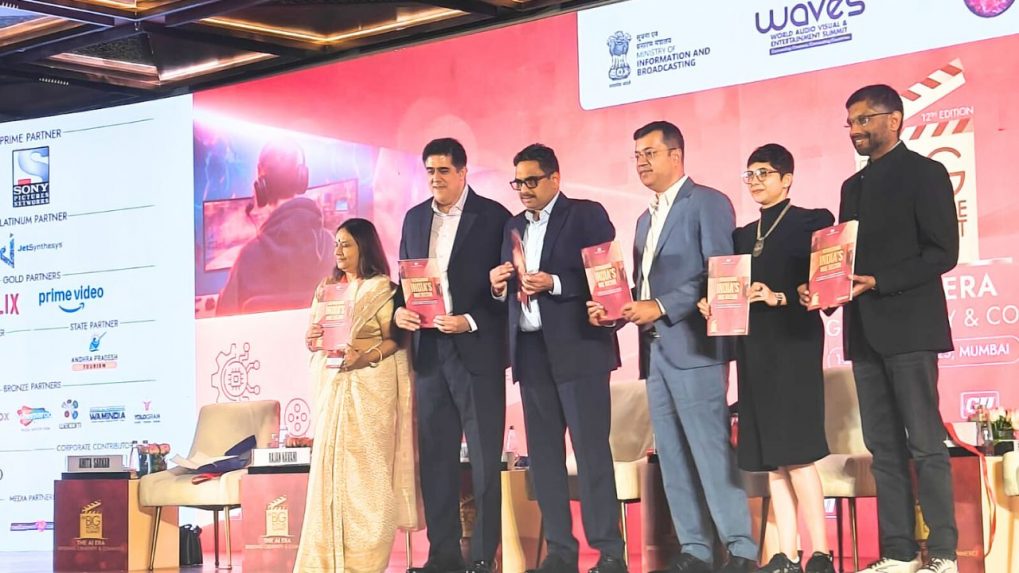
The Confederation of Indian Industry (CII) has called for the adoption of a National Media & Entertainment Policy to drive long-term growth and overhaul India’s Media & Entertainment (M&E) landscape.
“India is poised to redefine the global creative economy. With decisive reforms—regulatory unification, infrastructure modernization, skills expansion, IP protection, and export acceleration—India can become a global creative powerhouse by 2030,” CII said, urging the Government of India and State governments to jointly adopt a unified National Media & Entertainment Policy built on convergence, digital-first innovation, and global competitiveness.
CII has also unveiled its White Paper titled “Reimagining India’s M&E Sector: A Call for Action to Build a Future-Ready, Globally Competitive Industry by 2030,” which lays out a bold vision and actionable roadmap for transforming the sector through coordinated policy reform and strategic investment. Released on December 1, 2025, the initiative seeks to unlock the sector’s potential, foster inclusive growth, and position India as a premier global creative powerhouse.
“The moment for coordinated action is now. India’s creative entrepreneurs, storytellers, and youth are ready. With supportive policy, India can not only expand its domestic market but also project its cultural leadership across the world,” the industry body added.
M&E industry in India has consistently urged the government for a comprehensive National Media and Entertainment Policy to address challenges and foster growth across the sector. Currently, various specific policies and regulations are being formulated or are in place to address different sub-sectors, rather than a single overarching policy.
Meanwhile, the Federation of Indian Chambers of Commerce & Industry (FICCI), in the past, has urged the government for a "light-touch" regulatory regime to foster innovation and growth, rather than a single, overarching National Media and Entertainment Policy.
With the global media and entertainment industry expected to reach $3.5 trillion by 2029, India stands on the brink of a transformative leap. The country’s M&E sector is projected to grow at a CAGR of 9.8%—outpacing the global average—and reach $100 billion by 2030. While India has laid essential groundwork, including the India Cine Hub, emerging AVGC clusters, a thriving startup ecosystem, growing AI adoption, and an increasing global presence of Indian creators, structural constraints such as fragmented regulation, low screen density, limited infrastructure, skills shortages, and weak export pathways continue to impede progress.
CII’s White Paper, shaped through robust industry consultation and aligned to global best practices, responds to these urgent challenges with a strategic roadmap for reform.
Six Strategic Pillars for Reform
The White Paper articulates six pillars to drive the sector’s growth and global competitiveness:
Regulatory and Governance Reform:
1. Preserve OTT self-regulation and reform broadcasting.
2. Establish a Unified Media Regulator (UMR) to harmonize content rules across TV, OTT, and digital, ensuring “same content, same rules.”
3. Deregulate and modernize compliance frameworks to encourage innovation and reduce regulatory burden.
4. Launch a National Esports & Gaming Development Authority to streamline standards, incentives, and talent development for India’s fastest-growing creative sectors.
Access, Entrepreneurship, and Ease of Doing Business:
1. Implement a single-window digital portal for all permissions and approvals across production, distribution, and export, modeled on global best practices.
2. Strengthen anti-piracy enforcement with specialized cyber units and a blockchain-based content registry.
3. Standardize regulations and automate incentives and clearances to attract domestic and foreign investment.
Infrastructure and Technology:
1. Accelerate development of world-class film cities, studios, and post-production facilities through public-private partnerships.
2. Expand digital connectivity, public Wi-Fi, and next-generation content delivery networks, particularly in underserved regions.
3. Offer fiscal incentives for cinema screens in tier 2/3 cities and streamline licensing to democratize content access.
Export and Monetization:
1. Launch a central export fund and targeted cash rebates to boost global distribution of Indian content, films, gaming, and AVGC (Animation, VFX, Gaming, Comics).
2. Facilitate international co-productions, marketing tie-ups, and IP transfers to amplify India’s soft power and export revenue.
3. Provide dedicated support for content localization and international market entry.
Talent and Skills:
1. Standardize and globally align media curricula, expanding training capacity to 10,000 annual seats and establishing 750 skilling centers nationwide.
2. Develop a unified education-to-employment platform and incentivize industry-led apprenticeships.
3. Enable international mobility for Indian creative professionals through global certification and partnership programs.
IP and Innovation:
1. Institute a Production-Linked Incentive (PLI) scheme for original IP in media, gaming, and AVGC-XR.
2. Modernize copyright laws to address digital infringement and piracy, expand IP protection periods, and introduce robust blockchain registries.
3. Expand access to co-production financing, venture capital, and content-based lending to fuel entrepreneurial growth.
Government as a Catalyst
The report recognizes recent government initiatives—such as the operationalization of the National Center of Excellence (NCoE) for AVGC-XR, launch of the ‘Waves’ platform for industry collaboration, and regulatory reforms for cinema infrastructure—as pivotal. CII urges continued policy and fiscal support to sustain this momentum.
Despite India’s creative dynamism, the sector lacks an integrated national policy. CII strongly advocates for the adoption of a National Media & Entertainment Policy—similar to telecom and IT sectors—to provide a unified vision, regulatory clarity, and a roadmap for innovation and convergence.
From Delhi’s sharp-tongued lyricists to Chennai’s bilingual innovators and North-East India’s experimental beatmakers, Rap 91 LIVE’s lineup was a sonic map of the country’s cultural diversity.
Read MoreAs WPP reels from revenue declines and vows sweeping restructuring, Publicis and Havas ride strong AI-led client demand. With Omnicom and IPG on the cusp of a historic merger, the global advertising landscape braces for a power realignment built on data, technology, and efficiency.