Advertising
From Pink Slips to Silent Sidelining: Inside adland’s layoff and anxiety crisis
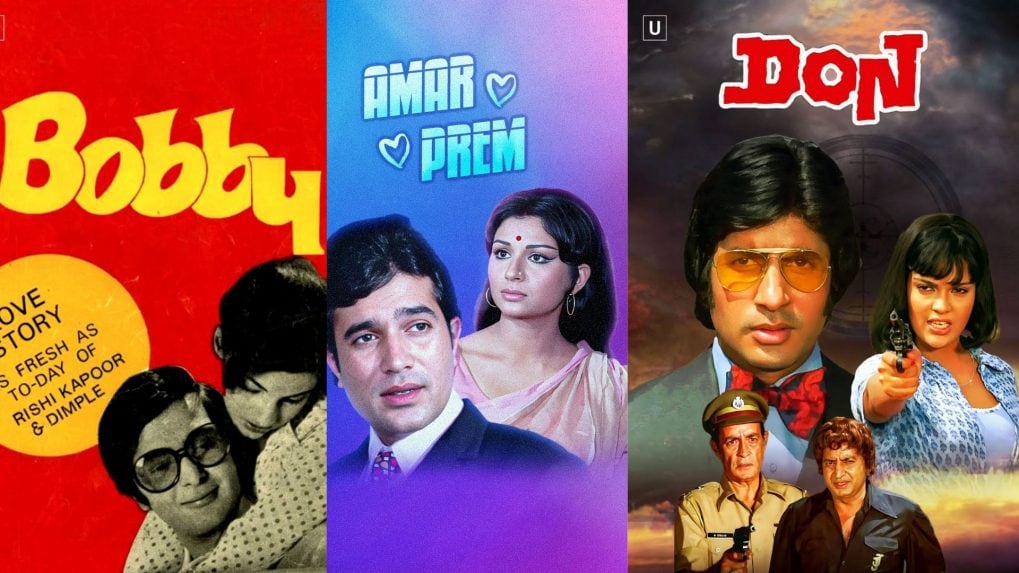
Classic films are finding a new and younger audience in India, with Gen Z and Millennial viewers increasingly discovering legacy cinema for the first time rather than revisiting it out of nostalgia, according to Ultra Media & Entertainment Group’s OTT Insights Report 2025.
The report notes that improvements in film restoration quality, digital accessibility and curated discovery have helped expand the audience base for classic content, challenging the long-held perception that such films cater primarily to older viewers.
On Ultra Media’s streaming platform Ultra Play, classic Hindi films released before 1980 recorded strong engagement in 2025. Titles such as Don, Amar Prem, Bobby, Aradhana and Mera Naam Joker emerged as the most-watched in the segment, consistently outperforming other catalogue films. Among movies from the 1990s and early 2000s, films including Munna Bhai M.B.B.S., Andaz Apna Apna, Tezaab, Sarfarosh, Koi… Mil Gaya, Khalnayak, Karan Arjun and Ghayal delivered the highest watch time and repeat viewing, forming a core engagement base on the platform.
Restoration proved to be a key driver of premium viewing. Restored titles such as Rangeela and Sarfarosh significantly outperformed comparable catalogue films, recording higher-than-expected engagement and completion rates. Other restored classics, including Half Ticket, Pyaasa and Pardes, also contributed meaningfully to viewership, underscoring the strategic value of marquee restorations in driving high-intent consumption.
In terms of genres, action and thriller films dominated viewership on Ultra Play in 2025, accounting for 29.07% and 24.92% of total consumption, respectively. Comedy followed at 12.83%, romance at 11.05%, while crime titles accounted for 5.68%, indicating a strong preference for fast-paced, plot-driven narratives.
Geographically, viewership was led by metros such as Delhi and Mumbai, with strong growth also seen in markets including Pune, Hyderabad, Ahmedabad, Jaipur and Patna. Across regions, audiences showed a clear tilt towards post-2000 blockbusters, action thrillers, South Indian dubbed films and legacy Hindi cinema. Demographically, the platform’s audience skewed young and male, with an 80:20 male-to-female ratio, and nearly 70 percent of total viewership coming from users under the age of 44, led by the highly active 18–24 age group.
At the platform level, dubbed South Indian content emerged as a major growth engine, contributing 31.2% of total viewership. While Hindi films continued to anchor the catalogue, South Indian dubs played a critical role in driving scale and engagement. The platform’s five most-watched titles of 2025—Garudan, Kooman – The Night Watchman, Kodai Diaries, The Sketch Artist – Identity and 29th February—were the top contributors to hours streamed and overall reach.
Ultra Play recorded 250% year-on-year growth in 2025, aided by the addition of over 700 new titles, while festive-period consumption surged by nearly 300%, the report said.
Commenting on the findings, Sushilkumar Agrawal, CEO of Ultra Media & Entertainment Group, said audiences increasingly connect with stories rather than eras. “Whether it’s the emotional depth of Amar Prem, the romance of Bobby, the cultural imprint of Don or the timeless scale of Mera Naam Joker, legacy films—when restored, curated and presented right—can compete head-to-head with modern blockbusters,” he said.
The company expects the momentum to continue, with subscriber numbers projected to cross 500,000 by 2026 and one million by 2027. Ultra Media also plans to roll out features such as offline viewing, multi-device access and enhanced streaming quality on the platform.
From purpose-driven work and narrative-rich brand films to AI-enabled ideas and creator-led collaborations, the awards reflect the full spectrum of modern creativity.
Read MoreLooking ahead to the close of 2025 and into 2026, Sorrell sees technology platforms as the clear winners. He described them as “nation states in their own right”, with market capitalisations that exceed the GDPs of many countries.